Yen Carry Trade, Interest Rates, Exchange Rates... Four Checkpoints After the U.S.-Japan 'Yen Rescue' Operation
- Input
- 2026-08-03 15:36:10
- Updated
- 2026-08-03 15:36:10

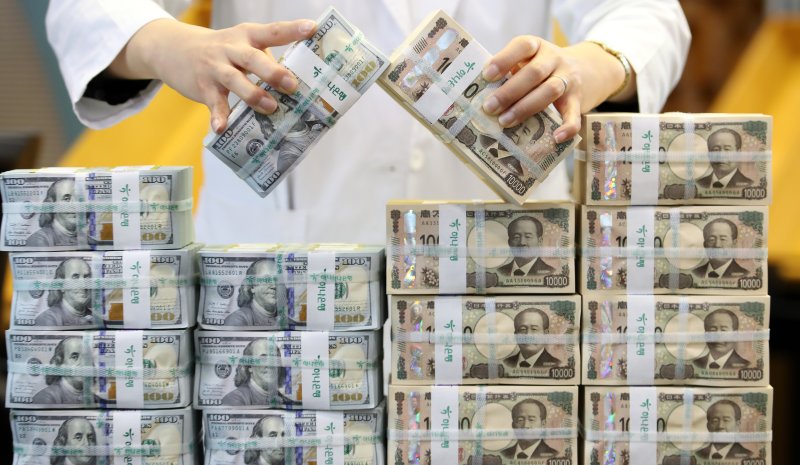
[Financial News] The joint U.S.-Japan intervention for the first time in 15 years is being seen not as the end, but as the beginning. The foreign exchange intervention has at least temporarily curbed the weak yen, but the direction of global financial markets could shift again depending on whether yen carry trade positions are unwound and whether the Bank of Japan (BOJ) raises rates further. The fortunes of industries such as autos and semiconductors are also expected to diverge depending on the yen's movement.
Joint intervention buys time... The BOJ's September meeting will be the real test
Market participants interpret the joint intervention not as a decisive move to end the weak yen, but as a measure to buy time until the BOJ shifts its monetary policy.
This joint intervention, in which multiple countries step into the foreign exchange market at the same time, is the first coordinated action in 15 years since the Great East Japan Earthquake in 2011. At the time, the Group of Seven (G7) responded together by selling yen and buying dollars to prevent a sharp rise in the yen after the earthquake. This time, however, the move was the opposite: selling dollars and buying yen to stop the weak yen.
In particular, the fact that the United States joined Japan in buying yen is the first such move in 28 years, since the 1997 Asian financial crisis. Except in emergencies such as financial crises or major natural disasters, direct U.S. intervention in the currency market is extremely rare. Nikkei, Inc. reported on the 3rd that "joint intervention is a measure carried out only in exceptional situations such as financial crises or major disasters."
A Japanese government official told The Nikkei that "consultations for the joint intervention have become more concrete step by step," adding that "the joint statement by the U.S. and Japanese finance ministers last September laid the groundwork for this coordination." At the time, the two countries reaffirmed the principle that they can respond to excessive exchange-rate volatility, and discussions on joint intervention continued on that basis.
Still, many in the market believe that foreign exchange intervention alone cannot change exchange-rate trends for long. Eric Wallerstein, a strategist at U.S. investment advisory firm Clocktower Group, said, "Authorities know that foreign exchange intervention has had only temporary effects so far," and added, "Intervention may become more frequent over the next few quarters, but unless it is followed by a change in interest rate policy, its durability will be limited."
If the BOJ raises rates again at its September monetary policy meeting, the narrowing gap between U.S. and Japanese interest rates could support further yen strength. If rates are left unchanged, however, the underlying cause of the weak yen would remain, and the effect of the joint intervention could gradually fade. Robin Brooks, a researcher at the Brookings Institution, noted that "the root cause of yen weakness is excessive debt, and the effect of exchange-rate intervention is likely to be temporary."
Yen carry trade unwinding and industry winners and losers also in focus
The variable the market fears most is the unwinding of the yen carry trade. The yen carry trade is a strategy in which investors borrow ultra-low-interest yen and invest in U.S. stocks, government bonds, and emerging-market assets. If the yen rises sharply, investors may sell overseas assets to repay the borrowed yen, and that process could increase volatility in global financial markets. In fact, after the BOJ's unexpected rate hike in July 2024, concerns over yen carry trade unwinding spread, sending both the U.S. stock market and the South Korean stock market sharply lower. The circuit breaker mechanism was even triggered on the KOSPI.
The impact also varies by industry. Japanese automakers and electronics companies would see export profitability worsen if yen strength continues, because the same $100 earned overseas would convert into fewer yen. By contrast, power, airline, and retail companies that import crude oil, liquefied natural gas (LNG), and food would benefit from lower input costs.
For South Korean companies, the pressure from price competition with Japanese rivals could ease somewhat. The auto sector, including Hyundai Motor Company and Kia Corporation, could see its relative competitive position improve if the strong yen continues. For semiconductors, however, the direct benefit is likely to be limited, as the sector is influenced more by AI investment and memory chip market conditions than by exchange rates.
If the yen continues to strengthen, the cost of travel to Japan and the prices of imported goods such as Japanese cars, electronics, and food will rise from current levels.
[email protected] Kim Kyung-min Reporter