U.S. and Iran to Resume Talks on the 3rd, Discussing Restoration of Ceasefire Memorandum
- Input
- 2026-08-03 14:04:24
- Updated
- 2026-08-03 14:04:24
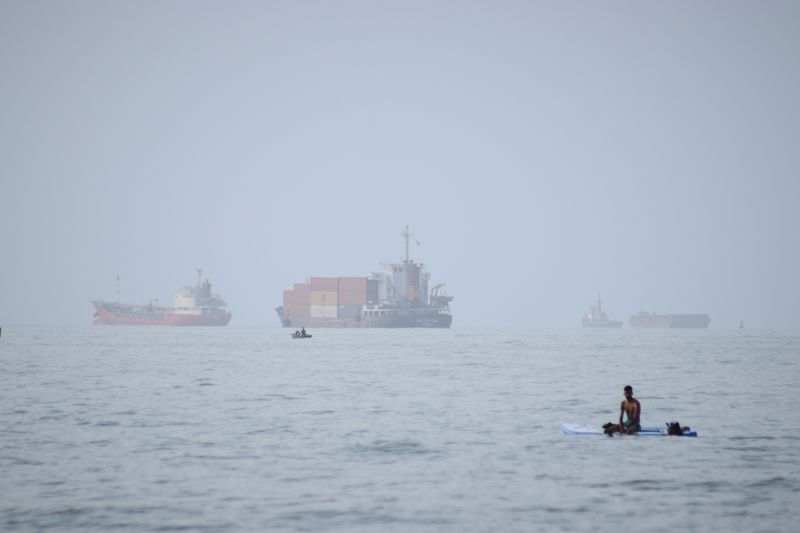
[Financial News] Despite signing a ceasefire memorandum in June, the United States and Iran, which had repeatedly exchanged airstrikes, have finally begun negotiations to restore the agreement. U.S. President Donald Trump said talks would begin as early as the 3rd, local time.
Opening the Strait of Hormuz for 60 days without tolls
Channel 12 (Israel) reported on the 2nd, citing multiple officials, that the United States and Iran had begun discussions to restore the memorandum, helped by last-minute mediation from Qatar. According to the officials, the two sides are considering a compromise that would keep the Strait of Hormuz open for 60 days without tolls and renew the existing ceasefire pledge. The two sides signed the ceasefire memorandum on June 17 and agreed to a 60-day truce while final negotiations were underway. The ceasefire under that document is set to expire on the 16th of this month.Article 5 of the memorandum stated that Iran would "take all necessary measures to ensure the safe passage of commercial vessels" through the Strait of Hormuz. However, it did not specify what those measures would be. Iran interpreted the clause as recognition of its authority to manage shipping lanes in the strait. The United States, by contrast, demanded full freedom of navigation there.
In the end, after the memorandum was signed, Iran attacked merchant ships that strayed from designated routes in the Strait of Hormuz, and the United States retaliated with airstrikes. The clashes continued until the 29th of last month.
Qatar, which had brokered the earlier ceasefire agreement, carried out intensive mediation efforts with Iran, the United States and Oman on the 1st and 2nd. Qatar reportedly asked Trump for one more day to work out a solution with Iran, and later conveyed to Washington that Iran had agreed to the proposal to open the Strait of Hormuz. Trump had threatened large-scale bombing against Iran at a Cabinet meeting on the 31st of last month, but canceled it in an announcement on the 1st. He claimed that Iran and other Middle Eastern countries had asked him to hold off on the strikes.
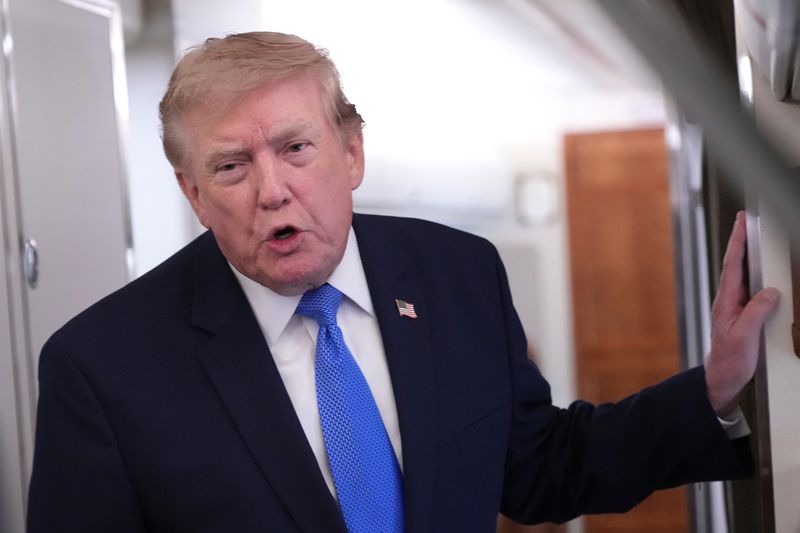
Iran is believed to begin talks with the U.S. on the 3rd
Speaking to reporters aboard the presidential plane returning from New Jersey to the White House on the 2nd, Trump said he halted the airstrikes because "I got requests from Saudi Arabia, the United Arab Emirates, and Iran to cancel the attack." He added, "There is an agreement on Hormuz," and said, "Then there will be an agreement on the nuclear issue, or an agreement you could call denuclearization of Iran." Article 8 of the ceasefire memorandum states that "Iran reaffirms that it will not acquire or develop nuclear weapons." Trump said, "What we are going to do now is talk to them in the form of negotiations," adding that talks with Iran would "begin tomorrow afternoon." He did not mention the venue or deadline.Iran has not confirmed whether it will negotiate with the United States, but it stressed that the ceasefire memorandum must be upheld. Iranian President Masoud Pezeshkian wrote on X on the 2nd that "Iran must force the United States to continue honoring the ceasefire memorandum it signed with Iran for peace." He also said there is broad agreement among members of Iran's Supreme National Security Council to recognize the memorandum.
Middle Eastern countries are viewing the talks between the two sides from different perspectives. The Wall Street Journal (WSJ) reported on the 2nd, citing officials, that the United Arab Emirates, one of Iran's main targets in the airstrikes, urged the Trump administration to take a tougher stance toward Iran. Israel, which had launched a war against Iran with the United States in February, was caught off guard by Trump's unilateral move. An Israeli senior official told Channel 12 (Israel) on the 2nd that he had not heard anything about the decision to cancel the strikes and said that when Trump's sudden post appeared, "it felt as if we had been abandoned."
Meanwhile, Esmaeil Baghaei, spokesman for Iran's Foreign Ministry, said in an interview on the 2nd that talks with Oman, which shares the Strait of Hormuz, on managing the strait were in the final stage. He stressed that "under no circumstances will the Strait of Hormuz ever return to its previous state."
[email protected] Park Jong-won Reporter