U.S. and Japan Formalize "Rescuing the Yen" ... "We Will Not Hesitate to Carry Out Additional Joint Intervention"
- Input
- 2026-08-03 08:50:50
- Updated
- 2026-08-03 08:50:50
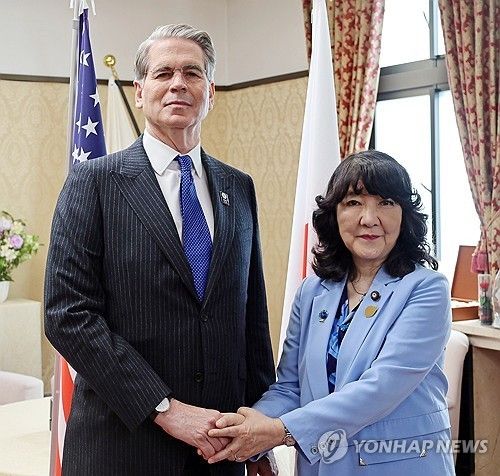
[Financial News] Japanese Finance Minister Satsuki Katayama has officially acknowledged joint foreign-exchange market intervention with the United States and suggested the possibility of further coordinated action. It was the first time since 1998, or 28 years ago, that the United States directly joined in yen-buying intervention, leading market observers to say the two countries have begun moving in earnest to defend the yen.
According to Nikkei, Inc. and other outlets on the 3rd, Katayama said in a statement that "on July 31, U.S. Eastern Time, we carried out yen-buying intervention in coordination with the U.S. Treasury Department."
He said the move was "a measure to respond to the yen's recent excessive volatility and disorderly movements," adding that "we will not hesitate to carry out additional joint intervention," signaling the possibility of further action.
On the same day, U.S. Treasury Secretary Scott Bessent also said he would "participate without hesitation in additional joint intervention with officials from Japan's Ministry of Finance and the Bank of Japan (BOJ)."
Bessent emphasized that "the Donald Trump administration is doing its best for America's trusted partners," adding, "Economic security is national security. The U.S.-Japan alliance is built on both."
He also said, "We strongly support Japan's decisive market and monetary policy measures to correct the yen's significant undervaluation," and added that "the Sanae Takaichi administration is entering an interesting new phase of Abenomics, the economic policy of former Prime Minister Shinzo Abe."
The joint intervention took place as the Japanese government and the U.S. Treasury Department simultaneously entered the foreign-exchange market to sell dollars and buy yen. The U.S. side is understood to have participated in yen buying through the New York Fed.
This was the first joint U.S.-Japan intervention in the foreign-exchange market in 15 years, since the G7 coordinated action immediately after the Great East Japan Earthquake in 2011. In particular, it was the first time in 28 years, since the 1997 Asian financial crisis, that the United States joined Japan in buying yen, making it an unusual move under normal circumstances.
Market participants interpreted the announcement as more than a simple confirmation of past intervention, saying it carried a strong warning that the U.S. and Japan could respond jointly if yen weakness deepens further.
[email protected] Kim Kyung-min Reporter