Israel Voices Concern Over 'Hamas Disarmament Plan'... Says IDF Will Not Withdraw from Gaza
- Input
- 2026-08-03 09:44:20
- Updated
- 2026-08-03 09:44:20
[Financial News] Israel said it has formally conveyed "serious security concerns" to the White House over U.S. President Donald Trump's recently announced "Hamas disarmament agreement." It is the first time a senior Israeli official has publicly stated the government's position since Trump unveiled the deal.
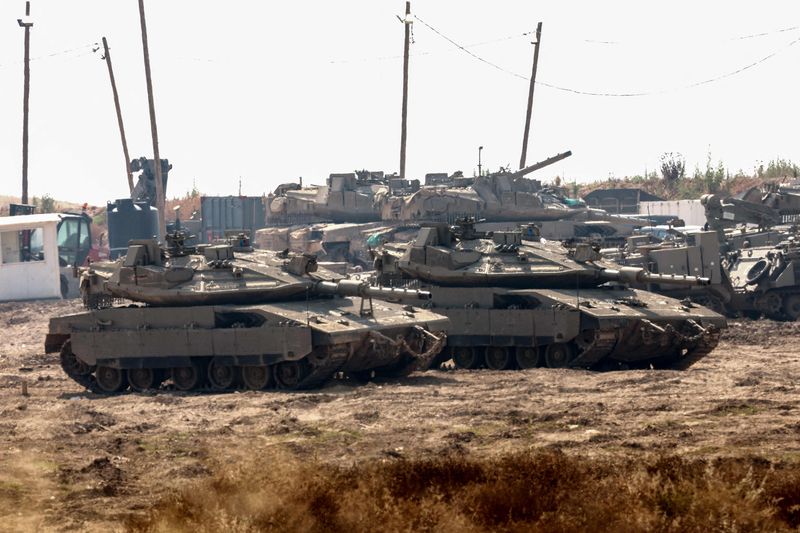
According to a report on the 2nd local time by The Times of Israel (ToI), Prime Minister's Office of Israel spokesperson Doron Spielman said in an interview with AP that "Israeli intelligence assesses that Hamas is trying to rebuild its military capabilities rather than truly disarm," adding that "Israel Defense Forces (IDF) will not withdraw from the Gaza Strip until Hamas is disarmed." The Israeli military currently controls more than 60% of the Gaza Strip.
Spielman warned that if troops are redeployed before Hamas is fully disarmed, the group could quickly expand across the Gaza Strip, rebuild its terror infrastructure, and threaten Israeli residents again. He said this could lead to a repeat of the tragedy of the Oct. 7, 2023 surprise attack. He added that disarmament means the "physical surrender" of weapons, and that anything less is not open to compromise.
The latest friction came just days after Hamas said it would begin the disarmament process as part of a U.S.-brokered ceasefire agreement.
Trump's 20-point peace plan includes the surrender of Hamas weapons and the destruction of its underground tunnel network, a phased withdrawal of Israeli forces, the launch of a new Palestinian technocratic government, the deployment of an international security force, and the reconstruction of the Gaza Strip.
According to a draft of the agreement obtained by AP, all weapons held by Hamas police are to be transferred as soon as the U.S.-backed Palestinian technocratic committee enters the Gaza Strip. Heavy weapons will then be dismantled and military facilities destroyed alongside the deployment of peacekeeping forces, with the process tied to the gradual withdrawal of Israeli troops.
However, political conditions inside Israel are emerging as a variable. Prime Minister Benjamin Netanyahu, who faces an early election in October, is under heavy pressure from far-right coalition partners as well as criticism that he failed to prevent the 2023 surprise attack. Analysts say the chances of Israel carrying out a large-scale withdrawal or major concessions before the election are slim.
Separate from the negotiations, military tensions on the ground continue. Even after the ceasefire was reached, Israel has kept up airstrikes across the Gaza Strip, saying it is targeting Hamas remnants and terror infrastructure.
The Gaza Strip health authorities said at least 10 people, including children, were killed in Israeli airstrikes carried out between late on the 2nd and early on the 3rd. A residential apartment in southern Gaza was hit, killing a family of three, including a 4-year-old child.
The Israeli military said the strikes were "targeted airstrikes against Hamas operatives," but declined to provide specific details.
[email protected] Yoon Jae-jun Reporter