"A Number Seen Only in War or During Infectious Disease Outbreaks"... KOSPI Swings 2,164 Points Over Four Days [Why the Market Moved]
- Input
- 2026-08-03 05:00:00
- Updated
- 2026-08-03 05:00:00

[Financial News] KOSPI (Korea Composite Stock Price Index) staged an unprecedented volatility session, plunging more than 10% in one day before soaring more than 17% the next. Over four days, the sum of the absolute daily swings exceeded 2,164 points. Such double-digit moves are usually seen only when a shock such as a financial crisis or the spread of an infectious disease jolts the entire market, raising concerns about the stability of the domestic stock market.■ 1,162 points erased in three days, then a 1,002-point surge in one dayAccording to the Korea Exchange on the 3rd, KOSPI closed at 6,023.66 on the 28th of last month, down 732.09 points, or 10.84%, from the previous trading day. It fell another 360.42 points, or 5.98%, on the 29th to 5,663.24, and then slipped an additional 1.23% on the 30th to 5,593.56.
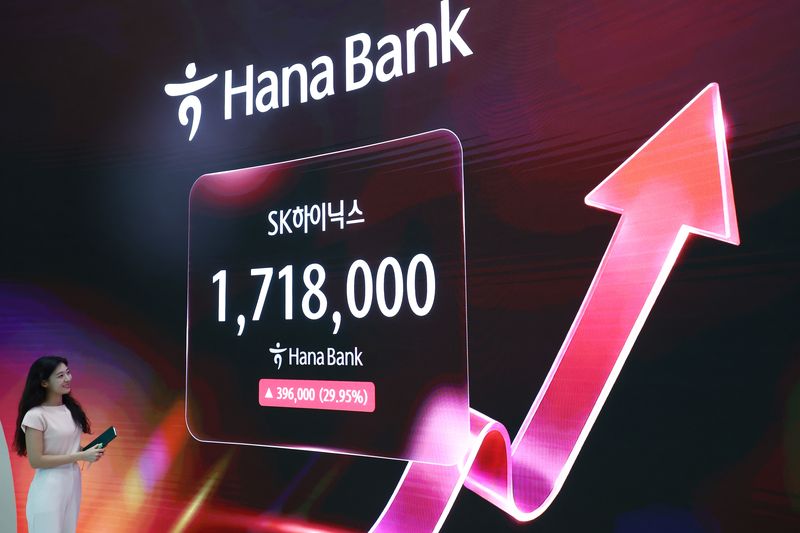
But on the 31st, the market's direction completely reversed. KOSPI closed at 6,595.45, up 1,001.89 points, or 17.91%, in a single day. Both the gain rate and the point increase were the largest since KOSPI was launched. The previous record for the biggest daily gain rate was 11.95% on October 30, 2008, during the global financial crisis. Intraday, it even climbed above the 6,630 level, with the gain rate widening to 18.54%.
From the 28th to the 31st, the sum of the absolute daily percentage changes came to 35.96 percentage points, while the total of the absolute index swings reached 2,164.08 points. This does not mean cumulative returns or the gap between the highest and lowest levels, but it does show how intense the daily volatility was for investors.
Kang Jin-hyuk, a senior researcher at Shinhan Investment Corp., said, "This week was a series of events that will be recorded in stock market history." He added, "KOSPI triggered a circuit breaker mechanism for two consecutive days for the first time ever, and on the 31st it posted the highest daily gain rate on record. SK hynix also closed at the upper limit for the first time in about 17 years."
A securities industry official said, "This is the kind of volatility that used to appear only when an external shock such as war or an infectious disease shook the entire market." The official added, "More serious than the direction of the market is the fact that the daily trading range itself has become excessively large. We need to examine whether the market is functioning normally."■ Extreme volatility recalls Black Monday and the COVID-19 panicEven in major overseas markets, it is rare to see double-digit declines and rebounds within such a short period.
A classic comparison is Black Monday in 1987. The Dow Jones Industrial Average (DJIA) plunged 22.6% in a single day on October 19, 1987, while the Standard & Poor's 500 Index (S&P 500 Index) fell 20.5% on the same day. The shock spread to Japan's market the next trading day. The Nikkei 225 Index dropped 14.90% on October 20, setting its record for the largest daily decline, before rebounding 9.30% on the 21st.
Even compared with Japan's market after Black Monday, KOSPI's rebound was larger. While the Nikkei 225 Index fell 14.90% and then rebounded 9.30% the next day, KOSPI dropped 17.20% from the July 27 close through the 30th before jumping 17.91% in a single day on the 31st.
The U.S. market also saw similar extreme volatility in March 2020, when COVID-19 spread. The S&P 500 Index fell 7.60% on March 9, 9.51% on the 12th, and 11.98% on the 16th. It then surged 9.29% on the 13th and 9.38% on the 24th, repeatedly swinging between sharp losses and strong rebounds. From its peak on February 19 to its low on March 23, the S&P 500 Index fell by about 34%.
However, during the COVID-19 period, there was a clear external shock in the form of the World Health Organization's declaration of a Pandemic, lockdowns in major countries, and fears that the real economy would grind to a halt. In 1987, too, automated selling tied to program trading and portfolio insurance strategies, along with concerns over a liquidity crunch, hit global markets at the same time.
Recent volatility in the domestic market differs in that it is difficult to explain it by a single external shock. Analysts say the swings were amplified by concentrated trading in major semiconductor stocks and single-stock leveraged products, along with shifts in foreign investor flows, margin trading and derivatives liquidation, and a sudden change in investor sentiment.
A securities industry official noted, "When a market rebounds sharply after a steep drop, it is usually interpreted as a sign that investor sentiment is recovering. But a rise of nearly 18% in a single day can also mean that the previous price had fallen too far, or that buy orders were excessively concentrated in certain time slots and stocks."
The official continued, "The rebound after a plunge can look especially large because of the base effect, since the gain rate is calculated from a lower index level. KOSPI fell 17.20% from the July 27 close of 6,755.75 to 5,593.56 on the 30th, then rebounded 17.91% on the 31st, but the closing level on the 31st was still 2.37% below the level on the 27th."
[email protected] Choi Du-seon Reporter