[Editorial] Extreme Stock Market Volatility Calls for Structural Reform, Not Short-Term Support
- Input
- 2026-08-02 19:04:19
- Updated
- 2026-08-02 19:04:19
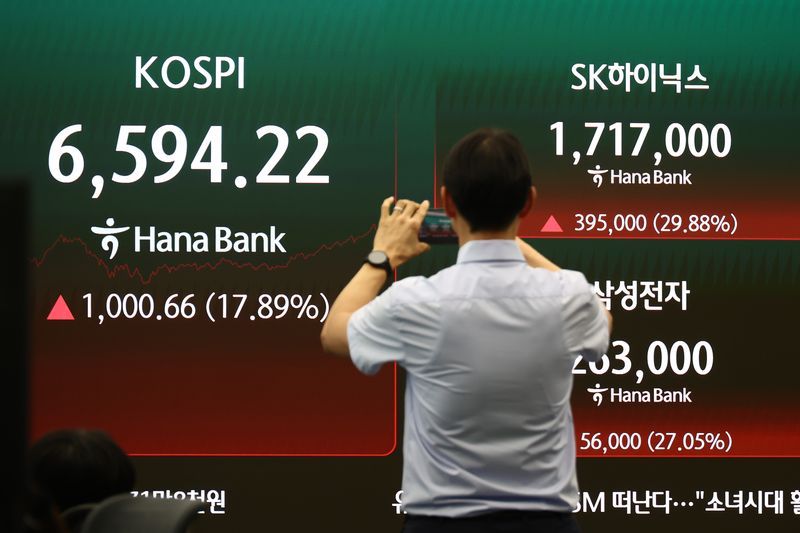
The domestic stock market has recently gone through a nightmare. Within a month, the index plunged more than 20%, and sidecars kept going off in rapid succession. On the 28th and 29th of last month, circuit breaker mechanisms were triggered on both the KOSPI and KOSDAQ for the first time ever. On the 31st of last month, the top two stocks by market capitalization surged at the same time, also a first. Excluding the final day, the cumulative decline over 30 days reached a staggering 34%. Even compared with the sharp sell-offs during the October 1997 foreign exchange crisis and the October 2008 financial crisis, the shock was overwhelming. A market that had surged more than 100% in the first half of the year and ranked first in global gains was reduced to this state in just one month. By any measure, it can no longer be called a normal market.
Given the current roller-coaster conditions, strengthening safeguards for emergencies is necessary. It is only natural to overhaul any system that amplifies market anxiety. But in terms of sequence, a thorough examination of the causes behind the current panic must come first, along with a serious reflection on what went wrong. The government ignored criticism and warnings from many quarters and abruptly approved a single-stock leveraged product. Even before its introduction, concerns were widespread that it could concentrate speculative demand in specific stocks and increase volatility, but the authorities did not accept those warnings. When the market began to swing wildly, they hurriedly raised margin deposits. Even that proved insufficient, and now they are changing course again, saying they will consider investment limits and leverage adjustments. If a policy introduced in the name of market revitalization instead turned the stock market into a speculative casino and intensified volatility, it should not simply be patched up with belated regulation. The proper course is to publicly review the entire policy process: what was examined, how the decision was made, and why the risk warnings raised at the time were dismissed.
Emergency powers must not be turned into a tool for defending stock prices. Stock prices naturally rise and fall depending on corporate earnings, the economy, and conditions in global financial markets. If the government intervenes simply because the index has fallen sharply, it could send the wrong signal that it will ultimately prop up the market. For that reason, the conditions for invoking emergency powers, their scope, and the detailed standards for their use must be defined more clearly.
It is also unwise to blame market instability solely on single-stock leverage products. Leverage is only an amplifier of volatility. The deeper causes lie in excessive concentration in a few stocks, short-term speculative trading, and a weak market base. The market cannot be normalized by regulating a few products while leaving intact a distorted structure in which the rise and fall of a handful of stocks can shake the entire index.
What the government must devote all its effort to is a fundamental restructuring of the stock market. It should focus more on broadening the capital market so that competitive companies can grow in fields such as Artificial Intelligence (AI), software, biotechnology, and content. Weak companies should be removed quickly, while strong companies should have greater incentives to remain listed. The right solution is to create conditions in which long-term investors can become the center of the market and to restore trust in the market.