Birth rate expected to return to the 0.9 range for the first time in seven years... youth population plunges, elderly population surges
- Input
- 2026-08-02 10:04:57
- Updated
- 2026-08-02 10:04:57
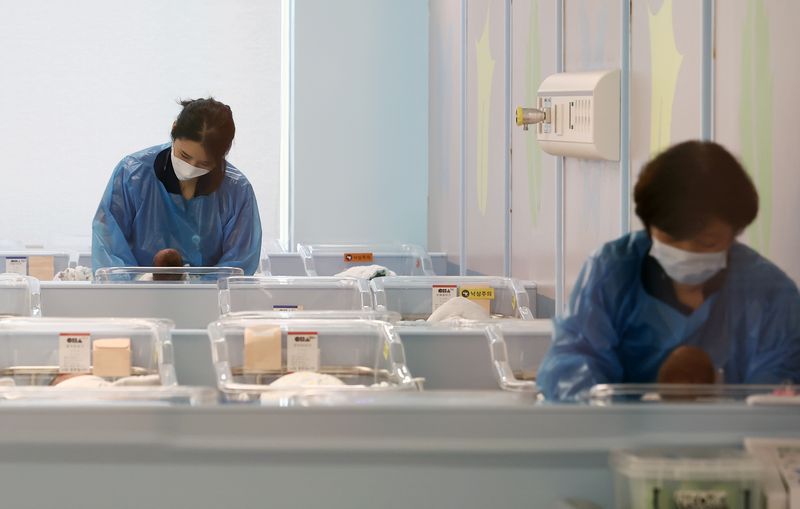
[Financial News] As marriages and births continue to rise, expectations are growing that this year's total fertility rate could return to the 0.9 range for the first time in seven years.
On the 2nd, data from the National Data Office and KOSIS showed that the total fertility rate in the first quarter of this year stood at 0.95. The rate was 0.93 in April and 0.85 in May.
The total fertility rate usually follows a pattern in which it is higher in the first and second quarters and lower in the third and fourth quarters. Given the trend through May, some observers say the annual rate could exceed 0.9.
If this year's total fertility rate does return to the 0.9 range, it would be the first time since 2019, when it stood at 0.92. The rate, which was 1.48 in 2000, fell steadily to 1.05 in 2017. It then dropped below 1 for the first time in 2018, when it came in at 0.98. After hitting a record low of 0.72 in 2023, it rebounded to 0.75 in 2024 and rose further to 0.80 last year.
The rebound appears to reflect a combination of factors, including a growing population in their 30s, more marriages, and more positive attitudes toward marriage and childbirth. In fact, the cumulative number of births from January to May this year reached 122,694, up 15.2% from a year earlier.
However, some analysts say the recent recovery in births is not enough to reverse the entrenched aging trend. Over the past 10 years, the youth population has fallen by nearly a quarter, while the elderly population has increased by more than 60%.
According to registered census statistics compiled each November, the population aged 0 to 14 in 2025 stood at 5,224,936, down 24.9% from 2015. By contrast, the population aged 65 and older rose 62.0% over the same period, from 6,617,378 to 10,722,557. The increase in the super-aged population, or those 85 and older, was especially striking. That group more than doubled from 525,723 in 2015 to 1,148,525 last year.
As a result, children accounted for just 10.1% of the total population of 51,817,499 last year. The share of the elderly population was 20.7%, more than twice that of the youth population. In its Korea Economic Report released on the 2nd of last month, the OECD stressed the need for structural reforms to address low birth rates, aging, and regional economic disparities. It also recommended supporting domestic demand through fiscal policy while moving toward fiscal consolidation in the medium term to prepare for the burden of population aging.
[email protected] Seo Young-joon Reporter