Conflicting Moves After 'Limit-Up Surge'... Foreign and Institutional Investors Countered with Leverage, Individuals with Inverse ETFs [Why the Stock Market]
- Input
- 2026-08-02 06:00:00
- Updated
- 2026-08-02 06:00:00
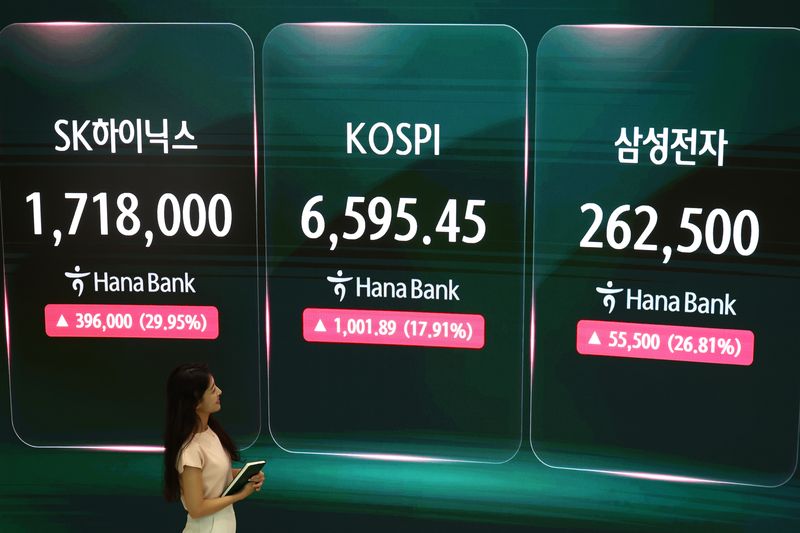
95%) soared to all-time highs; however, investors' choices diverged sharply. While individual investors engaged in profit-taking by heavily selling off Samsung Electronics and SK Hynix, foreign and institutional investors aggressively bought both stocks. In particular, institutions went beyond simply buying underlying stocks and expanded their holdings in single-stock leveraged exchange-traded funds (ETFs), placing weight on the prospect of further gains.Conversely, individual investors liquidated most of their leveraged ETFs and increased their purchases of inverse ETFs during trading, preparing for the possibility of increased volatility following the surge. ■ ETFs were clearer than underlying stocks. Institutions focused on leverage, while individuals reduced their positions According to the Korea Exchange on the 2nd, institutions net purchased most of the 16 types of single-stock leveraged ETFs for Samsung Electronics and SK Hynix on July 31.Funds flowed into leveraged ETFs listed on the market in general, rather than into specific products. 1 billion won in KODEX Samsung Electronics Single-Stock Leverage. 9 billion won) also recorded net buying across the board.
Buying dominance also continued in most leverage products from other asset management companies. Foreign investors followed the same direction. 7 billion won), they placed weight on the possibility of further gains in the semiconductor sector.
On the other hand, individual investors took the exact opposite approach. 8 billion won in KODEX Samsung Electronics Single Stock Leverage. 9 billion won worth of PLUS Samsung Electronics Single Stock Inverse 2X.
A securities industry official stated, "The supply and demand on the 31st of last month was more characterized by position building ahead of the first trading day of August than by simple profit-taking. " He added, "While foreigners and institutions placed weight on the possibility of a rise using leverage, individual investors prepared for volatility by increasing inverse trading. The market on Monday (the 3rd) will be the first to show which side's judgment was correct.
" ■ Attention Now Turns to the First Trading Day of August. Semiconductor Exports Face the First Test Following a historic rebound, market interest is now shifting to whether the semiconductor industry conditions can support stock prices. As investor sentiment revives following the reaffirmation of the trend of U.S. big tech companies expanding their investment in artificial intelligence (AI), whether actual semiconductor demand and exports can sustain this trend is considered a key variable for future stock prices. The market is paying attention to the fact that semiconductor exports continued their robust growth in July.Analysts suggest that if domestic semiconductor exports maintain a favorable trend driven by expanded investment in AI servers and sustained demand for High Bandwidth Memory (HBM), the investor sentiment that has recently recovered around semiconductors is likely to continue. On the other hand, there are also forecasts that if signs of slowing demand are confirmed, profit-taking pressure could increase, particularly for semiconductor stocks that have surged in the short term. Kim Yu-mi, an analyst at Kiwoom Securities, stated, "For corporate earnings expectations to be maintained, it is crucial to verify whether the demand supporting them is sustained.
" She added, "As semiconductor exports continued to show triple-digit growth rates in export figures through the 20th, this robust export trend will serve as a factor mitigating concerns about a recent correction in the domestic stock market centered on semiconductors. " She further noted, "The U. S.
Federal Reserve places greater weight on price trends than on the labor market when making policy decisions," and added, "For the time being, it is highly likely that the financial market's attention will focus on inflation and international oil price trends rather than U. S. employment.
"
63%. 4 won. Courtesy of Newsis.
[email protected] Choi Doo-sun Reporter