Tanker Hit in the Strait of Hormuz Near Oman, Raising Fears of a Tighter Red Sea Blockade
- Input
- 2026-08-02 05:20:39
- Updated
- 2026-08-02 05:20:39
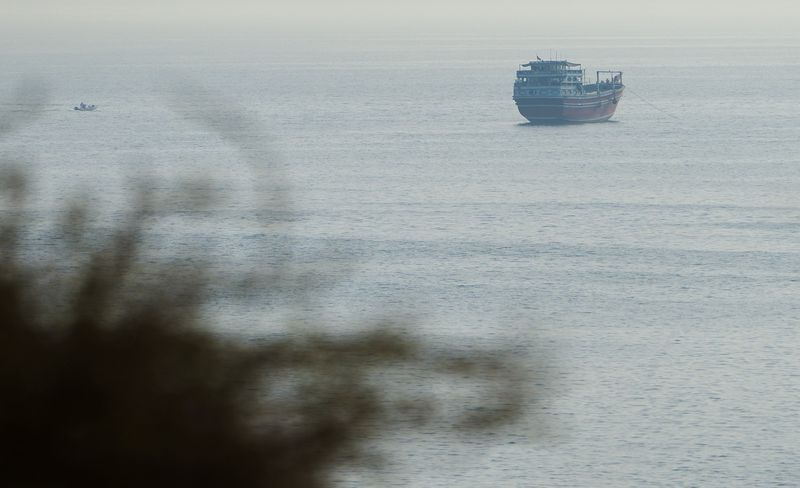
CNBC reported on the 1st, local time, that a tanker was hit in the Strait of Hormuz near Oman. Another vessel also reported an explosion nearby.
Reports of attacks in the Strait of Hormuz are piling up. Iran’s warning that a U.S. blockade of Iran would lead to a closure of the Strait of Hormuz is increasingly becoming reality.
Tanker hit
As reports continue to emerge that Donald Trump is preparing a large-scale new round of airstrikes against Iran as early as this weekend, the blockade of the Strait of Hormuz, which handles 20% of global oil and natural gas shipments, is dragging on.
The United Kingdom Maritime Trade Operations (UKMTO), a maritime agency supported by the Royal Navy, said on the 1st that it had received a report from a tanker stating that its engine room had been damaged by an unidentified flying object.
UKMTO said the attack took place 11 nautical miles northeast of Oman. It added that "the tanker is no longer under command, and the local maritime police have been notified." No casualties or environmental pollution have been reported so far.
UKMTO also said another vessel off Oman’s coast in the Strait of Hormuz reported that it "saw a large flash accompanied by an explosion near the ship."
Spreading across the Gulf region
Since the de facto collapse of the ceasefire understanding between the United States and Iran on the 17th of last month, Iran’s retaliation has also intensified.
Last week, after the United States ended its two-week air campaign against Iran, Iran attacked U.S. military bases in Kuwait and Bahrain.
An Egyptian Mediterranean port was also attacked. Egypt said on the 30th of last month that a drone flew into its Mediterranean port of Damietta, sparking fires on two floating liquefied natural gas storage vessels. It was the first attack on Egypt since the Iran war began on February 28. However, who carried out the drone attack has not yet been identified.
U.S. signals large-scale strikes on Iran
The Wall Street Journal (WSJ), citing U.S. administration officials, reported that Trump has ordered the launch of new military strikes against Iran as early as this weekend. Sources added, however, that he could halt the planned strikes if diplomacy makes progress.
At an unusual Cabinet meeting at Camp David on the 31st of last month, Trump warned that "we will hit them very hard" and said the attacks would continue until Iran says it "can no longer stand it."
Axios also reported, citing a U.S. official, that Trump is seriously considering strikes on Iran’s energy targets in the coming days, but has not issued a final order.
Will the Red Sea blockade tighten?
However, a U.S. attack on Iran is expected to leave significant aftereffects on the global economy.
Along with a tighter blockade of the Strait of Hormuz, access to Red Sea shipping routes is also expected to become more difficult. U.S. airstrikes appear to do little to weaken Iran’s ability to block sea lanes, while only fueling Iran’s resolve to fight on and strengthening the justification of Yemen’s Houthi rebels, who control the Bab-el-Mandeb Strait at the entrance to the Red Sea.
Iran, which already controls the Strait of Hormuz, has warned that U.S. military action will lead to a tighter blockade of the Red Sea.
According to Iran’s WANA news agency, Mohammad Bagher Zolghadr, a minister at Iran’s Supreme National Security Council (SNSC), said that "the continuation of the U.S. Navy blockade and the war-mongering of the U.S. regime will lead not only to a tighter blockade of the Strait of Hormuz, but also to the closure of other straits and maritime chokepoints." The Iran-backed Houthi rebels say the Red Sea remains open, but they are effectively blocking it by threatening to attack ships linked to Saudi Arabia.
Zolghadr warned that "the cost will be borne by the global economy, the energy market, and U.S. voters."
[email protected] Song Kyung-jae Reporter