After Japan's Strong Quake, Semiconductor Recovery Was Quick, but Auto Plants Took a Chain Hit [Japan Inside]
- Input
- 2026-08-02 08:20:00
- Updated
- 2026-08-02 08:20:00
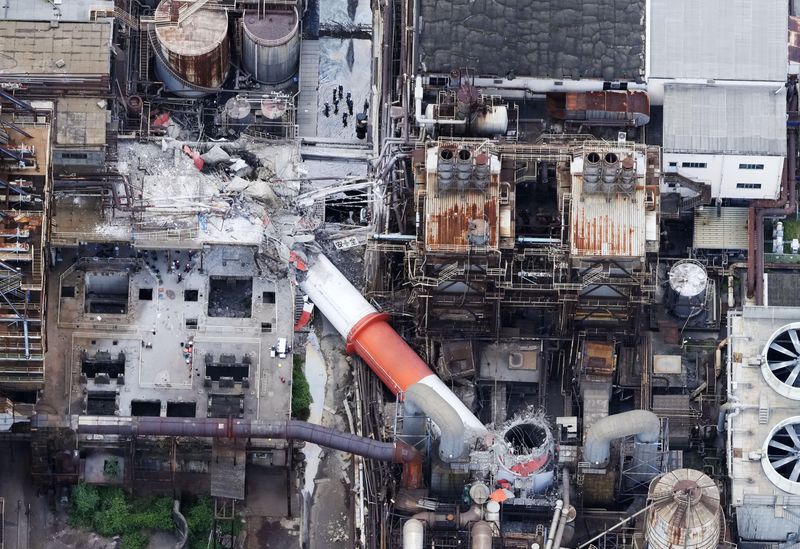
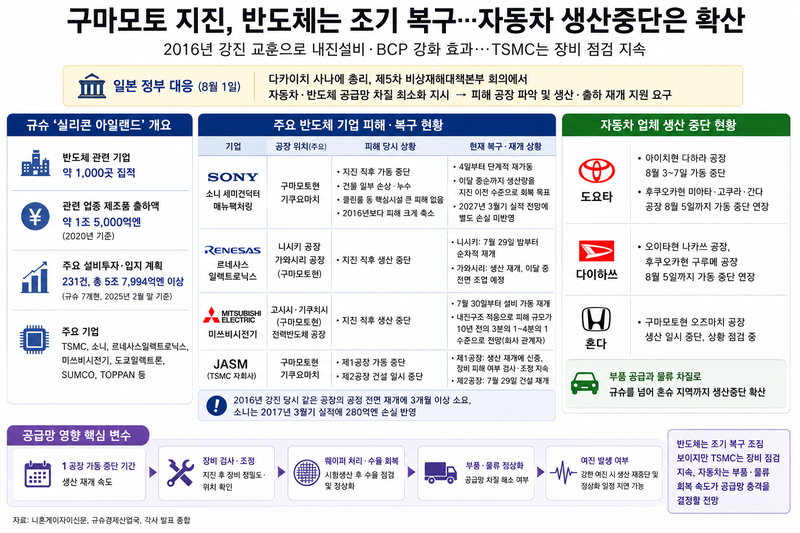
[Financial News, Tokyo = Reporter Seo Hye-jin] Semiconductor plants in Kyushu that were shut down after the magnitude 7.1 earthquake that hit Kumamoto Prefecture are resuming production faster than expected. Analysts say the quicker recovery reflects stronger seismic protections and business continuity plans, or BCPs, built up after the 2016 Kumamoto quake, when normalization took months.
By contrast, the auto industry is seeing production stoppages spread beyond Kyushu to Honshu as parts supply and logistics disruptions continue. TSMC, the world's largest foundry, is also taking a cautious approach as it continues inspecting and adjusting semiconductor manufacturing equipment before restarting production.
At a meeting of the fifth emergency disaster response headquarters on the 1st, Japanese Prime Minister Sanae Takaichi instructed officials to minimize disruptions to the auto and semiconductor supply chains. She also asked Economy, Trade and Industry Minister Ryosei Akazawa to assess the damage at affected plants and support the resumption of production and shipments.■ 1,000 semiconductor-related companies clustered in the region... 5.3 trillion yen in investment plansKyushu has long been known as the "Silicon Island" because it is home to a concentration of Japan's semiconductor production base.
According to the Kyushu Bureau of Economy, Trade and Industry, about 1,000 companies involved in semiconductor manufacturing, materials and components, and production equipment are clustered there. As of 2020, shipments from related industries such as integrated circuits and semiconductor manufacturing equipment totaled about 1.5 trillion yen, or roughly 1.376 trillion won.
After TSMC decided in 2021 to enter Kumamoto, investment in production facilities, materials, and equipment increased again. As of the end of February, major semiconductor-related investment and site-location plans across Kyushu's seven prefectures totaled 231 cases and more than 5.7994 trillion yen, or about 5.312 trillion won.
Along with TSMC, Sony, Renesas Electronics, Mitsubishi Electric, Tokyo Electron, SUMCO, and TOPPAN all have operations in Kyushu.
TSMC's decision to enter Kumamoto was driven largely by the existing industrial cluster. Around the Semicon Techno Park area in Kikuyomachi, semiconductor manufacturers, materials and equipment suppliers, and workers were already concentrated. Groundwater used in semiconductor processes is also an important water source.
TSMC has not disclosed the specific reasons it ultimately chose Kumamoto or the relative weight of each factor. It is difficult to say that abundant groundwater or land prices alone were decisive.
Kyushu produces automotive and industrial semiconductors, image sensors, and power semiconductors. JASM, TSMC's subsidiary, plans to equip its first and second plants with combined monthly capacity of more than 100,000 12-inch wafers.
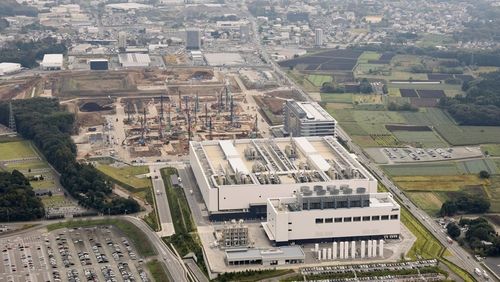
Although some parts of the plant building were damaged and there were leaks, the clean room, finished products, and production equipment were reported to have suffered no serious damage.
Sony Group did not reflect any separate loss from the quake in its consolidated earnings outlook for the fiscal year ending March 2027. CFO Hiroki Totoki said on the 31st of last month, "We do not believe this strong quake will have an impact large enough to significantly change the earnings outlook."
During the 2016 quake, it took more than three months to fully restart the same plant, and Sony booked 28 billion yen in losses from equipment damage and production stoppages.
Renesas has also resumed production at its Kawashiri plant in Kumamoto City and plans to return to full operations sometime this month. Its Nishiki plant restarted production in stages from the night of the 29th of last month.
Mitsubishi Electric, which operates power semiconductor plants in Kōshi City and Kikuchi City, also restarted equipment from the 30th of last month. A company official said damage is expected to be limited to one-third to one-quarter of the level seen 10 years ago thanks to seismic design measures.
Market research firm Omdia said, "The semiconductor industry has thoroughly prepared BCPs for earthquake response and recovery."■ TSMC continues equipment checks... auto production stops even on HonshuAlthough semiconductor makers are gradually returning to normal, JASM's first plant remains cautious about restarting production.
TSMC said the plant building has been confirmed safe and that there are no problems with water, power, or raw material supplies. However, it is still checking for damage to semiconductor manufacturing equipment and carrying out adjustments. Construction of the second plant resumed on the 29th of last month.
Even if a semiconductor plant has no structural damage, it must recheck equipment placement, precision, and wafer production conditions. It also needs to inspect the condition of wafers already in production and the yield after trial runs.
DigiTimes estimated that even if JASM's plant were shut down for a week, the impact on TSMC's sales in the third and fourth quarters of this year would be only about 0.03%. That estimate, however, is based on a private-sector analysis assuming there is no serious damage to production facilities and that operations normalize within about a week.
In the auto industry, production disruptions are spreading beyond Kyushu.
Toyota will suspend operations at its Tahara plant in Aichi Prefecture from the 3rd through the 7th. The company is said to have been affected by disruptions to key parts procurement after the Kumamoto quake halted operations at its Miyata, Kokura, and Kanda plants in Fukuoka Prefecture.
The shutdown period for Toyota's three Kyushu plants has been extended through the 5th. Daihatsu has also extended the suspension of operations at its Nakatsu plant in Oita Prefecture and its Kurume plant in Fukuoka Prefecture through the 5th. Honda has temporarily halted production at its Ozumachi plant in Kumamoto Prefecture and is checking the situation.
So far, no automaker has announced a long-term production cut on the grounds of a shortage of automotive semiconductors. Still, the speed at which parts and logistics return to normal has emerged as a key factor in the recovery of auto production.■ Seismic protection and BCPs are paying off... aftershocks and yield recovery remain variablesAnalysts say the stronger seismic protections and BCPs put in place since 2016 helped reduce damage and speed up recovery this time.
However, automotive and industrial semiconductors, as well as image sensors, cannot easily be replaced by production at other plants. That is because manufacturing processes and equipment conditions differ from plant to plant, and customers must also verify quality.
The impact on supply chains may depend not only on the length of the shutdown, but also on equipment adjustments, wafer handling, and the speed of yield recovery after restart. If strong aftershocks occur, production stoppages and repeated equipment and process checks could delay the return to normal.
[email protected] Seo Hye-jin Reporter