Iran tanker attack pushes global oil prices up 1%; could domestic fuel prices end 11 straight weeks of declines?
- Input
- 2026-08-01 09:05:40
- Updated
- 2026-08-01 09:05:40
On the New York Mercantile Exchange, September West Texas Intermediate crude oil (WTI) futures settled at $84.67 per barrel, up 1.3% from the previous session. On the Intercontinental Exchange Futures Exchange (ICE Futures Exchange), September Brent Crude Oil futures closed at $90.12 per barrel, up 1.2% from the previous session.
The Islamic Revolutionary Guard Corps (IRGC) claimed that it attacked two tankers that were attempting to pass through the Strait of Hormuz under the aerial escort of U.S. forces.
According to the Islamic Republic News Agency (IRNA) and other Iranian state media, the IRGC said in a statement that "the two tankers were hit and brought to a halt after attempting to pass through the Strait of Hormuz via a dangerous and illegal route." It added that "four other tankers nearby quickly changed course and returned to their original positions."
Chevron Chairman and CEO Mike Wirth said in a CNBC interview that the threat to Middle East oil supplies was spreading beyond the Strait of Hormuz. He added, "We do not have much time left. As time goes on, the situation is getting more difficult."
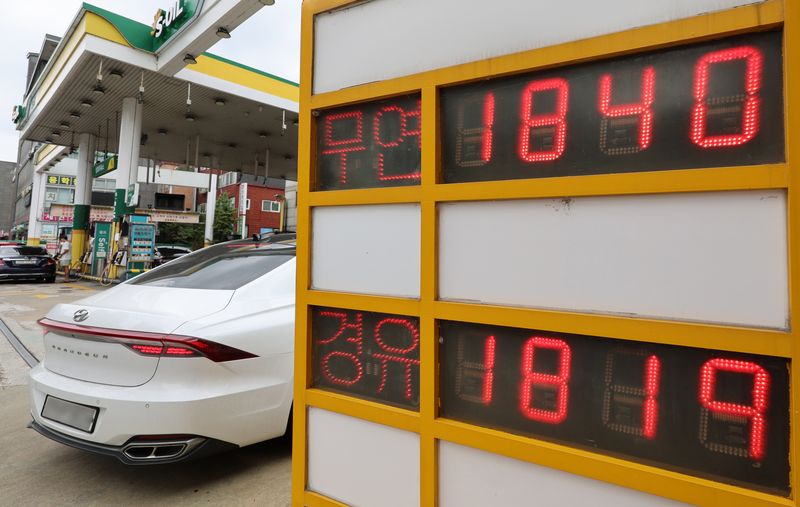
Attention is also turning to whether domestic gas station fuel prices, which have fallen for 11 consecutive weeks, will rise within the next few weeks. Changes in global oil prices are typically reflected in domestic pump prices with a lag of about two to three weeks.
Fuel prices at gas stations nationwide fell for the 11th straight week this week. According to Opinet, the oil price information system run by the Korea National Oil Corporation (KNOC), the average retail price of gasoline at gas stations nationwide in the fifth week of July (July 26-30) fell 3.3 won per liter from the previous week to 1,869.1 won. Dubai crude, the benchmark for imported oil prices, fell $7.2 per barrel from the previous week to $80.7.
[email protected] Kim Kyung-soo Reporter