"U.S. and Israel Plan Weekend Strike on Iran Energy Facilities" ... Tensions Rise Again in the Middle East
- Input
- 2026-08-01 08:41:29
- Updated
- 2026-08-01 08:41:29
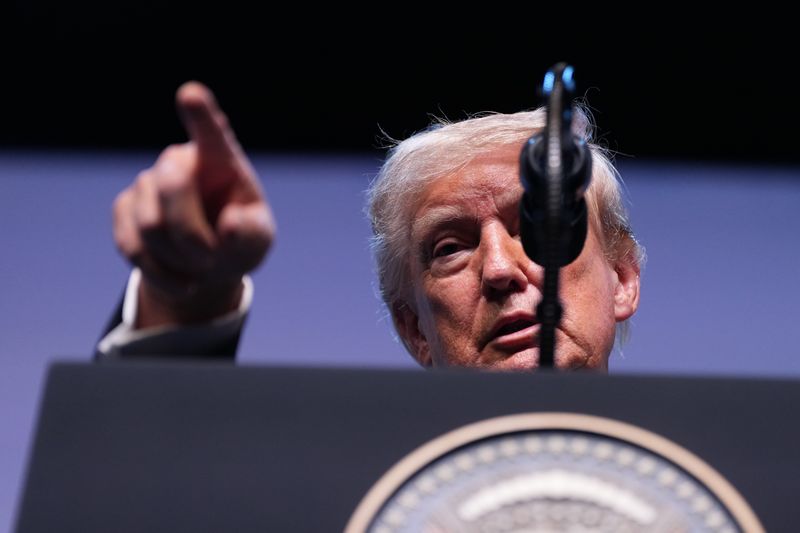
[Financial News] Reports said that the United States and Israel are planning one of the strongest airstrike operations ever against Iran's energy infrastructure this weekend.
CBS reported on the 31st, citing multiple sources, that the United States and Israel are reviewing strike operations for August 1 and 2. The plan has already been conveyed to Israel, and the two sides are reportedly discussing the attack. President Donald Trump has not yet given final approval.
The Wall Street Journal also reported, citing U.S. officials, that "President Trump ordered new attacks to force Iran to submit, and the strikes will begin this weekend and continue for several days." Aside from the question of whether Trump has approved the plan, both outlets reported that a major assault on Iran is likely this weekend.
At a Cabinet meeting held at Camp David in Maryland on the same day, President Trump had already signaled a large-scale strike on Iran. He said, "We will hit them very hard," adding, "At some point, they [Iran] will say, 'We can't take it anymore.'"
The Iran war, which began on February 28, initially appeared to be moving toward an end in mid-June after the United States and Iran signed a memorandum of understanding and entered negotiations. However, tensions flared again over differing interpretations of the MOU, including provisions related to control over the Strait of Hormuz.
After Iran continued attacking civilian merchant ships in the strait, President Trump ordered airstrikes on Iran for 13 consecutive days starting on the 11th, based on U.S. Eastern Time. Iran also struck U.S. bases in the Middle East, and the exchange of force continued for some time.
Trump halted the strikes from the 24th, saying negotiations with Iran were under way. But when Iran launched a surprise preemptive attack on a U.S. base in Jordan on the 28th, the U.S. military carried out retaliatory airstrikes on the 29th, throwing the Middle East back into a state of tension.
If the United States, which paused its strikes on the 30th, resumes them on August 1, the Iran war appears likely to expand into a full-scale conflict, as it did in the early days of the fighting. In particular, if Israel joins the U.S. in striking Iran, it would be directly involved in the war again for the first time in about a month and a half. Israel has not taken part in airstrikes on Iran since the signing of the U.S.-Iran MOU.
The fact that the targets are Iran's energy infrastructure, such as oil and gas facilities and power plants, is also heightening fears of escalation. Exports of energy resources such as oil and gas are the backbone of Iran's economy, and power plants are essential infrastructure for state operations and daily life. As a result, Iran's resistance could become even more hardline.
[email protected] Kim Hee-sun Reporter