"My regular customer is 90. He says all his friends have passed away, so he comes here" ... A Cheonggyecheon used-bookstore left with only time [Recorder of the Low Places]
- Input
- 2026-08-02 07:00:00
- Updated
- 2026-08-02 07:00:00
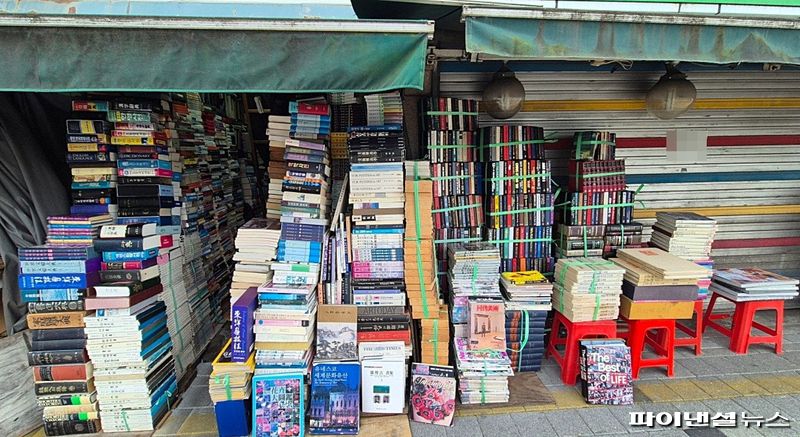
The used bookstores that once bustled with students looking for books, and the printing alley where orders for business cards and flyers kept coming in, are now more noticeable for stacks of books and cardboard boxes than for customers. Even so, some people still keep their doors open despite fewer visitors and lower prices. We looked at the present-day lives of these long-standing workplaces in the alleys of Cheonggyecheon and Euljiro.
[Financial News] "People don't read books as much as they used to."
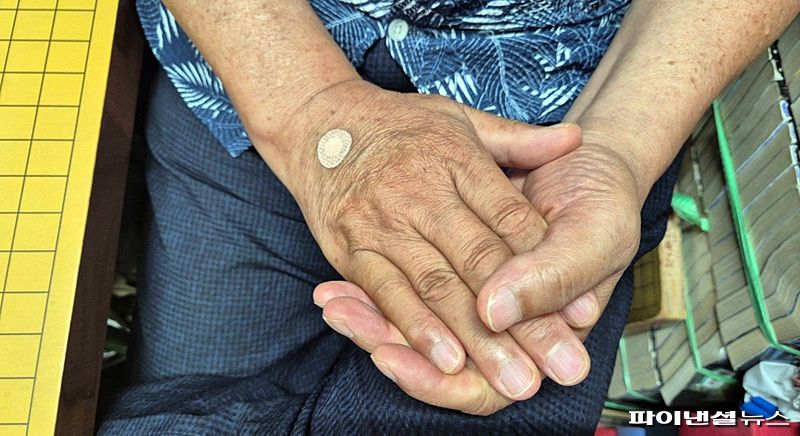
That was what a bookstore owner in his 70s, identified as A, said while sitting between the shelves at Cheonggyecheon used-bookstore street in Jung-gu, Seoul, on the afternoon of the 31st of last month. A small bandage was stuck on the back of his hand. Years of flipping, bundling, and moving books were etched into his knuckles.
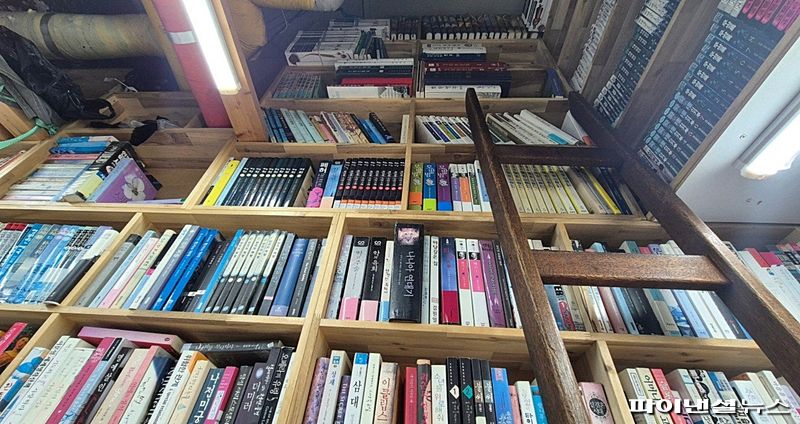
The shop was cramped. Books lined both walls almost up to the ceiling, and more stacks were piled on the floor. A black plastic bag and packets of instant coffee hung on one side. In front of the tall shelves, a wooden ladder was leaning at an angle. When a customer asked for an old major textbook or a book that was out of print, the owner said he would climb the ladder and check the upper shelves.
A said he has been selling books since 1975. That gives him more than 50 years in the trade. "Business was still decent until the mid-2000s," he said. "In the past, students would come out to buy books as soon as the new school term started. In March, I was so busy I couldn't even eat lunch."
The customers he remembered from the old days were mostly students. Middle and high school reference books, college textbooks, and major-specific books sold well, he said. Cheonggyecheon used-bookstore street was where students who could not afford expensive new books came to find used textbooks. "College students used to come here and buy their textbooks," A said. "Now, hardly anyone like that comes anymore." He added, "These days, people look for books on YouTube or through apps."
Stacks of books remain, but customers have dwindled
Along the street, used books were lined up in rows. Bibles and hymnals, novels, humanities books, language textbooks, and old complete collections were tied together with string. Some shops had placed books outside their doors, while others stood empty with their shutters down. At one shop marked for lease, cloth covered the entrance. Under an old signboard, only the bookstore name remained to show that this had once been a place of books.
Once, Cheonggyecheon used-bookstore street was a place where students and readers flocked to find books. The street was designated a Seoul Future Heritage site in 2013. According to materials from the Ministry of Culture, Sports and Tourism (MCST) on Humanum 360, the area took shape as used bookstores began opening one by one from 1959, and by the 1970s about 200 shops were thriving. Later, the rise of large bookstores, online used-book platforms, and a decline in the reading population left only about 20 shops by the mid-2010s. As of the 31st of last month, when this reporter visited, only about 10 used bookstores remained.
The decline in bookstores also reflects a broader drop in the number of people reading books. According to the "2025 National Reading Survey" released by MCST in March, the annual comprehensive reading rate among adults was 38.5%. The paper-book reading rate was 28.8%, and adults read an average of 2.4 books a year.
The changes A feels are not far from those numbers. "People simply don't read books as much as they used to," he said. "Those who do come ask about philosophy books or humanities and social science titles, but even those don't come in as often as before."
But the bookstore was more than just a place to buy and sell books. A brought up a regular customer in his 90s. "He used to run a used bookstore here himself. He's been coming to Cheonggyecheon for more than 50 years," he said. "He says all his friends have passed away and he has no one left to talk to, so he still comes several times a week." Even if they do not buy books, some people stop by the shop and sit for a while.
Euljiro printing alley also says, "Large orders have shrunk ... nobody looks at calendars anymore"
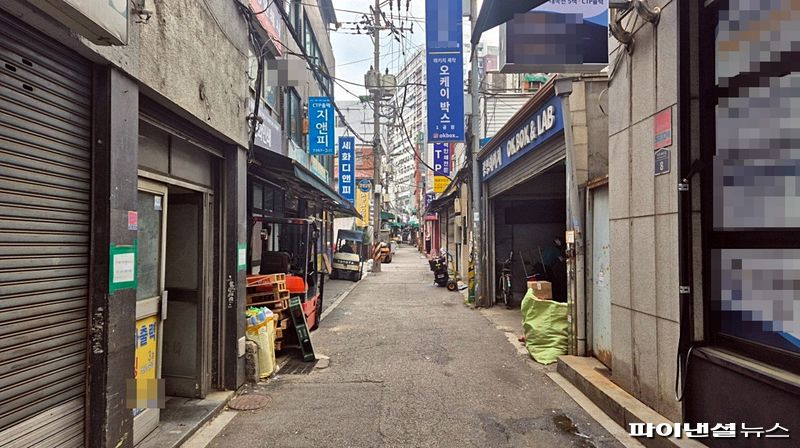
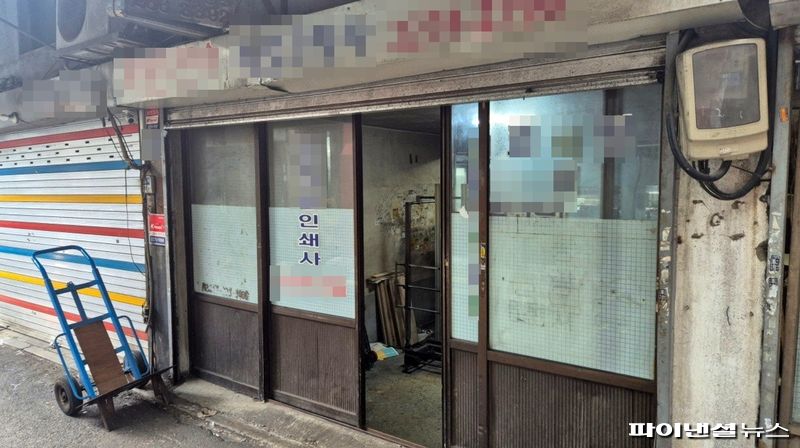
The situation was similar in Euljiro printing alley, not far from Cheonggyecheon. In the alley visited that same day, signs reading "printing," "binding," "coating," and "business cards" were packed closely together. Inside the narrow alley stood an old paper cutter, cardboard boxes, and handcarts. Some shops were open, but many others had their shutters down.
A printing business owner in his 50s, identified as B, said that "business cards and flyers are not what they used to be." "These days, many people place orders through apps or online," he said. "Even when small orders come in, the unit price is low, and large-volume orders have decreased." He added, "Sometimes the waiting time is longer than the time I spend with the machines running."
He also said the calendar orders that used to come in every year-end are no longer what they once were. When asked about promotional items such as calendars, another printing business owner, identified as C, replied, "Who looks at calendars these days? Everyone just uses their phone."
Euljiro and Chungmuro printing alleys were once the center of Seoul's printing industry. According to the Seoul Metropolitan Government's newsletter Seoul Sarang, this area once handled a large share of the city's printing business, and the number of people working in printing-related jobs reached about 20,000.
But orders for business cards, flyers, and booklets are now often placed through online printing platforms. Book printing volumes have also shifted to large-scale printing facilities. Small print shops in the alley are surviving on quick turnaround, finishing work, and small orders, but merchants say "there is no longer the kind of volume that used to come in all at once."
For small business owners overall, the burden of closure is far from small. According to an analysis of closed businesses released by the Ministry of SMEs and Startups in June, 976,000 businesses closed in 2025, with a closure rate of 8.64%. In a survey of 1,500 small business owners who had closed within the past year, 70.9% cited "worsening profitability and weak sales" as the main reason for shutting down. At the time of closure, 68.5% said they had debt, and the average debt amount was 85.31 million won.
Used bookstores and print shops were businesses that depended on customers coming in person. If a customer named an out-of-print title, the owner would search the shelves from top to bottom and find it. Business cards and flyers were ordered by matching paper thickness and color. But now online searches and order screens have taken their place. The shops left in the alleys are carrying on day by day amid fewer regular customers, old inventory, and lower prices.
That change was visible inside A's bookstore as well. The books still filled every shelf, but the number of people coming to look for them was nothing like before. A stared at the upper shelves for a while. Old books were still packed tightly beside the ladder. "I've never seen business this bad," he said. "Still, if that's the way the times are, you have to accept it."
After pausing for a moment, A turned his gaze back to the shelves. Then he added, "Still, people who know about this place do come. Those who know it's here will find their way here."
We record the stories of real lives in print. Even if the words are rough, we preserve the voices gathered on the scene. From alleys and markets to someone's workplace, the record of an ordinary day we may have passed by comes to you, our readers. To receive [Recorder of the Low Places] comfortably, please subscribe to the reporter profile page.
[email protected] Han Seung-gon Reporter