Cheong Wa Dae Says It Will Begin Importing Argentine Crude Oil Next Year, Diversifying Supply Lines to South America
- Input
- 2026-08-01 03:59:58
- Updated
- 2026-08-01 03:59:58
At the summit, Lee and Milei agreed to significantly expand cooperation on critical mineral supply chains between the two countries. They also moved to begin importing Argentine crude oil in earnest, finalized negotiations on a double taxation avoidance agreement, and agreed to resume negotiations on a Korea-MERCOSUR trade agreement within the year, broadening the scope of economic cooperation.
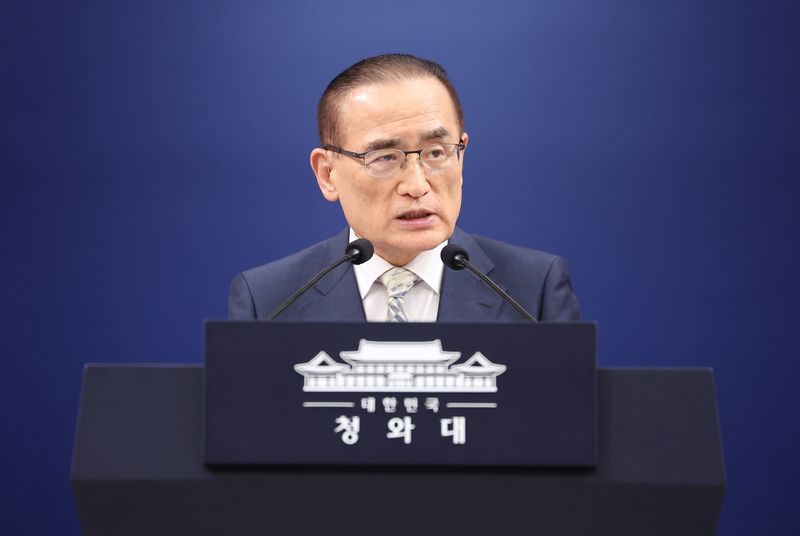
Wi Sung-lac, head of the National Security Office at Cheong Wa Dae, gave a briefing on the summit results at a press center in Buenos Aires on the same day. He said, "We have established a cooperation framework for critical mineral supply chains needed by future industries." He added, "During this visit, the two countries signed a Memorandum of Understanding (MOU) on critical minerals cooperation, under which they will share information on policies and investment systems related to critical minerals and promote investment and joint projects by companies from both countries across the entire value chain, including lithium exploration and mining." In addition to lithium projects, the government plans to seek expanded investment opportunities for Korean companies in new critical mineral sectors such as copper.
Wi also said, "We have created a practical turning point that could expand oil supply lines to South America." He added, "Korean companies conducted a pilot import of Argentine crude oil this year, and based on that, imports are expected to begin next year." The specific volume has not yet been decided, but the move is expected to broaden Korea's crude oil supply lines, which are concentrated in the Middle East, toward South America and improve energy supply resilience by reducing geopolitical uncertainty.
Korea and Argentina will also expand energy cooperation beyond crude oil to include natural gas and nuclear power, while identifying specific joint projects together.
The two sides also improved institutional conditions to support Korean companies' investment and market expansion. Wi said, "The two countries have finalized a double taxation avoidance agreement, which is expected to reduce the tax burden on Korean companies operating in Argentina and improve predictability in the investment environment." He added, "They also plan to push for an early resumption of negotiations on the Korea-MERCOSUR trade agreement to expand access for Korean companies to the South American market."
In the food sector, the two countries will actively pursue related consultations so that Korea can be designated as a country under Argentina's high sanitary surveillance system.
They also agreed to restart the Joint Economic Committee and the Energy and Resources Cooperation Committee. The Joint Economic Committee will broadly review trade, investment, business difficulties, and market access issues, while the Energy and Resources Cooperation Committee will focus on cooperation projects involving lithium, copper, crude oil, gas, and nuclear power.
In addition, the two sides will work to conclude a mutual recognition agreement on driver's licenses as soon as possible, identify new cooperation projects in defense, space, Antarctica, and health, and pursue talks to expand cultural exchanges, educational cooperation, and people-to-people exchanges.
Wi emphasized, "The two leaders assessed that this visit has laid the foundation for a new leap forward in bilateral relations, and they agreed to expand mutually beneficial, practical cooperation in a wide range of areas, including trade, investment, critical minerals, energy supply chains, artificial intelligence (AI), defense, and quarantine." He added, "They also shared the view that they should quickly deliver results that people can feel."
[email protected] Choi Jong-geun Reporter