Honam Semiconductor Exemption from the 52-Hour Workweek... From Calls for Nationwide Application to Backlash Over 'Labor Rollback'
- Input
- 2026-07-31 18:36:44
- Updated
- 2026-07-31 18:36:44
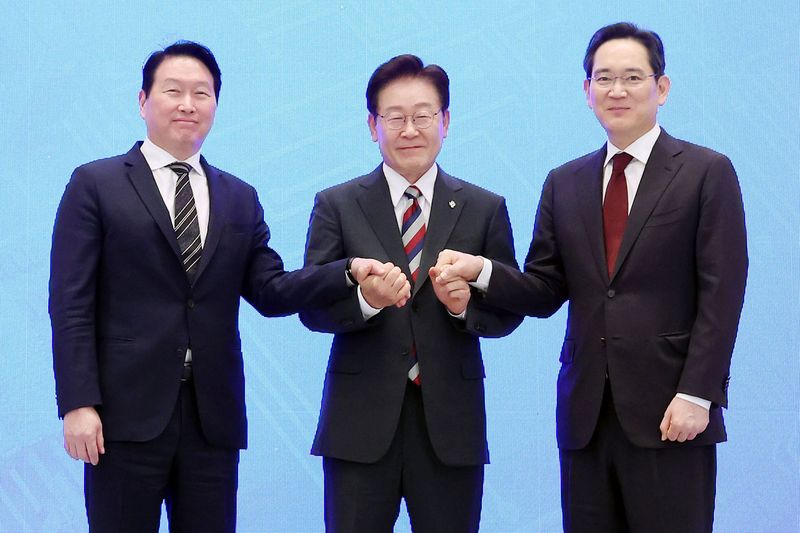
[Financial News] The Lee Jae Myung administration and the Democratic Party of Korea (DPK) are pushing to exempt non-capital region mega special zones, including the 800 trillion won semiconductor investment in Honam, from the 52-hour workweek system. The People Power Party said the exemption should apply nationwide, not only in Honam, while the Progressive Party denounced the move as a "labor rollback" and called for it to be stopped.
Ruling and opposition parties discuss excluding only the top 3% of developers from work-hour caps
According to political sources on the 31st, the Special Act on Mega Regulatory Free Zones, which is being prepared as a key bill for the government-led three major mega projects, is expected to include a "white-collar exemption" that would lift the 52-hour workweek limit for certain workers, such as those in research and development (R&D). The deregulation would apply only to mega special zones outside the capital region, including Honam, Chungcheong, and Yeongnam.
The Ministry of Employment and Labor (MOEL) is said to have recently briefed lawmakers from the DPK on the National Assembly Committee on Climate, Energy, Environment and Labor about plans to ease labor regulations in the mega special zones, including the white-collar exemption.
Specifically, the measures include excluding managers and researchers in the top 3% of earners from the 52-hour weekly cap and from overtime, night, and holiday pay; extending the settlement period for flexible working hours from the current one month to six months; allowing fixed-term workers to have their contracts extended by an additional two years beyond the current limit of two years and receive a fair allowance when their contracts end without conversion to permanent positions; and expanding dispatch work and allowing longer assignment periods only for specialized industries designated by the Presidential Committee on the Era of Local Autonomy.
People Power Party says if semiconductor importance is the basis, the same rules should apply nationwide
The People Power Party pointed out that the DPK had opposed an exemption clause for R&D workers under the 52-hour workweek when the Special Act on Semiconductors was being drafted, calling it hypocritical. It also argued that the exemption should be made possible nationwide, including in the capital region.
People Power Party lawmaker Koh Dong-jin, a former Samsung Electronics executive, introduced a revision to the Special Act on Semiconductors on the same day that would add an exemption from the 52-hour workweek. The bill would recognize special work-hour treatment through a written agreement, based on factors such as income level and work style, while requiring additional overtime pay and health protection measures.
Koh said, "If the same semiconductor R&D work is subject to different labor-hour rules depending on whether a plant is in Honam or another region, it would undermine fair competition among companies and violate equity for workers." He added, "If the national importance of the semiconductor industry and the special nature of the work are the basis for the work-hour exemption, then it should be applied equally nationwide, regardless of whether the region is Honam or Yongin."
Progressive Party, backed by labor backlash, demands halt to 'unconstitutional idea'... Some in the ruling party also express concern
The Progressive Party said the 52-hour workweek exemption amounts to a labor rollback and should be stopped. The party voiced its opposition after the two major labor federations, the Korean Confederation of Trade Unions (KCTU) and the Federation of Korean Trade Unions (FKTU), also reacted strongly.
Progressive Party lawmaker Jeong Hye-gyeong criticized the plan, saying, "If profits are expected, then workers' conditions should improve, not deteriorate. It is common sense." She added, "If the government gives companies various deregulation benefits while forcing the public to accept expanded dispatch work, the exclusion of R&D workers from the 52-hour workweek, and unpaid overtime, that is an illegal and unconstitutional idea that seeks to produce results by exploiting the public."
Concerns similar to those raised by labor groups and the Progressive Party are also reportedly emerging within the DPK. Kang Jun-hyun, the DPK's chief spokesperson, told reporters after the Supreme Council meeting on the day that the issue of a 52-hour workweek exemption came up in the MOEL briefing on climate issues, but no conclusion has been reached yet. He added that there are differing views within the party and that it will make a decision after sufficient deliberation.
[email protected] Kim Yun-ho Reporter