Acting Prosecutor General Koo Ja-hyun resigns over passage of bill abolishing supplementary investigative powers, saying it undermines the essence of the prosecutor system
- Input
- 2026-07-31 18:23:38
- Updated
- 2026-07-31 18:23:38
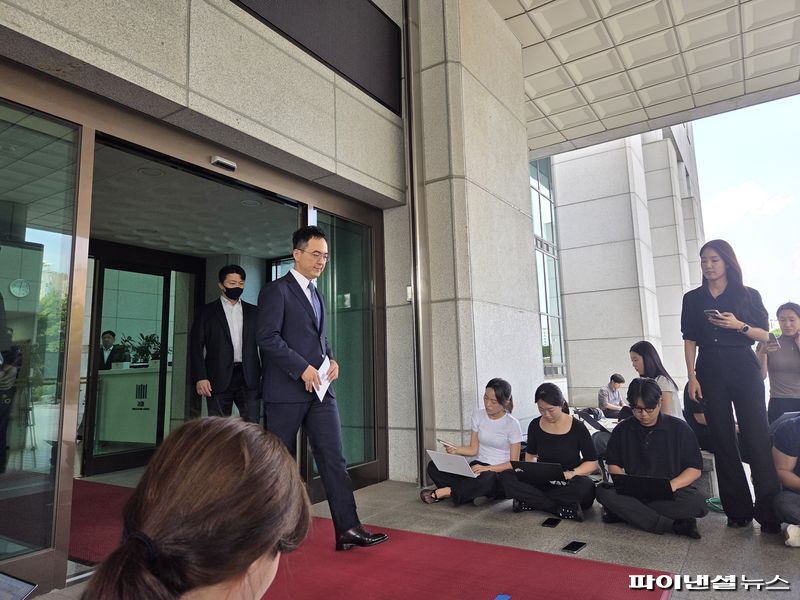
Koo met reporters as he was leaving the SPO in Seocho-gu, Seoul, at 6:01 p.m. on the 31st. "I just submitted my resignation," he said. "I also deeply feel the responsibility for the revision of the Criminal Procedure Act."
He added, "I have repeatedly raised concerns that under this revision, prosecutors would have no choice but to decide whether to indict based only on investigative records, that it would be difficult to fully protect victims, and that it would create an inefficient structure that takes a great deal of time and money." He continued, "It is regrettable and hard to hide my sense of helplessness that the bill passed as it was, without these concerns being accepted."
"The prosecution must reflect on the parts where it failed to earn public trust," he said. "But for that reason, institutional reform should not be carried out in a way that undermines the essence of the prosecutor system, which exists to uncover the substantive truth and protect victims and other parties involved in a case." He added, "Even if the revision passed by the plenary session of the National Assembly is sent to the government, I earnestly ask that you take another look at whether there will be any gaps in the system when the law takes effect, and whether it will be sufficient to protect the public."
The key point of the revision to the Criminal Procedure Act passed by the plenary session of the National Assembly on the day was the complete abolition of prosecutors' supplementary investigative powers. Article 196 of the law, which stated that "a prosecutor shall investigate the suspect, the facts of the crime and the evidence when he or she deems that there are grounds to suspect a crime," was entirely deleted in this revision.
By contrast, provisions on the right to request supplementary investigations were detailed in Article 197 of the same law. Judicial police officers must faithfully carry out supplementary investigations in line with the request within one month from the date they receive such a request from a prosecutor, and they must notify the prosecutor of the results.
The period for supplementary investigations may be extended by up to one month upon application by a judicial police officer or at the officer's own discretion. If it is difficult to expect an appropriate supplementary investigation from the judicial police officer, a request for supplementary investigation may be made by designating a superior investigative agency of the police office to which the officer belongs, or another investigative agency.
[email protected] Kim Dong-gyu Reporter