The Future of Interest Rates on the Dot Plot: Compass or Shackle? Debate Grows Over Its Usefulness
- Input
- 2026-08-30 14:37:41
- Updated
- 2026-08-30 14:37:41
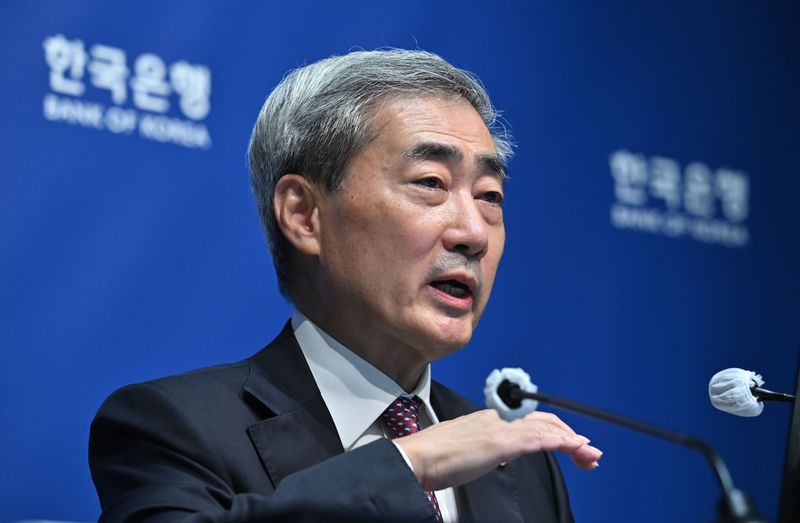
Monetary policy experts generally acknowledge the dot plot's effectiveness. But some argue that the board itself may end up constraining the present with the past, while also creating noise in the bond market.
In a survey of eight market experts conducted by Financial News on the 30th, five said the dot plot should be kept, one supported conditional retention, and two called for abolition.
Those in favor of keeping it generally praised its role as a communication tool. One expert said, "Given that members of the Monetary Policy Board have limited direct contact with the public, clues or hints about the future direction of monetary policy are important reference points." The expert added that it also helps stabilize markets.
The Bank of Korea also places weight on these positive functions. It says the dot plot should provide information needed to manage expectations for long-term interest rates and to set medium- to long-term policy direction. Former Deputy Governor Ryoo Sangdai also said it has "a positive empirical effect on the market."
Even among those who want to keep the dot plot, some say changes are needed. The expert who chose conditional retention called for extending the horizon. In the past, when the governor issued verbal forward guidance, the horizon was three months. The current dot plot uses a six-month horizon, and the expert said it should be extended further.
The Bank of Korea also considered a one-year horizon in a simulation last year, but concerns were raised that the dispersion of the dots could widen. Another expert said, "The dots should be differentiated by member." There are concerns about political pressure on individual members, but if each member is not assigned a fixed color and the dots are displayed differently each time, the risk of identification can be reduced to some extent.
Others agreed with abolishing it. One expert pointed to an anchoring effect tied to past decisions or data. The implication is that, even if only conditionally, members of the Monetary Policy Board cannot help but be bound by earlier decisions. The expert noted that the dot plot was "an effective strategy in the zero-interest-rate era," when the key question was how long monetary easing could continue without rate cuts.
Another expert who questioned the dot plot's usefulness said, "Domestic liquidity and market interest rates now tend to move ahead of the policy rate, and expectations for the benchmark rate decision often follow only afterward." The expert added, "In this environment, the dot plot and forward guidance are more likely to create noise in the bond market."
Above all, the changing stance of the Federal Reserve System (Fed) is giving such arguments added legitimacy. In the first Federal Open Market Committee (FOMC) policy statement after Kevin Warsh took office as chair in June, the long-used term "forward guidance" was removed, and Warsh did not place his own dot on the plot. Some even expect the dot plot could be abolished within the year.
The Fed's view is that active communication, symbolized by the dot plot, can make markets look only to the central bank and weaken their own price-discovery function.
The Bank of Korea faces the same dilemma. Markets tend to treat the dot plot as a promise, which means there is always a risk that if the policy path moves outside that range, it will be seen as a reversal of course.
Another limitation is that even if one or two of the seven members of the Monetary Policy Board change their view, it can still be interpreted as the board having changed direction. It is also impossible to tell which of the three dots each member gives the greatest weight to.
[email protected] Kim Tae-il Reporter