Will the Drug Price Cut Reshape Korea's Pharmaceutical Industry? The Shift to R&D-Driven Growth Faces Its First Major Test
- Input
- 2026-07-31 12:39:18
- Updated
- 2026-07-31 12:39:18
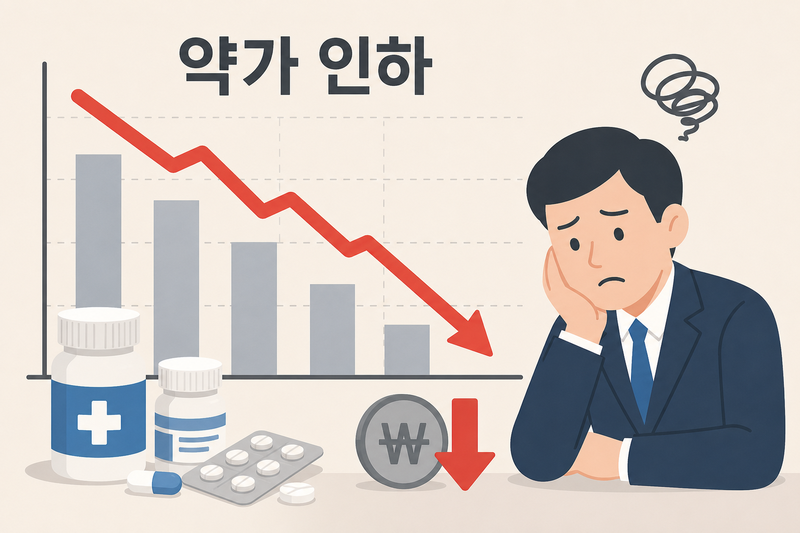
[Financial News] Tension is rising across South Korea's pharmaceutical industry as the government's revised pricing system for generic drugs takes effect on August 1.
The government says the reform is designed to ease the burden on National Health Insurance finances by lowering the benchmark used to set generic drug prices, while also steering the industry toward new drugs and research and development, or R&D. But pharmaceutical companies are worried that weaker profitability could disrupt the supply of low-cost essential medicines.
The overhaul is also expected to do more than simply cut prices. It may become a turning point that changes the business model of Korea's pharmaceutical industry.
Analysts say companies will now have to move away from the old model of producing large volumes of generics to secure stable sales. Instead, they must build growth engines based on new drugs, improved new drugs and global technology exports.
Generic drug prices lowered to 45%: mass-production model takes a hit
According to the pharmaceutical industry on the 31st, the key point of the reform is to lower the pricing benchmark for newly listed generic drugs from 53.55% of the original drug price to 45%.The government plans to adjust generic drug prices to reduce pressure on National Health Insurance finances and use the savings to strengthen coverage for innovative new drugs and essential medicines.
The background to the government's move lies in the structural limits of Korea's pharmaceutical industry. Many domestic drugmakers have expanded sales through generics and improved new drugs, but officials believe greater R&D investment is needed to produce innovative drugs that can compete in global markets.
The industry broadly agrees that, in the long run, the reform could serve as a catalyst for shifting the sector toward an R&D-centered structure. Some companies are already internalizing drug candidates and research personnel, while strengthening capabilities from clinical development to approval and technology transfer.
The problem is that not every company can become an R&D-driven business overnight. Smaller and mid-sized pharmaceutical firms often reinvest cash flow from generics into other drug development and production, so lower prices do not necessarily translate into higher R&D spending.
Drug development requires years of investment and carries a high risk of failure, from identifying candidates to preclinical and clinical trials and regulatory approval. If generic profitability falls without enough compensation for new drugs, companies may actually lose the capacity to invest in research and development.
Supply concerns grow for low-cost essential medicines and exit-prevention drugs
Another major issue in the pricing reform is the stability of supply for essential medicines and medicines protected from market exit.Essential medicines are drugs that are indispensable for patient treatment but difficult to supply stably through market forces alone. Medicines protected from market exit are also vital for patient care, but their low profitability means manufacturers may stop producing them.
Examples include normal saline injection, basic IV fluids, epinephrine injection used in emergencies, heparin and Acetaminophen.
If generic prices fall across the board, products that are already low-margin could become even less viable. Drugmakers worry that they may have stronger incentives to halt production or reduce output for items that cannot cover manufacturing costs and equipment maintenance.
To address this, the government plans to designate pharmaceutical companies that meet certain requirements as "supply stability leading companies" and apply bonus pricing for newly listed generics for up to four years.
But the industry says the current criteria do not fully reflect actual contributions to supply. In particular, many exit-prevention drugs are low-priced products, making it difficult to meet the required share based on claimed sales value.
Industry officials also argue that, because many companies improve production efficiency by separating factories into subsidiaries or affiliates, bonus eligibility should include output from those entities as well, based on actual production contributions.
One industry source said, "If costs, plant maintenance expenses and minimum production volumes are not fully taken into account, it will be difficult to prevent production stoppages for low-cost essential medicines. To improve supply stability, we need a realistic incentive system that reflects how much a company actually contributes to production."
"More predictability than price": the need for a virtuous R&D policy cycle
What the pharmaceutical industry emphasizes most in this reform is not the size of the price cut itself, but the predictability of the system.Because drug development can take several years, or even more than a decade, from investment decisions to product launch, companies need to be able to forecast future pricing and compensation levels to plan long-term R&D spending.
This year, the burden is even heavier because the generic drug pricing reform is being implemented alongside other price-cutting measures such as the price-volume agreement. The maximum price reduction rate under that system has also been raised from 10% to 15%, increasing pressure on drugs with rising sales.
In the industry's view, the virtuous cycle the government hopes for — lower generic prices, more R&D investment and more innovative drug development — will only work if price cuts are paired with stronger rewards for new drugs and improved new drugs, tax incentives for R&D and support for clinical trials.
For essential medicines and medicines protected from market exit, the industry also says a separate supply-stability policy is needed. That policy should consider not only prices, but also production costs, plant maintenance expenses and distribution structures.
The pricing reform taking effect on August 1 is expected to mark an important turning point as Korea's pharmaceutical industry moves away from a generic-centered business model and toward an R&D-centered structure.
Whether it can truly promote industrial innovation, as the government hopes, will depend less on the price cuts themselves and more on whether a sophisticated compensation system is built that allows companies to keep investing in R&D in a predictable environment.
[email protected] Kang Jung-mo Reporter