"The bar for retail investors has gone up"... Samsung Electronics and SK hynix leveraged ETFs now require 30 million won in cash starting today
- Input
- 2026-07-31 10:55:38
- Updated
- 2026-07-31 10:55:38
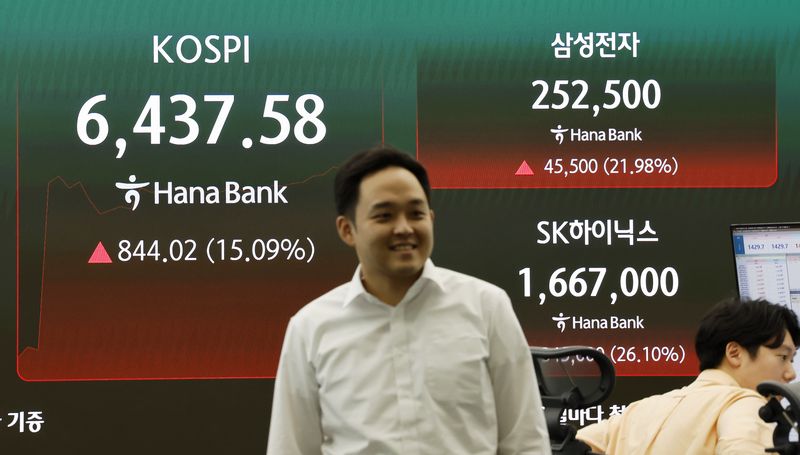
[Financial News] Government measures to curb overheated investment in single-stock leveraged exchange-traded funds (leveraged ETFs) tied to Samsung Electronics and SK hynix will take effect in earnest. From now on, investors must hold at least 30 million won in cash, rather than stocks or bonds, in their securities accounts to buy these products.
According to the financial investment industry on the 31st, the government’s tightened deposit requirement for single-stock leveraged products takes effect starting today.
Earlier, financial authorities announced corrective measures, including stricter entry requirements for investors, as concerns grew that single-stock leveraged products were increasing stock market volatility.
The minimum deposit requirement has been tripled from 10 million won to 30 million won, and the range of assets recognized as deposits has been sharply narrowed.
Previously, up to 70% of the market value of substitute securities such as stocks, ETFs and bonds in an account could be counted toward the deposit requirement. Starting today, only cash will be recognized as a deposit.
As a result, even if an investor holds tens of millions of won worth of stocks or ETFs in a securities account, they cannot buy a new single-stock leveraged ETF unless they have at least 30 million won in cash.
The minimum deposit requirement must also be maintained throughout the investment process. If an investor deposits 30 million won in cash and then uses 20 million won to buy a single-stock leveraged ETF, they must replenish the cash balance to 20 million won in order to make additional purchases.
However, selling an already held single-stock leveraged product remains possible regardless of whether the minimum deposit requirement is met.
The timing for when proceeds from stock or ETF sales are recognized as part of the deposit requirement will also change.
Under the previous rule, proceeds from the sale of substitute securities were immediately recognized as equivalent to cash. Going forward, they will only be counted toward the minimum deposit requirement after two trading days, or T+2, when the actual sale proceeds are deposited into the account.
Even if an investor sells holdings and converts them into 30 million won in cash, they will not meet the deposit requirement on the day of the sale. The proceeds will be recognized as the minimum deposit required to invest in single-stock leveraged products only from the day the money is actually deposited, which is two trading days after the sale. This measure is intended to prevent excessive turnover, such as selling an ETF and immediately buying it back on the same day.
Loans secured by sale proceeds will also be excluded from the minimum deposit requirement. Financial authorities expect the measure to curb ultra-short-term trading by individual investors and raise the entry barrier, helping ease the concentration of funds in specific stocks.
Additional measures are also in the pipeline. Authorities are discussing moving up a plan to expand the minimum ETF trading unit from the current one share to 20 shares, earlier than the originally planned November timeline. They are also expected to push ahead with setting individual investment limits and introducing simulated trading.
The financial investment industry is also implementing voluntary regulations to reduce market volatility caused by single-stock leveraged ETFs.
Asset management companies plan to spread out rebalancing trades that had been concentrated just before the market close, reducing their impact on underlying assets. They also plan to cut the trading volume of liquidity providers and strengthen management of tracking errors.
[email protected] Ahn Ga-eul Reporter