"Who would foolishly open a '4% savings account'?" Then KOSPI crashed, and people said, "I should have just saved instead" [World of Retail Investors]
- Input
- 2026-08-02 06:00:00
- Updated
- 2026-08-02 06:00:00
[Financial News] #. Office worker A, 38, had a minor quarrel with his friend B earlier this year. The argument started when A, who had been caught up in the excitement of stock investing, complained about his friend’s habit of putting money only into installment savings. When A urged him to buy stocks and said, "Who would foolishly save money in the era of KOSPI 9,000? That’s just a losing move," B got angry, and the exchange escalated into a fight.By June, when KOSPI was racing toward 9,000, A’s judgment seemed right. In group chats with friends, people kept saying, "You have to get in now," and screenshots proving they had opened stock accounts kept circulating. In the group chat full of friends obsessed with stocks, only B stayed quiet.
Then July arrived, and the group chat was filled with groans. A’s account, which had boldly gone into the SK hynix leverage ETF, quickly turned deep red as well. As everyone complained about their losses, someone said to B:"Installment savings guarantee your principal, so that must be nice. I should have just opened one too."
FOMO, Gone Without a Trace
Just two months earlier, people were consumed by fear of missing out (FOMO). As news spread that KOSPI had surged past the 9,000 mark, people rushed into stocks one after another. Customer deposits swelled to as much as 140 trillion won in early June, and the margin loan balance hit a year-to-date high of 38 trillion won on June 24.
But as KOSPI plunged, the people who had been suffering from FOMO disappeared too. As of the 24th of last month, customer deposits had fallen to 106 trillion won, down by nearly 34 trillion won in just one month. Posts in stock group chats and online communities increasingly disclosed loss amounts or asked whether to sell, andinstead of FOMO, a new term emerged:JOMO, or the joy of missing out, reflecting relief at having avoided the downturn.
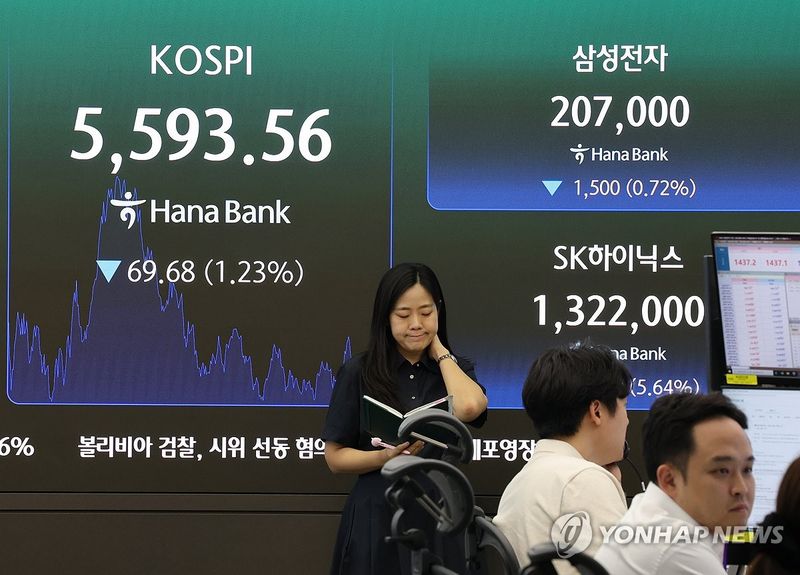
It was that kind of market. KOSPI’s monthly drop in July was -28.94%. That was the steepest decline since 1990, surpassing both the 1997 IMF Crisis (-27.25%) and the 2008 Global Financial Crisis (GFC) (-23.13%). Compared with the all-time high of 9,114.55 on June 22, the index had fallen 33.91%. KOSPI’s market capitalization shrank from 7,449 trillion won to 4,993 trillion won, wiping out 2,456 trillion won.On the last day of July, the 31st, the market showed signs of recoverythanks to a sharp rally in semiconductor stocks on Wall Street, but it still failed to recover all of the losses after prices had fallen to near-bottom levels.
A Sudden Reversal in the Mood of "Who Would Foolishly Save Money?"
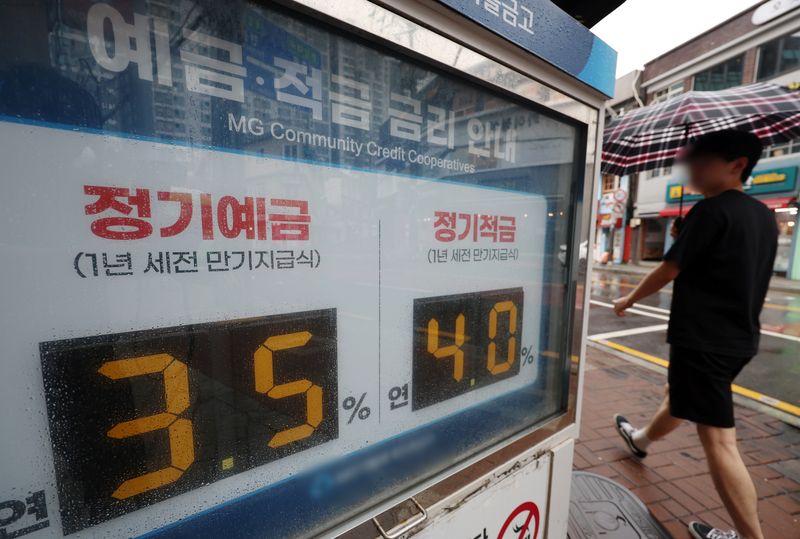
In the space left by FOMO, a very different emotion took hold. More people began turning back to safe assets they had ignored for some time. According to the financial sector, the combined balance of time deposits at the five major banks stood at 971.0883 trillion won as of the 24th of last month. That was up 21.6885 trillion won from the end of June, marking the largest increase of the year. In June, the increase was only 4.6837 trillion won, but in July the pace accelerated, with the gain expanding to about 4.6 times the previous month’s level.
This is believed to reflect banks raising deposit rates one after another after the Bank of Korea lifted the base rate from 2.5% to 2.75%. Major commercial banks raised the rates on their flagship time deposit products this month from the high 2% range to the low 3% range in an effort to attract deposits.
Signs of a Reverse Money Move, and Where the Funds Are Going
As stock market volatility intensified and losses piled up,more people began turning back to bank deposits that guarantee principal.This suggests that, worn down by days of volatile trading and having experienced real losses in the KOSPI crash, individual investors are trying to ease their psychological fatigue by moving into deposits and installment savings that do not carry losses.
The financial sector expects the preference for time deposits to continue for the time being, especially as the possibility of another base rate hike by the Bank of Korea is also being discussed. "As the KOSPI correction has heightened investors’ risk-averse sentiment, demand for deposits is rising instead of bargain hunting," said one banking industry official. "The flow of short-term idle funds into time deposits is likely to continue for now."
I don’t want to become one of those people who keep saying, "I should have bought, I should have sold, I should have held..." Stocks, real estate, and personal finance all seem to be working out for everyone else but me. The world of investing is hard no matter how much you study it, so if you want to receive stories that make you nod in agreement,[World of Retail Investors]please subscribe to the reporter page.We also welcome tips from retail investors who have investment stories they would like to share.
[email protected] Kim Hee-sun Reporter