"Renesas Restarts, TSMC Inspects" — Semiconductor Recovery Moves at Different Speeds
- Input
- 2026-07-31 08:36:10
- Updated
- 2026-07-31 08:36:10
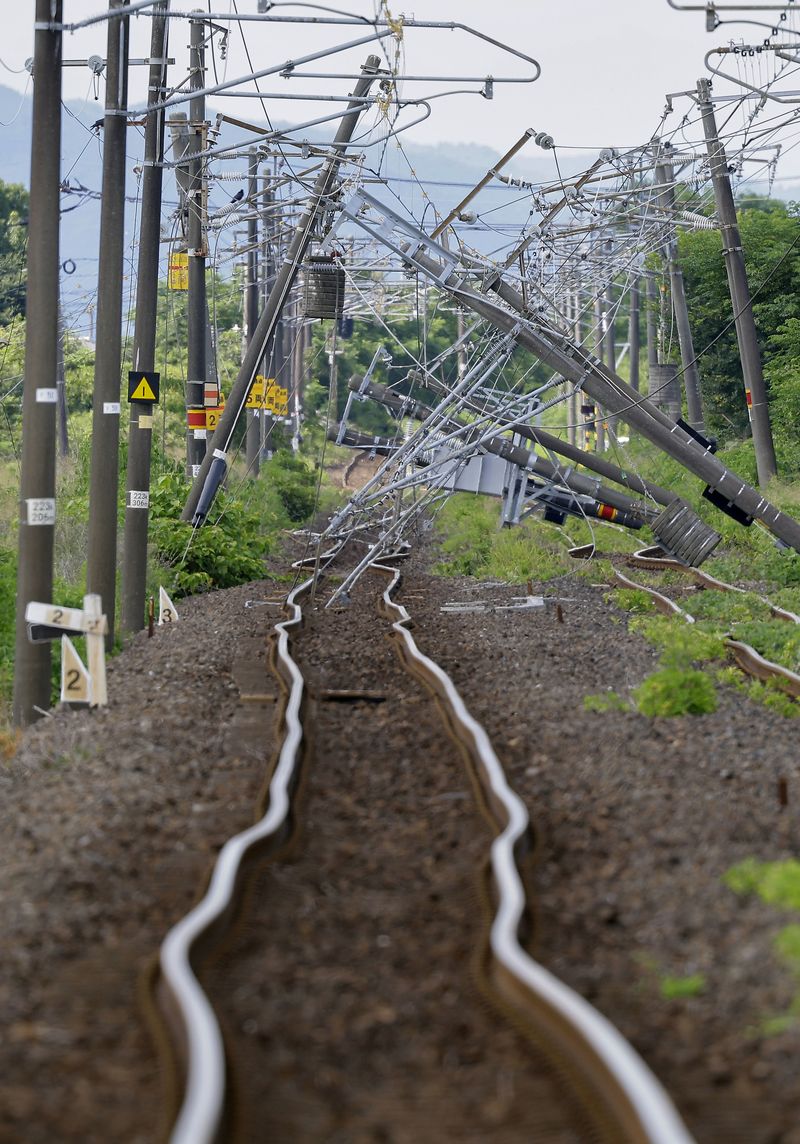
[Financial News, Tokyo = Seo Hye-jin, correspondent] Semiconductor production lines that were halted by the Kumamoto earthquake in Japan have begun restarting in stages. Renesas Electronics, Tokyo Electron, and Mitsubishi Electric are moving quickly to resume production, but TSMC and Sony are expected to need more time before returning to normal operations as detailed inspections of semiconductor manufacturing equipment continue. While most communications networks have been restored, parts of the Kyushu Shinkansen and expressways remain cut off, so supply-chain disruptions are likely to continue for now.■Renesas and others restart factory operations... TSMC and Sony continue inspectionsAccording to Nikkei, Renesas resumed production late on the 29th at its Nishiki plant in Kumamoto Prefecture after confirming the safety of the clean room. Recovery work is also under way at its Kawajiri plant in Kumamoto City, which had drawn close attention because of the scale of the damage, with the goal of restarting production on the 5th of next month.
The Kawajiri plant is one of Japan's representative aging semiconductor factories. It began operations in 1970 and was considered highly vulnerable because it is close to the epicenter. Some wall cracks and water leaks were found, but the clean-room environment, which is essential to production, was confirmed to have been maintained. That made an early restart possible.
Tokyo Electron also began gradually restarting operations at its Kōshi City and Ōzumachi plants in Kumamoto Prefecture from the previous day. It plans to shift to full-scale production from the 3rd of next month. Toshiki Kawai, president of Tokyo Electron, said at an earnings briefing the previous day, "We believe the impact of this earthquake on earnings will be limited."
Mitsubishi Electric also began gradually restarting equipment operations at its power semiconductor plants in Kikuchi City and Kōshi City, Kumamoto Prefecture, from the previous day, and is carrying out final checks for full-scale production.
By contrast, TSMC and Sony plants, which are central to the Kumamoto semiconductor cluster, have not yet set a date for full operations.
TSMC is continuing equipment inspections, saying, "It will take some time to inspect and adjust semiconductor manufacturing equipment."
Local partner companies said demand is surging all at once for cleaning work to remove impurities that have built up inside equipment, as well as for parts replacement. They added that if gas and chemical pipelines used in the production process are damaged, the repair work itself carries risks.
Sony is also continuing safety inspections of its buildings and production facilities. During the 2016 Kumamoto earthquake, semiconductor equipment installed on upper floors suffered major damage, resulting in losses from equipment damage and production disruptions of about 28 billion yen, or roughly 245.3 billion won.
Goldman Sachs said the scale of the damage and its impact on competitiveness will again be key factors for Sony's stock price.
Experts say semiconductor factories take longer to recover than automobile plants because of the nature of the manufacturing process. Semiconductor production involves hundreds of steps, and it is difficult to judge whether manufacturing equipment is abnormal just by looking at it, making detailed inspections and calibration essential.
However, some say recovery has been faster than expected, thanks to stronger earthquake-resistant design and business continuity plans built on past earthquake experience.■Logistics infrastructure recovery remains slow... attention turns to semiconductor companies' earnings briefingsUnlike semiconductor factories, which are moving toward normalization, recovery of logistics infrastructure is slow.
According to JR Kyushu, more than 200 cases of damage, including collapsed sound barriers, were found on the Kyushu Shinkansen section between Kumamoto and Kagoshima-Chuo. Rails were also damaged at Shin-Yatsushiro Station. Since damage assessments are still under way, the timing of service resumption has not yet been decided.
JR Kyushu said Shinkansen service between Hakata and Kumamoto will resume from today, but south of Kumamoto it is still relying on detour operations on conventional lines. Travel time from Kagoshima to Hakata has increased sharply, from about 1 hour and 30 minutes on the Shinkansen to about 9 hours via the detour route.
Highway traffic remains restricted on some sections, and bus services linking Fukuoka, Kagoshima, and Miyazaki have also been suspended. With detour routes taking more than six hours and driver working-hour regulations adding another constraint, operators are struggling to restore normal service.
The airline industry is responding with emergency extra flights. Japan Airlines (JAL) has significantly increased temporary flights on the Fukuoka-Kagoshima route and has also added temporary flights on the Fukuoka-Miyazaki and Haneda-Kumamoto routes. However, most of those flights are already fully booked.
Recovery work is also picking up speed. NTT Docomo, KDDI CORPORATION, SoftBank, and Rakuten Mobile, the country's four major mobile carriers, announced the previous day that all mobile communication disruptions had been restored.
Coca-Cola Bottlers Japan said it plans to restart operations at its Kumamoto plant, which had been shut down, from the 5th of next month. It also said logistics have mostly normalized, but some delivery disruptions remain because of road restrictions.
ENEOS Corporation will resume shipments of gasoline and kerosene from its storage base in Yatsushiro today. Meanwhile, a plant operated by a subsidiary of pharmaceutical wholesaler Suzuken remains shut down, and no restart date has been set.
Market watchers are paying close attention to whether the earnings briefings scheduled for today by Sony, Renesas, and Mitsubishi Electric will provide concrete details on the scale of earthquake damage and the timetable for restoring production.
[email protected] Seo Hye-jin Reporter