Yeongnam Faces 40-Degree 'Deadly Heat Wave'... Heat Illness Alert Issued for Seniors and Outdoor Workers
- Input
- 2026-07-30 18:21:27
- Updated
- 2026-07-30 18:21:27
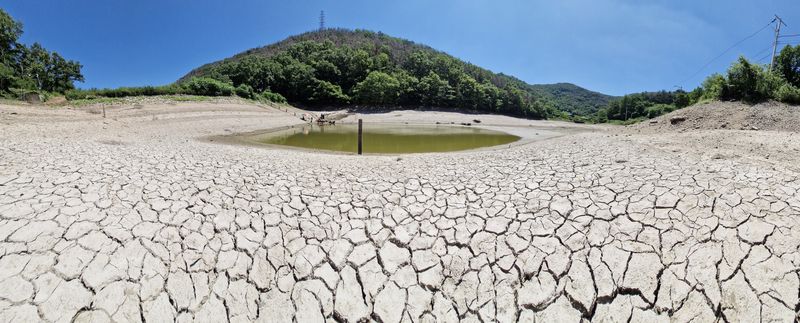
According to the KMA on the 30th, as of 3 p.m. that day, a severe heat wave warning was in effect in western and central Busan, Yangsan, Changwon, Gimhae, Miryang, Uiryeong, and Changnyeong in South Gyeongsang Province. Heat wave advisories also remained in place across most other regions nationwide.
Temperatures in areas under the severe warning climbed to levels that could threaten human health. As of 3 p.m., Yangsan-si in South Gyeongsang Province recorded the nation's highest daily maximum temperature at 40.3 degrees Celsius. It was the second consecutive day above 40 degrees. Such a two-day streak above 40 degrees in one area has occurred only in 2016 and 2018. Busan's Buk-gu reached 39.0 degrees, Gimhae 38.8 degrees, Bukchangwon 38.7 degrees, and Changwon 38.5 degrees, underscoring the extreme heat across the Yeongnam region.
By contrast, temperatures in the Capital Region rose more slowly, but the heat had not gone away. At the same time, the highest apparent temperatures at major locations reached 35.6 degrees in Gumsa, Yeoju, Gyeonggi Province, 35.5 degrees in Pyeongtaek, 35.0 degrees in Namchon, Osan, and 34.8 degrees in Seoun, Anseong. Seoul's highest apparent temperature was 32.6 degrees, Incheon recorded 32.3 degrees, and Suwon 32.1 degrees. Those figures were lower than in Yeongnam, but the sweltering weather continued.
This heat wave is not weakening nationwide so much as shifting in intensity by region. Cloud cover has somewhat limited temperature increases in the Capital Region, while strong sunlight and hot, humid air have made the heat even more severe in Yeongnam. The nationwide heat wave continues, but the epicenter of the most extreme heat has moved to the southern regions. The heat is lingering not only during the day but also at night. Tropical nights, when temperatures do not fall below 25 degrees Celsius overnight, are continuing, driving up demand for air conditioning and raising concerns about fatigue from sleep loss and related health damage. In particular, vulnerable groups such as older adults, children, and outdoor workers face a higher risk of heat-related illness and are urged to take extra precautions.
As the heat wave drags on, heat-related illnesses are also being reported nationwide. Since the emergency room surveillance system was activated on May 15, the cumulative number of heat illness patients has reached 1,557 over a little more than two months. By age group, people in their 60s accounted for 18.8 percent, or 293 cases, followed by those in their 50s at 16.7 percent, or 260 cases. People aged 65 and older made up 30.9 percent of the total, or 481 cases. Health authorities are urging people to avoid outdoor activities during the day and prolonged outdoor work, to drink enough water, and to follow heat wave safety guidelines, including drinking water regularly even if they do not feel thirsty.
[email protected] Reporters Lee Seol-young and Lee Bo-mi Reporter