Special Prosecutor Bill on NEC Passes National Assembly Plenary Session... Investigation Up to 150 Days
- Input
- 2026-07-30 16:05:28
- Updated
- 2026-07-30 16:05:28
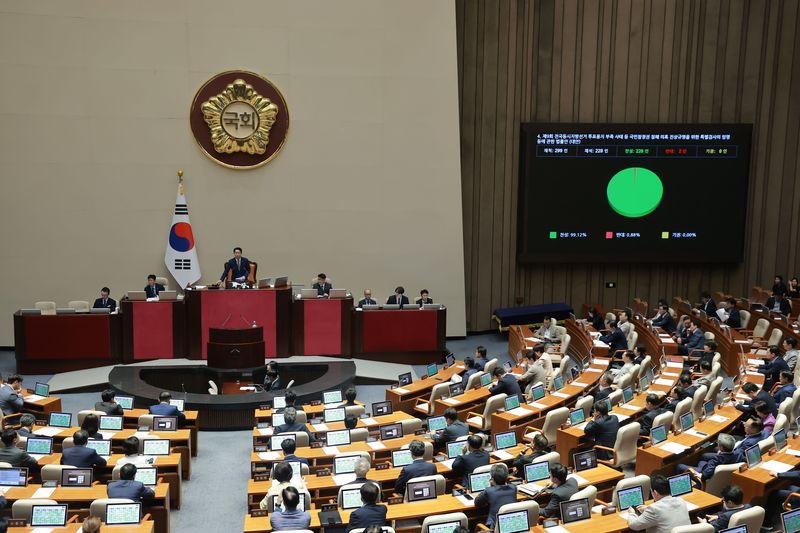
The National Assembly held a plenary session that day and passed the NEC special prosecutor bill. The ruling and opposition parties had initially differed over the scope and targets of the investigation. After several rounds of negotiations through the morning, they reached an agreement, and the bill moved forward quickly.
Under the special prosecutor bill agreed to by both sides, the investigation period is 90 days. After reporting to the president and the National Assembly, it may be extended once for an additional 30 days. It can then be extended one more time for 30 days with the president's approval. In total, the investigation period can last up to 150 days.
The scope of the Special Prosecutor's investigation includes allegations that the public's right to vote was infringed by the shortage of ballots in local elections, as well as allegations of forcing vote counting to proceed without suspension or preservation measures; procedural violations and abuse of authority in the process of lowering the minimum standard for ballot printing volume; computer input errors and manipulation of election statistics, including alleged tampering with turnout figures; poor ballot management; failure, reduction, concealment, or cover-up of reports by officials at relevant agencies regarding the ballot shortage; intentional delays and concealment by NEC staff in investigations and inquiries; cases of poor election administration uncovered during a parliamentary inquiry; cases of lax NEC operations and misconduct related to official duties; allegations of poor management of NEC operations; and cases identified during the Special Prosecutor's investigation.
The Special Prosecutor will be appointed through a public recommendation committee for special prosecutor candidates established in the National Assembly. The committee will receive three recommendations each from the Korean Bar Association (KBA) and the Council of Law Schools, then select two out of the six candidates and recommend them to the president for appointment. The president will appoint one of them as Special Prosecutor.
The Special Prosecutor team will consist of one Special Prosecutor, five deputy prosecutors, 20 dispatched prosecutors, up to 70 special investigators, and up to 70 dispatched government officials.
[email protected] Kim Hyung-gu Reporter