Japan to Cut Food Consumption Tax from 8% to 1%; Low- and Middle-Income Households to Face 'Effectively 0%' Burden
- Input
- 2026-07-30 14:45:41
- Updated
- 2026-07-30 14:45:41
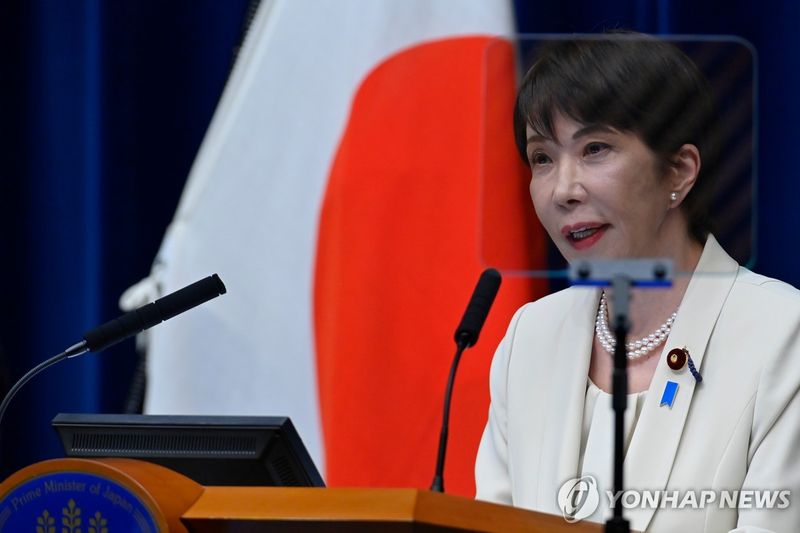
[Financial News, Tokyo = Seo Hye-jin, correspondent] Japanese Prime Minister Sanae Takaichi has formally announced a plan to sharply cut the food consumption tax rate from the current 8% to 1%, the Yomiuri Shimbun and other outlets reported on the 30th. The reduction would be limited to two years, and low- and middle-income households would receive cash payments equivalent to the remaining 1%, effectively eliminating the consumption tax burden. However, disputes over how to secure funding and resistance within the Liberal Democratic Party (LDP) are intensifying, making internal coordination the biggest variable going forward.
According to the Japanese government and the LDP, Takaichi said at an extraordinary party executive meeting on the day that she would push for a plan to lower the food consumption tax to 1% for two years starting in April next year, while providing low- and middle-income households with cash equal to 1% of the tax, effectively making the burden 'effectively 0%.'
Takaichi said, "I judged that lowering the tax rate to 1% is the most appropriate approach," and asked party leaders to gather opinions so the government and ruling coalition could finalize an official policy by early next month.
The Japanese government plans to approve the policy at a Cabinet meeting early next month and submit related legislation to an extraordinary session of the Diet this fall.
The proposal is based on an interim report prepared by a working-level meeting of the cross-party Social Security National Council. Its main point is to cut the food consumption tax to 1% for two years from April 2027 and provide low- and middle-income households with separate payments equivalent to 1%.
The interim report also said a new income-linked support program for low- and middle-income households would be fully introduced from 2029, and that the current tax cut would be a temporary measure until then.
The funding needed for the tax cut is estimated at about 5 trillion yen a year, or 10 trillion yen over two years. The government says it will use increased tax revenue and spending reallocations, and will not issue deficit-financing bonds.
Takaichi emphasized, "To maintain market confidence, we will secure the necessary funding without relying on special deficit-financing bonds." The remark is seen as an attempt to reassure financial markets, which are concerned about worsening public finances and rising interest rates due to the tax cut.
However, opposition is also growing within the LDP.
Former Foreign Minister Kono Taro publicly opposed the plan on the day, saying, "Many problems have been pointed out regarding a consumption tax cut." He argued that there is no guarantee prices will fall by the same amount if the tax rate is lowered, and that prices could rise sharply again after the tax cut ends. He said cash support for households with children should take priority over a tax reduction.
Yuko Obuchi, a former election strategy chief and once a member of the so-called 'inner circle' of the LDP Tax Commission's key decision-making body, also opposed the consumption tax cut and stepped down from her core role on the day. She will remain vice chair of the Tax Commission but will leave the informal inner policy group.
Many within the party remain cautious about the funding source and the sustainability of the system. Takaichi has assigned Vice President Tarō Asō and Secretary-General Suzuki Shunichi, both of whom were skeptical of the tax cut, to coordinate opinions within the party. The LDP is expected to begin full-scale internal discussions from the 31st.
The consumption tax cut is regarded as one of the signature economic policies of the Takaichi administration. However, how effectively it can contain disputes over funding and internal resistance is expected to influence the government's ability to control state affairs going forward.
[email protected] Seo Hye-jin Reporter