The Paradox of KOSPI's Surge: Companies in Need of Cash Say "No to the Stock Market, Yes to Bank Loans"
- Input
- 2026-07-30 12:34:14
- Updated
- 2026-07-30 12:34:14
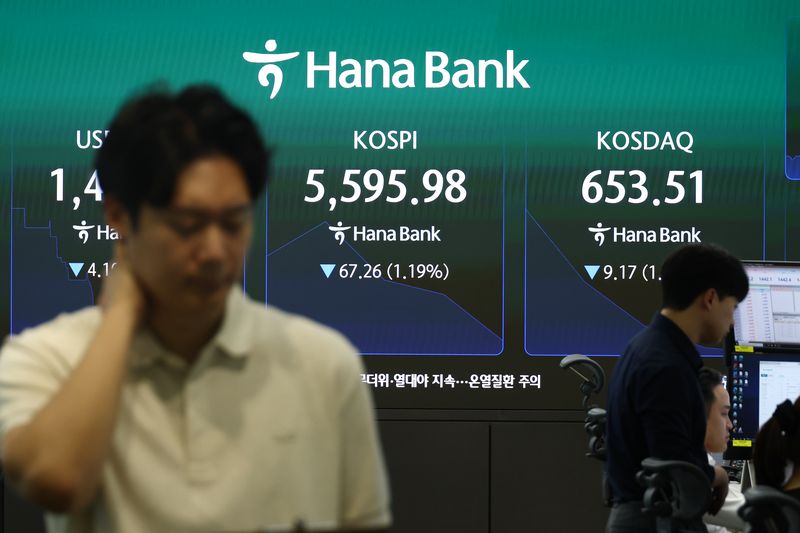
According to a survey on corporate financing conditions and policy tasks conducted by the Korea Chamber of Commerce and Industry (KCCI) among 204 nonfinancial companies, including 102 listed firms and 102 unlisted firms, respondents identified "expanding corporate lending by easing risk weights" (52.5%) as the most urgent policy task to improve financing conditions. They were followed by "expanding securities firms' corporate finance through notes payable and IMA" (23.5%), "expanding low-interest policy finance" (13.7%), "improving corporate bond market infrastructure" (6.9%), and "making public guarantees more flexible" (2.9%), highlighting the need to overhaul capital regulations and improve issuance conditions.
Companies' request to financial authorities for lower bank risk weights is aimed at reducing banks' capital burden so that corporate lending can expand. The higher a bank's risk weight, which reflects the capital set aside against potential losses, the more capital it must hold. The outstanding balance of industry-specific loans at deposit-taking institutions, including banks, is on an upward trend. The growing demand for bank loans suggests that fundraising through the stock market is not proceeding smoothly.
At the same time, the fact that "borrowing from commercial banks" (43.6%) was cited as the financing method that became most difficult over the past year is interpreted as a result of rising funding needs and heavier interest burdens. It was followed by "corporate bond issuance" (19.6%), "stock issuance" (14.2%), "policy finance" (11.8%), and "attracting equity investment" (2.9%).
As for the impact of the stock market on business activities, only 31.4% said it had a positive effect. Another 53.9% said it had no major impact, while 14.7% said it had a negative effect. Even considering that the survey was conducted from May 19 to June 25, when KOSPI was climbing toward an all-time high, the results show that rising stock prices do not necessarily translate into actual financing for individual companies.
According to the Financial Supervisory Service, the amount raised through stock issuance, including IPOs and capital increases, fell 30.7% year on year to 2.6631 trillion won in January-May 2026 from 3.8415 trillion won in the same period of 2025. By year, the figure hit record highs in 2021 and 2022, then plunged before appearing to recover to 13.7 trillion won in 2025. But this year, it has again weakened on a January-May basis.
In the survey, 43.1% said they were positively considering an IPO, while 56.9% said they were still cautious. The most common reason for being cautious about listing was "increased disclosure obligations and regulatory burdens after listing" (43.1%, multiple responses), followed by "difficulty meeting strict listing requirements" (36.2%) and "concerns over dilution of management control and pressure to manage the stock price" (31.0%).
Song Seung-hyeok, head of the financial industry team at the KCCI, said, "Regardless of market fluctuations, the ability of companies to secure funding stably is becoming increasingly critical." He added, "As the shift toward productive finance is being pursued in earnest, we need to strengthen banks' corporate lending capacity and also examine conditions in the issuance market so that the effects can reach financing at company sites."
[email protected] Jo Eun-hyo Reporter