Up to 30% of IPO Institutional Shares to Be Preallocated; Cornerstone Investor System to Be Introduced in November
- Input
- 2026-07-30 12:00:00
- Updated
- 2026-07-30 12:00:00
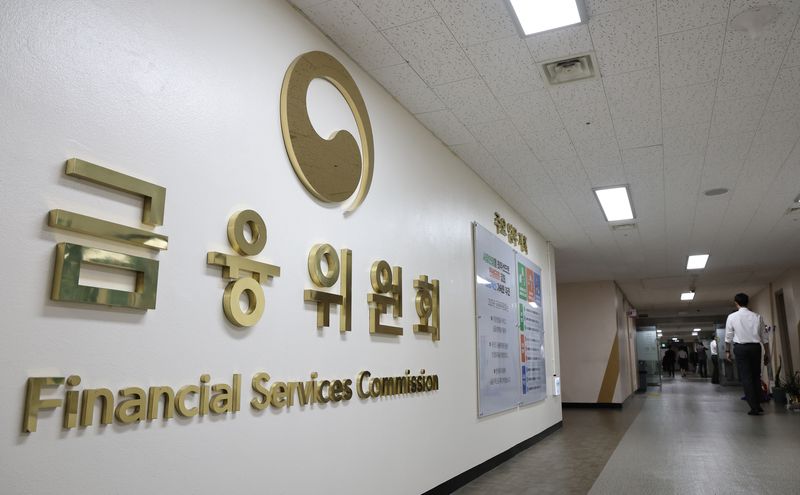
[Financial News] Starting in November, a cornerstone investor system will be introduced in the Initial Public Offering (IPO) process, under which a portion of newly issued shares will be preallocated to institutional investors that agree to hold the stock for a set period. The allocated shares will be subject to lock-up periods of six to 10 months depending on the tranche, and a pre-demand forecasting system will also be introduced to gauge institutional demand before the securities registration statement is filed.
On the 30th, the Financial Services Commission (FSC) said it will announce revisions to the enforcement decree of the Financial Investment Services and Capital Markets Act and the rules on the issuance and disclosure of securities, which set out the standards for cornerstone investors and the pre-demand forecasting system. The notice period runs until Sept. 8. The FSC plans to complete revisions to subordinate regulations in time for Nov. 13, when the amended Financial Investment Services and Capital Markets Act takes effect.
The cornerstone investor system preallocates part of the institutional tranche in an IPO to institutions that agree to a lock-up of at least six months. The goal is to secure medium- to long-term institutional investors before listing and ease the concentration of institutional selling immediately after the stock begins trading.
Shares allocated to cornerstone investors will be subject to different lock-up periods depending on the tranche. Fifty percent of the allocation cannot be sold for six months, 30 percent for eight months, and the remaining 20 percent for 10 months. The measure is intended to reduce the risk that multiple lock-up expirations will fall on the same date and trigger a sudden wave of selling. However, the staggered lock-up schedule applies only to shares preallocated to cornerstone investors.
Institutions seeking to participate as cornerstone investors must have equity capital or entrusted assets worth at least 20 times the amount of IPO shares they pre-subscribe to. If they join the IPO with their own assets, the requirement is based on equity capital; if they participate through entrusted assets such as funds, the requirement is based on those entrusted assets.
The preallocation cap will differ between KOSPI (Korea Composite Stock Price Index) and KOSDAQ (Korea Securities Dealers Automated Quotations). Based on the shares available to general institutional investors, excluding allocations to retail subscribers, employee stock ownership associations, and policy funds such as high-yield funds and KOSDAQ Venture Funds, the KOSPI market will allow up to 20 percent for all cornerstone investors combined and up to 10 percent for a single institution. For KOSDAQ, the limits are 30 percent in total and 20 percent per institution.
Converted into the total offering size, the cornerstone investor cap is 10 percent of the total for KOSPI, or 5 percent per institution. For KOSDAQ, the range is 4.5 percent to 10.5 percent in total, or 3 percent to 7 percent per institution, depending on the allocation ratio for employee stock ownership associations.
Conflict-of-interest rules will also be introduced to prevent the system from being used to support affiliates or shift underwriting burdens. Cornerstone investor contracts cannot be signed with institutional investors that have conflicts of interest, including major shareholders and related parties. Exchanging direct or indirect benefits on the condition of a cornerstone investor contract will also be prohibited.
The pre-demand forecasting system will allow lead managers to survey institutional investors on their desired purchase prices and volumes for newly issued shares before filing the securities registration statement. At present, the process begins with a proposed offering price range in the securities registration statement, followed by a formal book-building process. Under the new system, demand from some institutional investors can be checked from the stage of setting the desired price range.
General private fund managers and discretionary investment managers participating in the pre-demand forecasting process must have total entrusted assets of at least 30 billion won. Under the current formal book-building process, the entrusted-asset requirement is lowered to 5 billion won after two years from registration, but that easing rule will not apply to pre-demand forecasting.
After conducting due diligence on a company, the lead manager may provide qualified institutional investors with information that will later be disclosed through the securities registration statement. However, because the information is not yet public, the lead manager and participating institutions must sign a confidentiality agreement and keep records of when the information was provided and to whom.
If a participating institution violates the confidentiality agreement and allows a third party to use the information, it may constitute the use of undisclosed material information. The Korea Financial Investment Association plans to reflect additional participation requirements in its underwriting rules to verify valuation capabilities and internal controls for undisclosed information.
[email protected] Kim Mi-hee Reporter