"Wages Are Not Keeping Up With Inflation" Real Wages Fall for Two Straight Months for the First Time in About Three Years
- Input
- 2026-07-30 13:05:43
- Updated
- 2026-07-30 13:05:43
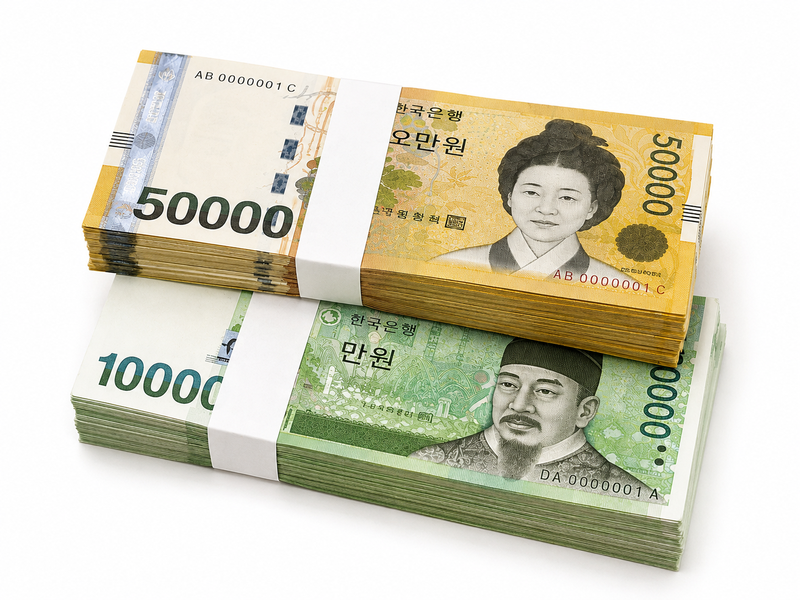
According to the Establishment Labor Force Survey released on the 30th by the Ministry of Employment and Labor (MOEL), real wages per worker stood at 3.321 million won in May, down 1.4%, or 48,000 won, from a year earlier. That followed a 1% decline in April, marking two straight months of falling real wages.
The reason real wages fell is that the Consumer Price Index rose faster than nominal wage growth.
Nominal wages per worker in May came to 3.982 million won, up 1.7%, or 66,000 won, from a year earlier. Nominal wages also rose for regular workers, at 4.245 million won per month on average, and for temporary and daily workers, at 1.788 million won, by 1.9% and 3.2%, respectively.
However, the CPI rose 3.1% over the same period, meaning overall nominal wage growth still lagged behind inflation. Analysts say price growth, which had been in the 1% to 2% range in 2024 and 2025, is now moving into the 2% to 3% range this year.
Jeong Hyang-suk, director of the Labor Market Survey Division at MOEL, explained, "Last year’s inflation rate was roughly in the 1% to 2% range after the Middle East war, but it is now 3.1%, so inflation has become much higher." She added, "There is also an aspect of the current situation reflecting the three pressures of a weak won, high oil prices and high inflation."
Another factor appears to be the rising share of temporary and daily workers, whose wage levels are relatively lower than those of regular workers.
Jeong added, "There is a base effect because temporary and daily workers, which had been negative for a long period, turned positive. Jobs and working hours for temporary and daily workers also increased as the lodging and restaurant sectors improved through subsidies and other support." She said, "Since the wage growth rate for temporary and daily workers came in at 3.2%, it would be hard to say the jobs themselves have worsened."
This is only the second time real wages have fallen for two consecutive months, excluding months that include major holidays.
Previously, real wages also declined for two straight months in July and August 2023. At the time, nominal wage growth from a year earlier was only around 1.1%.
A MOEL official explained, "Inflation was not at a particularly high level then, and special bonuses were very low." The official added, "The timing of payments can vary somewhat depending on wage negotiations and other factors."
The official continued, "April, May and June are relatively ordinary months for wages." The official added, "Based on our experience so far, the negative trend could continue."
There was also a case in which real wages fell in December 2023 and January 2024, but that was due to the Lunar New Year falling in January 2024. In practical terms, months containing the Lunar New Year or Chuseok are excluded because the holiday can fall in different months each year.
Jeong said, "In the case of January 2024, the holiday effect was present, so if that is excluded, this is the first time since July and August 2023."
[email protected] Kim Jun-hyeok Reporter