U.S. Central Command reportedly proposed a 10- to 14-day large-scale air campaign against Iran to Trump
- Input
- 2026-07-30 12:03:23
- Updated
- 2026-07-30 12:03:23
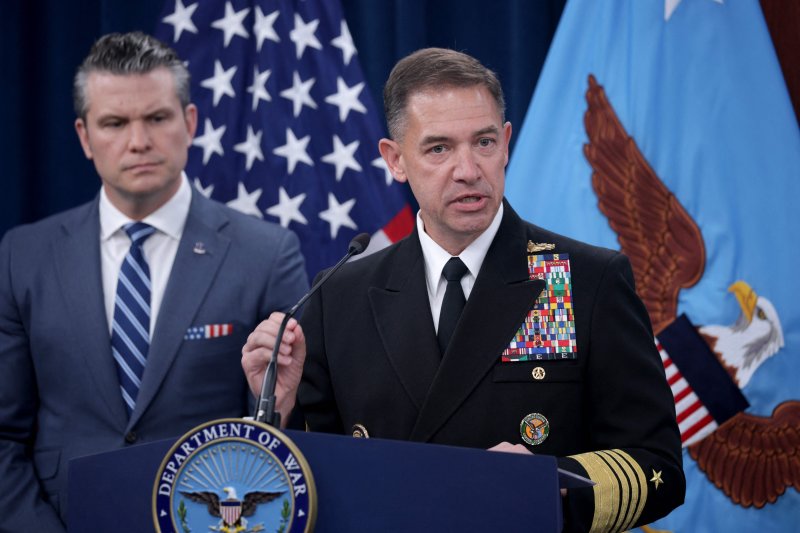
[Financial News] As CENTCOM, which is in charge of U.S. operations against Iran, resumed airstrikes on Iran after a six-day pause, a claim emerged that the command had prepared a large-scale bombing campaign lasting up to two weeks.
The Wall Street Journal (WSJ) reported on the 29th, citing sources, that U.S. Navy Adm. Brad Cooper, who leads CENTCOM, proposed a 10- to 14-day air campaign to U.S. President Donald Trump. The sources claimed that after Trump attended a reception for U.S. war dead from the Iran conflict in Dover, Delaware, on the 22nd, he discussed Iran with senior military officials aboard Air Force One, including Chairman of the Joint Chiefs of Staff Dan Caine, U.S. Secretary of War Pete Hegseth, and Cooper.
Cooper reportedly proposed a concentrated 10- to 14-day bombing campaign aimed at fundamentally weakening Iran's missile forces and launch capabilities. He argued that the United States must do more than simply retaliate and instead inflict major damage on Iran's offensive capabilities in order to deter threats to the Strait of Hormuz and attacks on U.S. bases in the region.
Caine, by contrast, was said to have urged caution, warning about the 'second- and third-order effects' that a large-scale military operation could trigger. According to the sources, he repeatedly told the White House that U.S. stockpiles of air defense missiles had fallen sharply in the conflict with Iran, and that the country's ability to respond to threats that could arise in other regions, including China, Russia, and North Korea, could be weakened.
In this regard, CNN reported on the 29th, citing the Center for Strategic and International Studies (CSIS), that U.S. air defense missile stocks were running critically low. CSIS said the United States currently has fewer than 827 Patriot missiles and fewer than 278 Terminal High Altitude Area Defense (THAAD) missiles, adding that about 60% of the stockpile held before the February conflict with Iran has been depleted.
According to the sources, Cooper has argued that more time is needed to complete the objectives of the Iran operation. As of March 31, he calculated that about 20 more days would be required to finish the war.
Cooper's stance reported by the WSJ on this day was markedly different from earlier reports. The New York Times (NYT) reported on the 25th that Trump halted airstrikes on Iran on the 24th because of a shortage of air defense missiles and Cooper's advice. The paper said Cooper had recommended suspending the attacks earlier that week to the War Department, the Joint Chiefs of Staff, and the White House. According to the sources, Cooper argued at the time that Iran's ability to attack ships had already been significantly reduced and that most of the designated bombing targets had been exhausted, making further airstrikes largely ineffective.
Meanwhile, CENTCOM, which had halted airstrikes on Iran since the 24th, announced on the 29th that it would resume them. In remarks on the 29th, Trump referred to Iran's attack on a U.S. base in Jordan on the 28th and the strike on an oil facility in Egypt on the 29th, saying of Iran, "We will beat the hell out of them."
[email protected] Park Jong-won Reporter