Tattooing Will Also Be Subject to Hygiene and Safety Standards... MOHW Prepares First 'Standard Guidelines'
- Input
- 2026-07-30 12:00:00
- Updated
- 2026-07-30 12:00:00
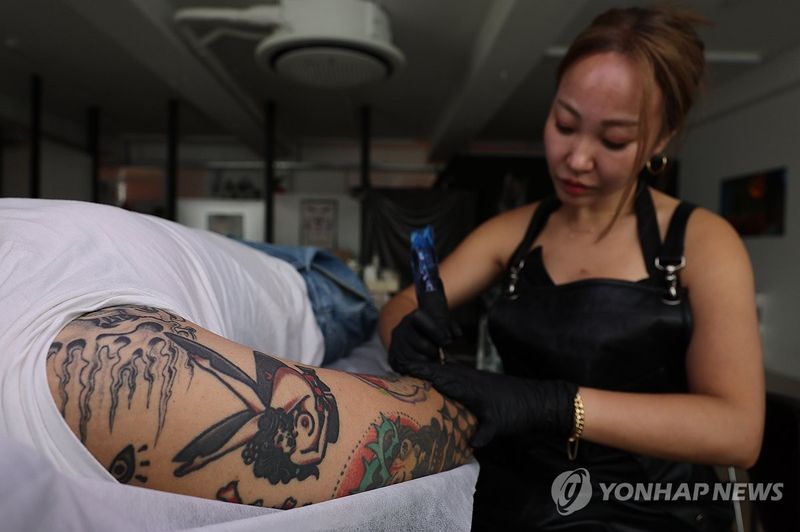
[Financial News] The government has drawn up its first set of standardized guidelines that bring together hygiene and safety standards for tattoo procedures. While studies and recommendations on tattoo safety management had been issued in the past, this is the first time that the Ministry of Health and Welfare has officially released a single set of rules covering everything tattoo businesses must follow in the field, from facility and tool management to pre- and post-procedure steps, infection prevention, and legal obligations, ahead of the Tattooist Act taking effect. As tattooing moves into the formal system, the procedure environment is also being standardized in earnest.
The Ministry of Health and Welfare and the Korea Health Promotion Institute announced on the 30th that they had prepared the "Standard Guidelines for Tattoo Procedures" in preparation for the implementation of the Tattooist Act and would begin distributing them on the 31st. The Tattooist Act was enacted and promulgated in October last year and will take effect on October 29, 2027.
The guidelines were designed to prevent infections and side effects that may occur during tattoo procedures and to ensure that both practitioners and users can receive services safely. They cover facility and tool management at tattoo businesses, procedures before and after treatment, hygiene management, legal obligations, and prohibited acts.
The guidelines consist of four chapters, 10 main sections, and 37 detailed subsections, covering an overview, facility and tool management and hygiene, compliance requirements by major procedure, and legal obligations and prohibited acts. They also define 55 tattoo-related terms in detail.
Business spaces are to be divided into waiting, treatment, and washing and sterilization areas. These areas may be separated not only by walls but also by partitions. Equipment should be arranged with the movement of users and practitioners in mind, and hygiene conditions should be managed by area.
As a rule, tattoo tools must be sterile and disposable. Used tools must be discarded immediately. If reuse is unavoidable, they must be washed and disinfected, while sterilization is recommended. Consumables such as pigment cups and gauze are also to be disposable, and reuse is prohibited. In particular, consumables with a high risk of infection must be sterile and disposable.
Practitioners must wear and remove personal protective equipment, such as gloves, masks, and aprons, at the proper time and in the proper manner. During procedures, sterile gloves are mandatory.
The guidelines also establish a procedure for checking a user's health condition before treatment. Practitioners must prepare and manage consent forms and tattoo procedure records, and determine whether treatment is possible based on a health status confirmation form. In particular, if a user has a history of blood-borne infectious diseases such as hepatitis B or C, the practitioner must decide whether to proceed only after confirming a medical opinion issued following consultation or treatment at a medical institution.
The ministry said it will distribute the guidelines through local governments and tattooist groups, and that they will also be available for download on the ministry and KHPI websites. It will also provide key Q&A materials to help with understanding the guidelines.
Jeong Eun-kyeong, Minister of Health and Welfare, said, "Now that the Tattooist Act has been enacted after long discussion, it is more important than ever that safe tattoo procedures be carried out within the formal system." She added, "Please familiarize yourselves with the hygiene management guidelines for tattoo procedures and thoroughly prepare and inspect facilities and environments in anticipation of the law taking effect."
[email protected] Jung Sang-hee Reporter