Citi says the Bank of Korea will raise rates again in August despite the KOSPI plunge
- Input
- 2026-07-30 10:54:55
- Updated
- 2026-07-30 10:54:55
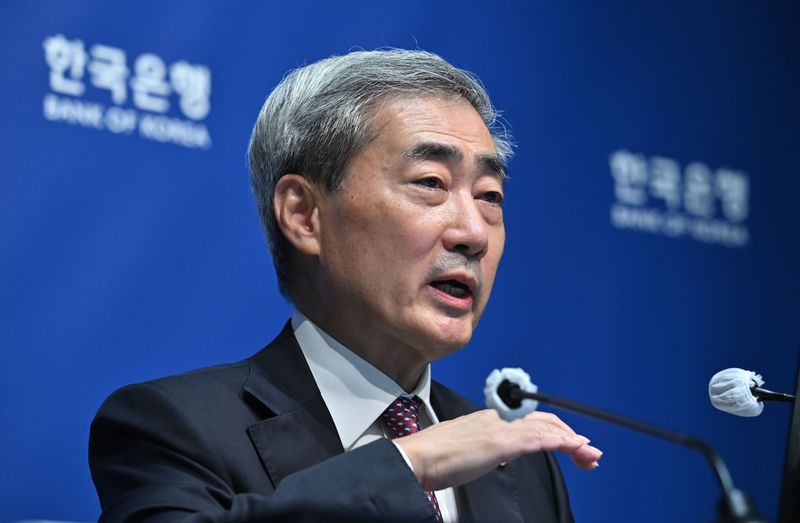
[Financial News] Although the KOSPI (Korea Composite Stock Price Index) has plunged 38% over the past month or so, a forecast has emerged that the Bank of Korea will raise its benchmark rate again next month. The analysis suggests that real-economy conditions, such as semiconductor prices and inflation trends, will have a greater impact on monetary policy than the stock market.
On the 30th, global investment bank Citi said in a report that the Bank of Korea is expected to raise its base rate by another 25 basis points at the Monetary Policy Board meeting on Aug. 27.
The KOSPI fell 38% from 9,114 on June 22 to 5,663 on July 29, but the outlook still calls for consecutive rate hikes.
Kim Jin-uk, an economist at Citi who wrote the report, said the prices of memory semiconductors are a more important variable for monetary policy than the stock prices of memory chip makers. Reflecting the strength in server DRAM prices, he raised his forecast for this year's global DRAM and NAND flash memory average selling price (ASP) growth rates to 234% and 236%, respectively, from a year earlier. He also expected higher semiconductor prices to improve the terms of trade and support a recovery in domestic demand.
Inflation was also cited as a factor supporting a rate hike. Kim projected consumer prices to rise 2.7% in July and core inflation to increase 2.5%. In August, he expects them to climb further to 3.2% and 3.3%, respectively, due to base effects. He added that the Bank of Korea places greater emphasis on core inflation than on headline inflation, making additional tightening more likely. He also said the current base rate of 2.75% remains below the 3.0% level estimated as the upper end of the nominal neutral rate, leaving room for another increase.
He also assessed that financial conditions remain accommodative despite the sharp drop in the KOSPI, while concerns over overheating in asset markets continue as expectations for rising housing prices have climbed to their highest level since September 2021.
Meanwhile, there is also a view that the financial authorities could tighten regulations on leveraged exchange-traded funds (leveraged ETFs) or provide liquidity by using tools such as a stock market stabilization fund if necessary.
[email protected] Seo Ji-yoon Reporter