The U.S. Resumes Airstrikes After Six Days, Taking a Hard-Line Approach to a More Brazen Iran
- Input
- 2026-07-30 10:45:48
- Updated
- 2026-07-30 10:45:48
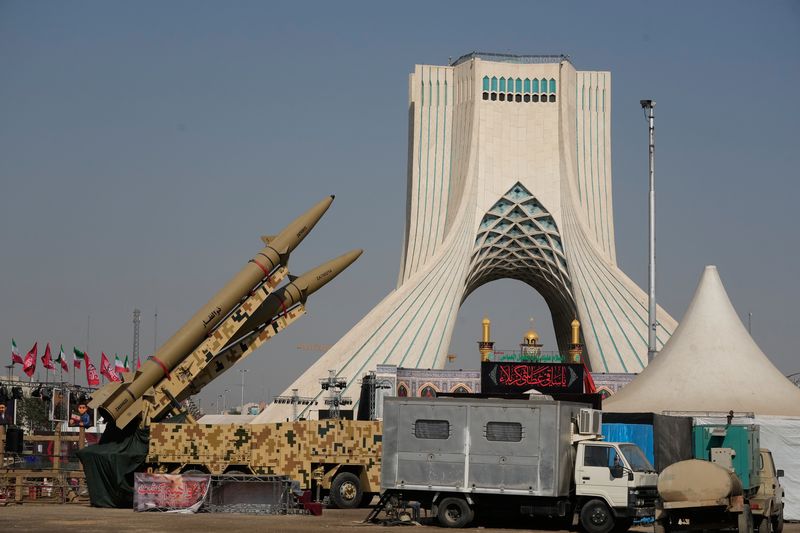
[Financial News] The United States, which had halted airstrikes for about six days in an effort to engage in dialogue with Iran, resumed bombing Iran on the 29th local time.
The U.S. resumes airstrikes on Iran after six days
The United States Central Command, which oversees U.S. operations against Iran, said on social media platform X that "U.S. forces began airstrikes on Iran as of 8 p.m. Eastern Time on the 29th." It added, "This strike is a strong response to Iran's attempted attack on U.S. bases in the Middle East on the 28th."Earlier that day, Barak Ravid, a reporter for the U.S. political outlet Axios, claimed in an X post that he had learned of the airstrikes from a U.S. official before CENTCOM's announcement. Iranian state media reported that, immediately after the statement, multiple explosions were heard in southern Iran, including on Qeshm Island and in Bushehr.
After signing a memorandum of understanding on ending hostilities with Iran on the 17th of last month and agreeing to a 60-day ceasefire, the United States resumed bombing Iran after Iran asserted control over the Strait of Hormuz and attacked commercial vessels. Iran then struck again on the 26th and 27th of last month, as well as on the 7th and 9th of this month, and carried out daily airstrikes from the 11th to the 23rd. Iran also retaliated with missiles and drones against U.S. bases in the Middle East, including those in Kuwait and Bahrain.
U.S. President Donald Trump said in an announcement on the 24th that airstrikes would be suspended as dialogue with Iran had resumed. On the 26th, Iran's military also said it had halted retaliatory actions in the Middle East.
But the lull did not last long. On the 28th, Iran's Islamic Revolutionary Guard Corps (IRGC) said it had launched ballistic missile attacks on a U.S. air base and a central command post in Jordan. The base is believed to be Muwaffaq Salti Air Base in Jordan. Three U.S. service members were already killed there in an Iranian attack on the 17th. In a statement on the 28th, CENTCOM said it had intercepted all of Iran's long-range attacks. It also said that, together with Saudi Arabia, it had struck pro-Iranian militias operating in Iraq that day.
Iran grows more brazen
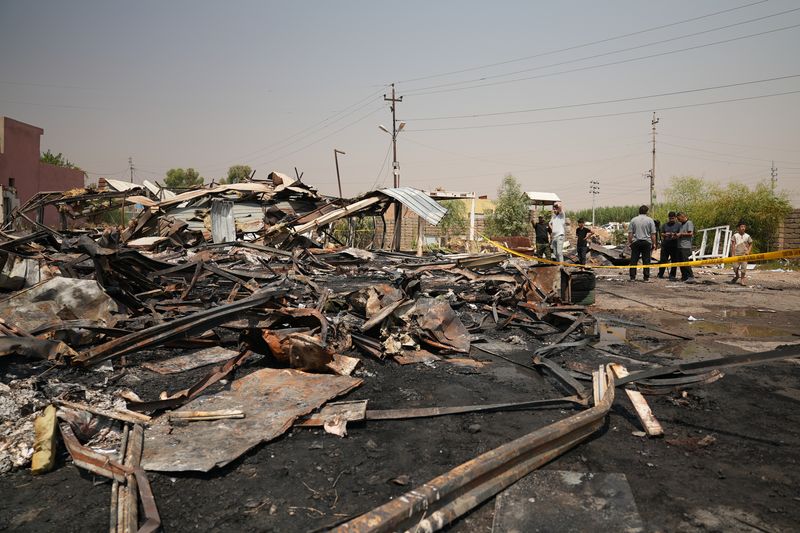
Iran's military actions continued on the 29th as well. British maritime security firm Ambrey said in a statement that a drone attack caused a fire at an LNG storage and transport facility in Egypt's Damietta port. The Associated Press reported that a U.S.-owned floating storage facility and a Greek-owned transport vessel in the Mediterranean were damaged.In an interview with Fox News on the 29th, Trump used profanity and said, "We're going to beat the f------ s--- out of them," adding, "They are going to get beaten." He had also written on Truth Social in early April, when Iran moved to block the Strait of Hormuz, "Open the damn strait, you crazy people."
Later that afternoon at the White House, when asked whether the attack on the U.S. LNG facility was linked to Iran, he said he had been briefed. Trump said, "It's a little more of the same kind of thing, but the situation will be sorted out soon," adding, "In the meantime, we will hit them very hard." He said, "Now it's our turn," and added, "We will see whether we reach a deal with Iran at some point, but we are going to hit them very hard."
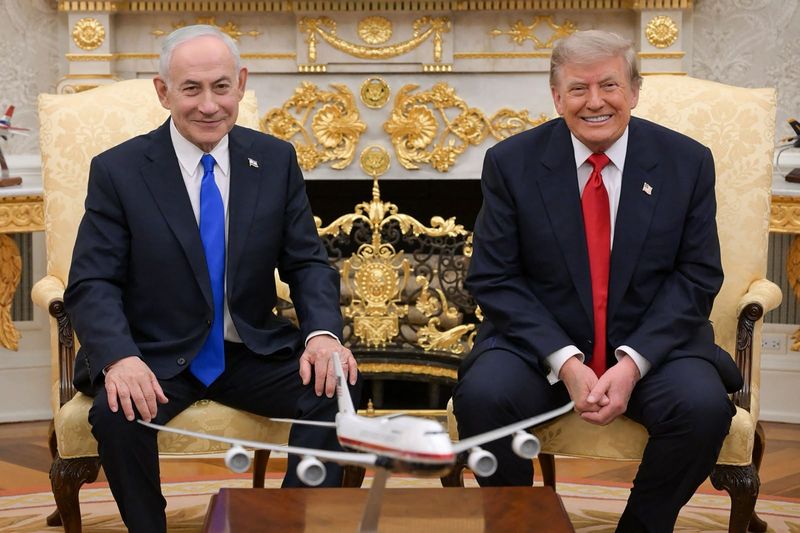
The 28th, when Iran attacked U.S. bases, was also the day Trump met Israeli Prime Minister Benjamin Netanyahu at the White House. U.S. media outlets said the IRGC had become more brazen. CNN and The Wall Street Journal, among others, analyzed that the IRGC prefers being at war with external forces over enduring political turmoil inside Iran during peacetime, and that it is now attacking pro-U.S. targets in the Middle East in a fight for survival.
Hamid Reza Azizi, a researcher at the German Institute for International and Security Affairs, said on X that "this attack appears to be a signal related to Netanyahu's visit to the White House" and explained that "it suggests Iran's military strategy has changed and that it is now prepared to launch preemptive strikes when it detects signs of an imminent threat."
Meanwhile, shortly after Trump's remarks that day, the September futures for West Texas Intermediate crude oil on the U.S. market and Brent Crude Oil on the British market jumped by about 6% to 7%. Brent Crude Oil, in particular, climbed back above $90 per barrel.
[email protected] Reporter Park Jong-won Reporter