"TSMC's Second Plant Construction Resumes, But Semiconductor Supply Chain Fears Persist"
- Input
- 2026-07-30 10:11:20
- Updated
- 2026-07-30 10:11:20
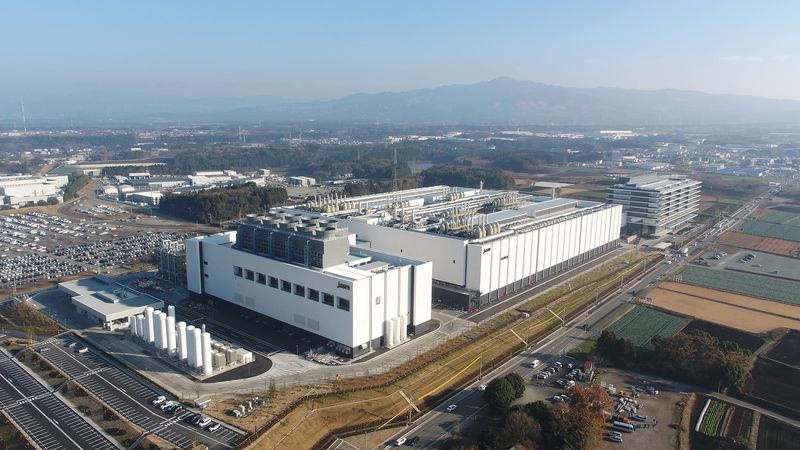
[Financial News, Tokyo = Seo Hye-jin, correspondent] Construction of TSMC's second plant in Kumamoto, which had been suspended after the strong earthquake in Kumamoto, Kyushu, has resumed. At the first plant, however, inspections and adjustments of semiconductor manufacturing equipment are still under way. As damage to semiconductor production sites and logistics infrastructure continues, attention is turning to the impact on Japan's manufacturing supply chain.
According to Nikkei, Inc. and Yomiuri Shimbun on the 30th, TSMC resumed construction of its second plant in Kikuyo, Kumamoto Prefecture, which had been temporarily halted over concerns about aftershocks, the previous day.
In a statement released the same day, TSMC said the structural safety of the first plant had been confirmed and that its water and power supply systems were operating normally. It also said there were no problems with raw material supplies. However, because the shaking from the quake was relatively strong, the company said it was continuing inspections and adjustments of semiconductor manufacturing equipment, and that such calibration would take some time.
At around 10:19 p.m. the previous day, aftershocks with a maximum intensity of upper 5 on the Japanese seismic scale were recorded in Yatsushiro, Amakusa and Kami-Amakusa. JMA analyzed the epicenter as being at a shallow depth in the Amakusa-Ashikita area of Kumamoto Prefecture and estimated the magnitude at 5.8. There was no tsunami threat.■ "Even if the plant recovers, shipments cannot resume immediately"What the industry is focusing on in this earthquake is the nature of semiconductor production.
Semiconductors are made through hundreds of vibration-sensitive processes that form microscopic circuits. From wafer input to final shipment, the process usually takes about three months.
Nikkei, Inc. reported that even if production facilities are restored early, additional time is usually needed before shipments can actually resume, as quality inspections and other checks must be completed.
During the Great East Japan Earthquake in 2011, damage to Renesas Naka Plant led to a shortage of semiconductors for automotive electronic control systems, forcing automakers around the world to halt production and cut output. Since then, Japanese semiconductor companies have strengthened earthquake resistance at their plants and increased inventories.
In Kumamoto now, facilities including Sony Group's image sensor plant, Renesas Electronics' automotive semiconductor plant, Mitsubishi Electric Corporation's power semiconductor plant, and Tokyo Electron's semiconductor manufacturing equipment plant have also stopped operations and are undergoing safety inspections.
Toshihiro Nagahama, chief economist at the Dai-ichi Life Research Institute, said, "Kyushu, including Kumamoto, is a 'Silicon Island' where semiconductor plants are concentrated and supply chains are linked nationwide," adding, "If plant operations are disrupted, industries that use semiconductors, such as the automotive sector, could also be affected."■ Damage to Yatsushiro Port also disrupts auto productionNot only plants but also damage to logistics infrastructure is being cited as a factor behind supply chain concerns.
According to MLIT, liquefaction and ground subsidence occurred at Yatsushiro Port in Kumamoto Prefecture. Cracks and uneven ground surfaces were also found inside the port.
Yatsushiro City said the port is the only one in Southern Kyushu capable of handling hazardous materials such as high-pressure gas and chemicals needed for semiconductor manufacturing.
Nippon Express Holdings believes the impact of the damage to Yatsushiro Port could be prolonged.
In the automotive industry, the effects of parts supply disruptions and logistics problems are already emerging.
Toyota Motor Corporation suspended operations at three plants in Miyata, Kokura and Kanda in Fukuoka Prefecture from the previous evening through the 31st. Production had briefly resumed the previous morning, but was halted again in light of logistics conditions and damage to suppliers.
Nissan Motor Co., Ltd. also decided to suspend part of operations at its Kyushu plant in Kanda, Fukuoka Prefecture, from this afternoon through the 31st. Although production equipment was not damaged, parts deliveries have been delayed.
Honda extended the suspension of operations at its Kumamoto Plant, the company's only motorcycle production base in Japan, through the 31st. Water leaks and flooding occurred in parts of the plant, and recovery work is under way. The company plans to decide whether to resume production after August 3, depending on the situation.
Japan Pulp and Paper's Yatsushiro Plant and Suntory's Kyushu Kumamoto Plant have also remained shut, while alternative production at other factories is being considered for some products.
[email protected] Seo Hye-jin Reporter