U.S. crude inventories fall to lowest level since 1983
- Input
- 2026-07-30 10:56:24
- Updated
- 2026-07-30 10:56:24
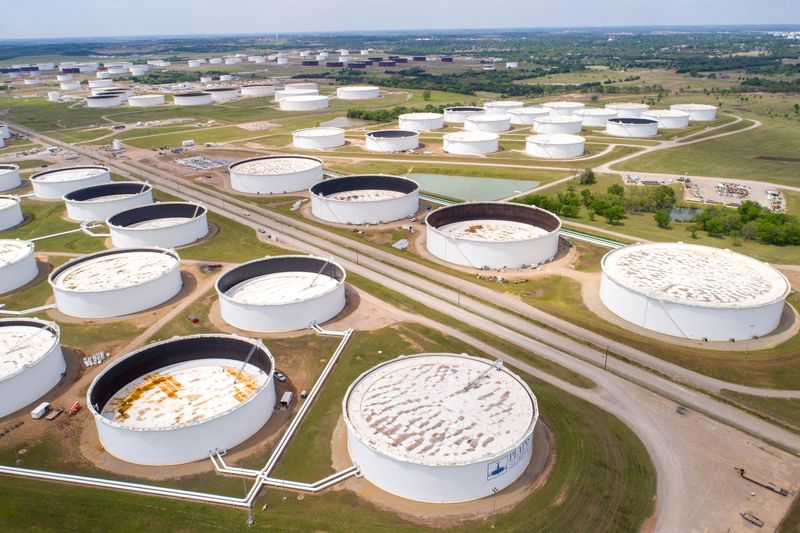
[Financial News] The U.S. Strategic Petroleum Reserve (SPR) has fallen to its lowest level since March 1983.
On the 29th local time, The Wall Street Journal (WSJ) reported that the reserves released by the U.S. Energy Information Administration (EIA) on the day were smaller than expected because crude imports declined, exports increased, and more oil was sent to refineries.
As of the 24th, crude inventories fell by 7.2 million barrels in a week to 404.5 million barrels, the EIA said. That was 7% below the five-year average.
In a WSJ survey of analysts, a decline of 600,000 barrels had been expected for the period.
Crude inventories in Cushing, Oklahoma stood at 18.6 million barrels, down 771,000 barrels over the week.
U.S. gasoline inventories were little changed at 211.3 million barrels, but they were still 6% below the five-year average.
U.S. crude production held steady at 13.8 million barrels per day, while imports fell by 124,000 barrels to 5.7 million barrels per day.
Crude exports rose by 114,000 barrels per day to 3.5 million barrels.
Refinery utilization rose 1.1 percentage points from the previous week to 97.2%, while output fell 0.3 percentage points.
CNBC reported that the SPR had dropped to its lowest level since March 1983 after 325 million barrels were released over the past four years to make up for shortages caused by turmoil in the Middle East and Iran.
A U.S. federal audit found that SPR facilities are vulnerable to future emergencies and that their ability to function properly is limited because the infrastructure is aging and major repair work is under way.
A report from the U.S. Department of Energy in May said it was unclear how much longer pipelines and storage tanks could last, adding that the system is currently being kept afloat by "band-aids."
The SPR infrastructure was built by a decision of the U.S. Congress after Arab countries imposed an oil embargo in 1973, and the audit found that it is nearing the end of its service life.
The U.S. Department of Energy plans to spend $1.4 billion to upgrade the facilities.
Despite concerns over declining crude reserves, David Goldwyn, who served as a special envoy at the State Department under the Obama administration, said, "There is enough SPR stock to handle another crisis." He added, "I am not worried about inventory stability or additional crude releases."
U.S. federal law does not set a minimum level for the SPR, but a Department of Energy official said that about 70 million barrels, or 10% of capacity, would be safe.
[email protected] Yoon Jae-jun Reporter