Court orders Kolon Group Chairman Lee Woong-yeol to pay 660 million won to Invossa scandal patients
- Input
- 2026-07-30 09:40:29
- Updated
- 2026-07-30 09:40:29
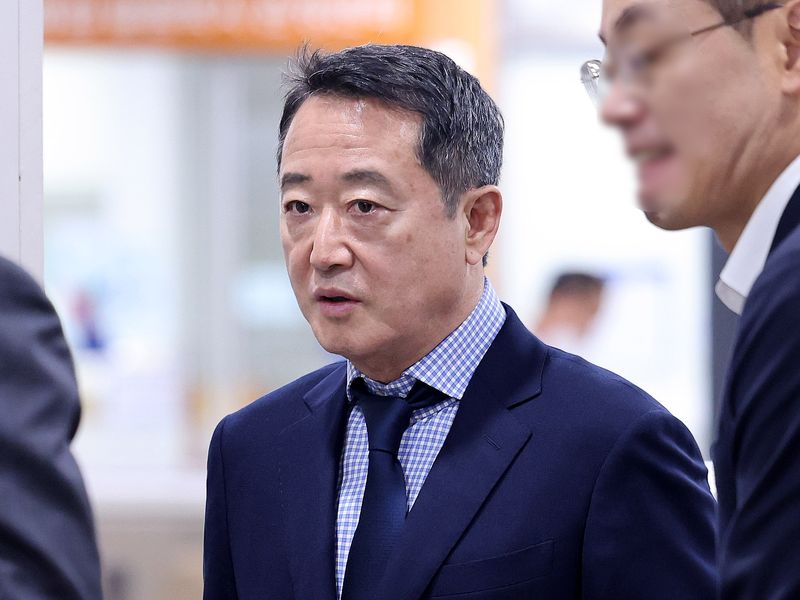
[Financial News] A court has recognized Kolon's liability for damages in a lawsuit filed by patients who said they suffered physical and mental harm after being treated with "Invossa Key-Ju" (Invossa), a knee osteoarthritis drug.
According to the legal community on the 29th, the 29th Civil Division of the Seoul Central District Court, presided over by Chief Judge Ko Seung-il, ruled partially in favor of the plaintiffs on the 9th in a damages suit filed by 18 people, including patients who received Invossa and bereaved family members, against honorary chairman Lee Woong-yeol of Kolon Group, Kolon Life Science, Kolon TissueGene, and former Kolon Life Science CEO Lee Woo-seok.
The court ordered Lee and the other defendants to jointly pay more than 664 million won in compensation to the patients.
The plaintiffs include 15 patients who received Invossa between April 2018 and March 2019, as well as three bereaved family members of a patient who died after receiving the drug.
They argued that defects in the drug's manufacturing caused ongoing pain, required 15 years of follow-up treatment, and in some cases led to cancer, and they sought damages.
Invossa, developed by Kolon TissueGene, Kolon Life Science's U.S. subsidiary, is an injectable gene therapy for arthritis composed of two vials: one containing human cartilage cells and the other containing transformed cells introduced with cartilage cell growth factor (TGF-β1). It received approval from the Ministry of Food and Drug Safety as South Korea's first gene therapy in 2017.
However, it was later revealed that the cells used to make the second vial were not the approved cartilage cells but kidney-derived cells (GP2-293), which are known to carry a risk of tumor formation. The MFDS revoked its approval in July 2019.
The court said Invossa had a manufacturing defect or lacked the level of safety normally expected, making Kolon liable for damages under the Product Liability Act. It added that the drug was manufactured differently from its original design, and that it could not be ruled out that the manufacturer should have discovered, based on the scientific and technological standards at the time, that the cells were kidney-derived rather than cartilage cells.
The court said, "It is obvious from common experience that the plaintiffs and the deceased suffered considerable mental distress due to the manufacturing defect," adding, "It is reasonable to recognize a causal link between the defect and the mental harm."
The court also recognized liability under the Act on Fair Labeling and Advertising for falsely labeling the product as containing "cartilage-derived cells" on its packaging and instructions, as well as under the Pharmaceutical Affairs Act for selling a drug mixed with foreign substances or different from the approved contents.
The court emphasized, "The defendant companies, former CEO Lee, and honorary chairman Lee manufactured and sold Invossa even though they could have known it was defective," and added, "They are responsible for compensating the losses suffered by the plaintiffs and the deceased patients."
The court awarded 30 million won in consolation money to each surviving patient and 50 million won to the deceased patient. It also ordered the doctor who prescribed Invossa to the deceased patient and the medical foundation to which the doctor belonged to pay 14 million won.
In addition, the surgery costs incurred by the patients to receive Invossa were included in the damages.
Meanwhile, in February, honorary chairman Lee and former CEO Lee were acquitted in the second trial of their criminal case, in which they were indicted for selling Invossa after manipulating its ingredients in violation of the Pharmaceutical Affairs Act and other charges. The acquittal was finalized after prosecutors decided not to appeal.
[email protected] Jung Kyung-soo Reporter