"I Borrowed to Invest, and It Feels Like My Life Is Ruined": KOSPI Plunge Halves Accounts, Retail Investors Vent
- Input
- 2026-07-30 07:20:26
- Updated
- 2026-07-30 07:20:26
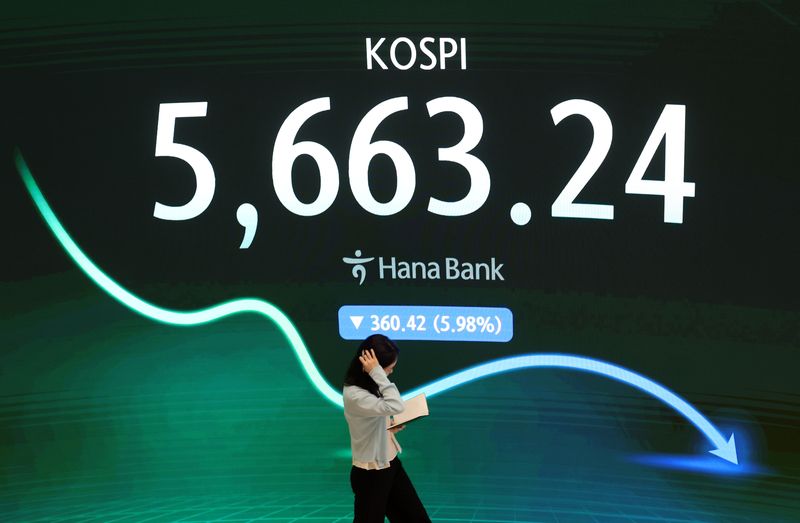
[Financial News] As the KOSPI plunged on the 29th and semiconductor stocks also fell sharply from their peaks, online investment communities were flooded with posts revealing losses or asking whether to sell. Some users also posted that they had invested borrowed money, savings deposits, and even funds under their children's names, only to suffer losses.
According to the Korea Exchange, the KOSPI ended trading on the 29th at 5,663.24, down 5.98% from the previous session.
The KOSPI had climbed as high as 9,385.59 intraday on June 19, but at one point on the 29th it fell to 5,262.77, down 12.63% from the previous day. Compared with its peak, that marked a drop of about 44% in roughly 40 days.
Major semiconductor stocks also fell to about half of their peak levels. SK hynix dropped from the 2.98 million won range to the 1.24 million won range, while Samsung Electronics fell from the 370,000 won range to the 180,000 won range. The KOSDAQ had once moved above the 1,220 level, but it fell to the 630 range intraday on the day.
Given the situation, posts lamenting losses continued to appear on online stock communities and stock discussion boards throughout the day.
One investor, who said he works at a bank, wrote, "I even borrowed money to invest in stocks, and now my total assets are down 30 million won. It feels like my life is ruined, and I don't know if I can recover."
Meanwhile, a salaried worker in their 30s said, "I even broke open my savings deposit to invest, but in the end I suffered a huge loss." Another investor lamented, "I tried to grow 20 million won that I had set aside for my unborn child's account, and it was cut in half."
The community also saw posts asking about losses and trading decisions, such as "Half of my principal is gone. Will I get 10 years in prison? My heart is pounding, and I can't work," "If you save me this once, I'll never invest in stocks again," and "Should I sell or buy? I just want to get back to break-even."
In strong markets, the term FOMO (Fear of Missing Out) was often used. But after the sharp decline, some users responded with JOMO, expressing relief at having stayed out of the stock market.
Some internet users who had not invested in stocks wrote, "I'm glad I didn't buy," and "I was reminded again how important it is not to lose money."
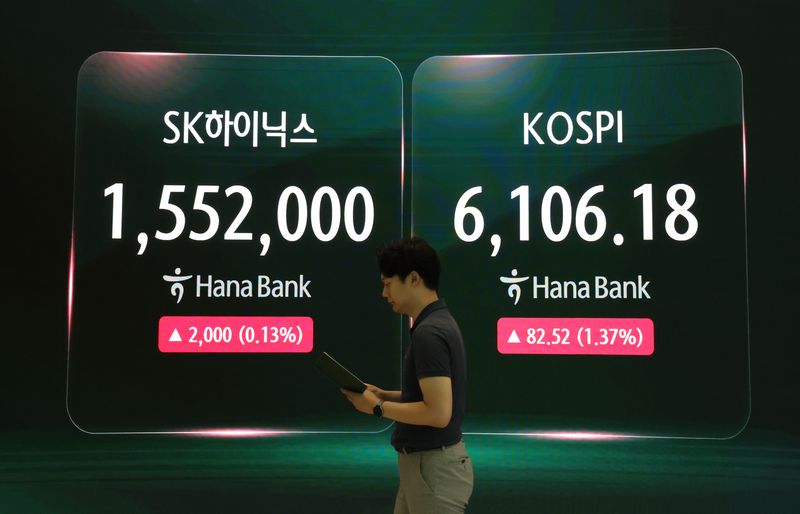
It was the first time in history that circuit breaker mechanisms were triggered on both the KOSPI and KOSDAQ markets for two consecutive trading days. After that, some investors posted that they could not understand the cause of the decline.
One investor said, "The Republic of Korea's economy hasn't collapsed, so I don't understand why this is happening," adding, "I don't know how I should respond."
Another investor pointed to single-stock leveraged exchange-traded funds as a factor behind the increased market volatility. He criticized the situation, saying, "Since the launch of single-stock leveraged ETFs, market volatility has become excessively high," and added, "It is frustrating that the government does not seem to be responding actively."
Meanwhile, individual investors were net sellers of more than 1.8 trillion won in the KOSPI market on the day.
[email protected] Han Seung-gon Reporter