Why KOSPI plunged: Nomura says leveraged ETF growth fueled volatility
- Input
- 2026-07-30 06:45:40
- Updated
- 2026-07-30 06:45:40
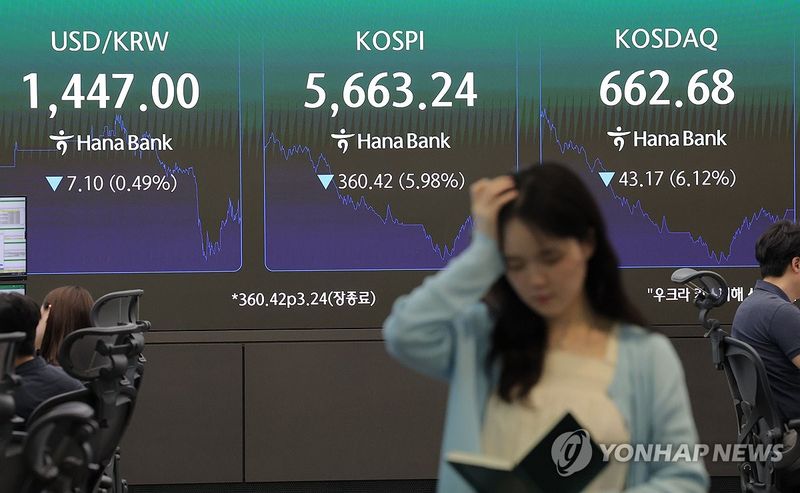
[Financial News] A recent plunge in KOSPI (Korea Composite Stock Price Index) was driven less by damage to corporate fundamentals than by a combination of heavy foreign selling and a supply-demand gap among institutions, as the National Pension Service (NPS) had less room to increase its domestic stock allocation. The report also said leveraged products added to market volatility.
On the 29th, Japanese global investment bank Nomura analyzed the reasons behind the recent KOSPI drop in a report titled "Korea's Next Re-rating."
In the report, Nomura Securities researcher Cindy Park said foreign selling, the NPS's shrinking room to expand domestic equity holdings, and the rapid growth of leveraged products had a greater impact on the market correction than corporate fundamentals.
Net foreign selling reached 15.8 trillion won, or about $108 billion, from the market peak on the 22nd of last month through the 24th.
Park explained that foreigners posted net sales of 15.8 trillion won, or about $108 billion, from the market peak on the 22nd of last month through the 24th, as KOSPI's benchmark weight exceeded portfolio management limits.
On the institutional side, the analysis said the NPS's limited room to reallocate assets into domestic stocks weighed on the market.
Park said, "As the share of domestic asset allocation approached a realistic limit, additional institutional support weakened." On leveraged products, she added, "The rapid growth of leveraged exchange-traded funds (leveraged ETFs) and newly launched single-stock leveraged products has acted as a factor that increased market volatility."
The report concluded that supply-demand factors amplified market volatility even though corporate fundamentals remained solid.
Park said, "These supply-demand factors amplified market volatility even when corporate fundamentals were strong." She added, "As the market's deleveraging process continues and foreign selling pressure eases, the next re-rating of the Korean stock market is likely to be led by share buybacks and treasury share cancellations by companies."
However, stronger shareholder returns from large-cap stocks were seen as a structural driver for gains in the Korean stock market.
Park also said, "Aggressive shareholder return policies centered on large-cap stocks will become a structural growth driver for the Korean stock market going forward."
[email protected] Han Seung-gon Reporter