"Dollar-Cost Averaging Backfired, Wiping Out 56 Trillion Won"...Retail Investors Left Reeling as More Declines Are Warned
- Input
- 2026-07-30 05:20:00
- Updated
- 2026-07-30 05:20:00
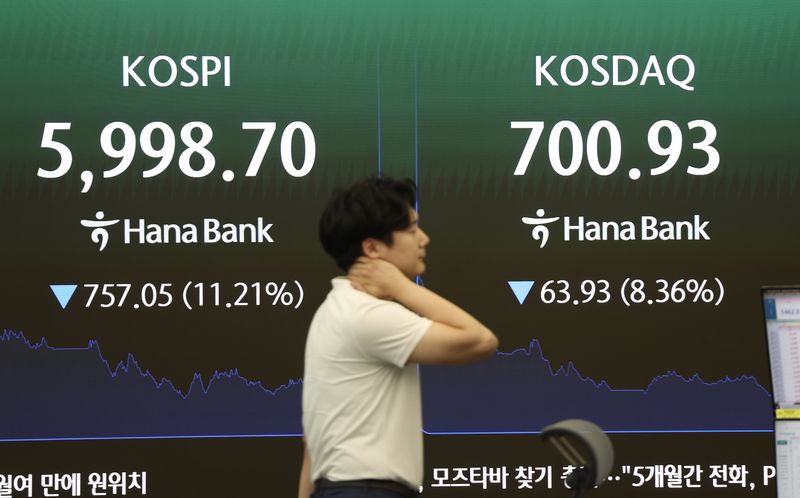
[Financial News] As the domestic stock market correction drags on, individual investors are growing increasingly exhausted amid intensifying competition in the global memory semiconductors industry and mounting losses from leveraged investments.
With capital flowing toward the listing of a Chinese memory semiconductor company and estimates of massive losses in leveraged products continuing to surface, investor sentiment is weakening sharply, especially in the semiconductor sector.
According to the financial investment industry on the 29th, one of the factors behind the recent weakness across the semiconductor sector is the listing of ChangXin Memory Technologies (CXMT), China's fourth-largest DRAM maker, on the SSE STAR Market of the Shanghai Stock Exchange (SSE).
CXMT, often called "China's Samsung Electronics," surged as much as 535% above its offering price immediately after its listing and quickly became the most valuable company on the mainland Chinese market. Park Myung-seok, curator at Sampro TV, said in a YouTube video the previous day that "the CXMT listing acted as a 'capital flow black hole' that absorbed global funds and also hurt sentiment toward global memory companies, including Micron, as well as Korea's leading semiconductor stocks."
Adding to the pressure were Morgan Stanley and other reports on the so-called memory peak-out thesis, which suggest that memory prices could peak by the end of this year, as well as controversy over hyperscaler capital expenditures (CAPEX). Together, these factors intensified selling pressure across the semiconductor sector. Some observers, however, say this is less about a fundamental deterioration in industry conditions and more about an excessive psychological downturn in sentiment.
"Believed in the rally, but..." Retail investors are estimated to have lost 56 trillion won in leveraged ETFs alone
As semiconductor stocks plunged, losses for domestic individual investors who had piled into leveraged products in hopes of a rebound have become almost impossible to grasp.
According to a market commentary released that day by Mohamed Afabayi, head of Asia-Pacific trading strategy at Citigroup Global Markets Securities, the market capitalization of Korea asset-based leveraged ETFs has fallen sharply from its peak of about 76.4 trillion won. Including new inflows, cumulative losses for domestic individual investors are estimated at about $38.7 billion, or roughly 56.3 trillion won.
By product, the largest decline in market capitalization was seen in SK hynix leveraged ETFs, which fell by about 24.74 trillion won. Losses were next largest in KOSPI200 leveraged products, at about 15.28 trillion won, followed by Samsung Electronics leveraged products, at about 7.28 trillion won.
In particular, retail investors kept buying SK hynix on a net basis even during the downturn. But as the stock price fell sharply from the estimated average purchase price of about 2.28 million won, they suffered unrealized losses of about 8.3 trillion won on those purchases alone.
Citi said only about 65% of the margin loan positions accumulated since the start of the year have been liquidated, adding that "it is too early to turn optimistic on the KOSPI, as individual investors have not yet begun full-scale capitulation."
[email protected] Moon Young-jin Reporter