Japan's Largest Semiconductor Hub Hit by Powerful Quake; Toyota Also Halts Factory Operations
- Input
- 2026-07-29 18:28:21
- Updated
- 2026-07-29 18:28:21
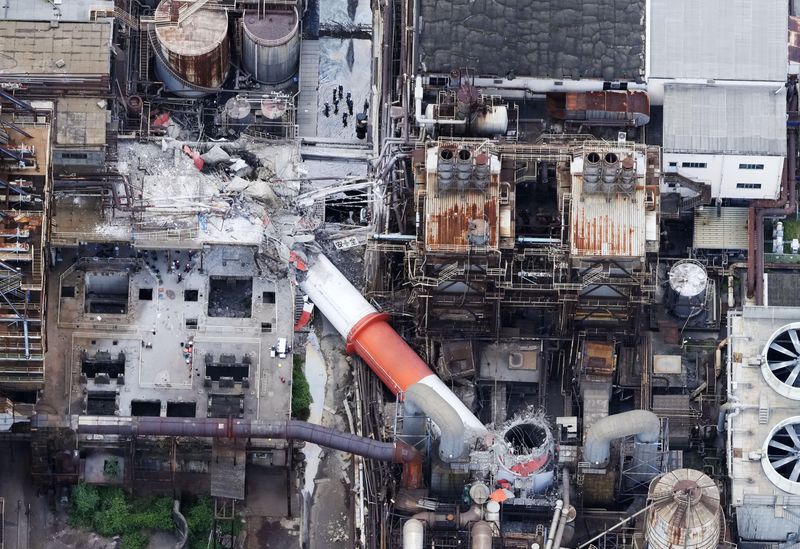
■Japan's semiconductor hub takes a direct hit... TSMC, Sony, and Renesas all suspend operations
According to Nikkei, Inc. and NHK on the 29th, the Kumamoto earthquake forced key nodes in Japan's semiconductor supply chain to halt operations one after another.
Sony Group evacuated employees immediately after the quake the previous day and suspended production at its Kumamoto image sensor plant. Renesas Electronics also stopped operations that day at its Kawashiri and Nishiki plants in Kumamoto City, where it makes automotive semiconductors. Cracks in the walls, water leaks, and ceiling panel collapses were found at the plants, and no date has been set for production to resume.
Mitsubishi Electric Corporation, Tokyo Electron, and Toppan Holdings have also suspended operations at their Kumamoto plants and are conducting safety inspections. JASM, the Japanese production unit of Taiwan's TSMC, the world's largest foundry, said its first plant had no safety issues. However, construction of its second plant has been partially suspended because of concerns over aftershocks.
Kumamoto is Japan's largest semiconductor hub, home to TSMC, Sony, Renesas, Tokyo Electron and other major companies. As of 2023, semiconductor-related industrial shipments totaled 1.1461 trillion yen, or about 10.14 trillion won, while shipments of related products reached 928.4 billion yen, or about 821 billion won. That accounted for 29.7% of the prefecture's total manufacturing output. The sector employed 23,545 people. Semiconductor manufacturing equipment shipments alone came to 519.3 billion yen, more than half of the total. Analysts say that if equipment production disruptions drag on, they could affect not only Japan but also expansion and maintenance schedules at semiconductor plants overseas.
■Disruptions also hit logistics and communications
The auto industry is also beginning to feel the supply chain shock. Toyota Motor Corporation said it would suspend operations at three plants in Miyata, Kokura and Kanda in Fukuoka Prefecture from the evening of the 29th through the 31st to inspect damage at parts suppliers and review logistics networks. The plants had resumed operations earlier in the day after being halted immediately following the quake, but production was stopped again.
Honda halted operations at its Kumamoto motorcycle plant and at its affiliated parts maker Astemo immediately after the quake the previous day. Daihatsu also stopped production at its Fukuoka plant, while Yamaha Motor suspended production through the 29th because of liquefaction damage at its Yatsushiro plant.
Logistics and communications networks were also disrupted. Yamato Transport, Japan Post, and Sagawa Express have suspended pickup and delivery services in the Kumamoto area. The number of damaged base stations at the four major mobile carriers has exceeded 150. JR Kyushu has also suspended Kyushu Shinkansen service and is continuing inspections of tracks and facilities.
■Calls for caution over further BOJ rate hikes grow
Some analysts say the earthquake has emerged as a new variable for the timing of additional interest rate hikes by the Bank of Japan (BOJ). The BOJ is holding a two-day monetary policy meeting starting today. Markets broadly expect the central bank to leave its benchmark rate unchanged at 1% at this meeting, but there are growing views that BOJ Governor Kazuo Ueda's hawkish message on further rate hikes could soften somewhat. According to the Cabinet Office (Japan), the 2016 Kumamoto earthquake caused economic losses of 240 billion to 460 billion yen, mainly in production facilities and social infrastructure. The scale of damage from this quake has not yet been fully assessed.
[email protected] Reporter