Koo Yun-cheol: "Strengthen property taxes on non-residents and multi-home owners" ... Signals tax reform centered on primary residences
- Input
- 2026-07-29 18:28:04
- Updated
- 2026-07-29 18:28:04
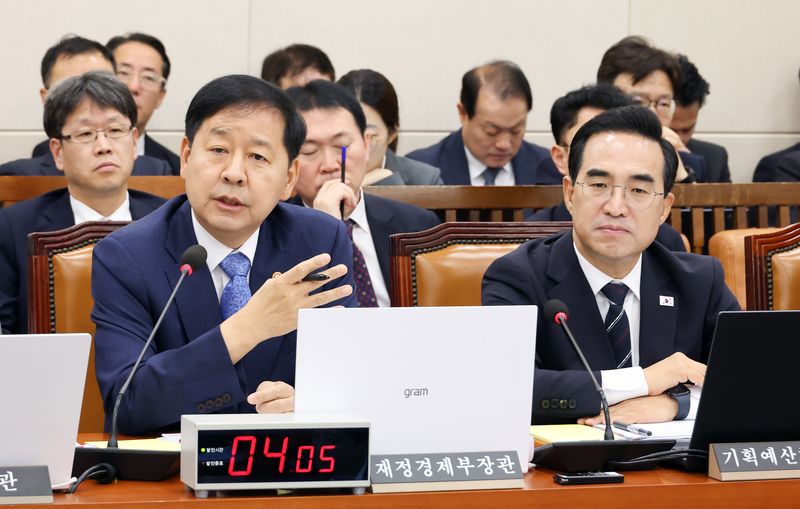
At a briefing to the National Assembly's Finance, Economy and Planning Committee on the 29th, Koo Yun-cheol said, "The direction of this tax reform plan, put simply, is to reduce the burden on a single home that people live in as much as possible up to a certain point." He added, "The key point is to normalize the burden on high-priced homes."
However, property taxes on non-residents and multi-home owners will be strengthened.
Koo said, "We do not intend to provide financial support or tax incentives to people who buy several homes, live in only one, and continue not living in the others." He added that the point is for non-residents and multi-home owners to bear a reasonable burden.
Capital gains tax is also expected to be reworked around actual residence. Koo stressed, "For homes people live in, the system should proceed normally, but we are considering whether it is really fair or consistent with tax equity to reduce capital gains tax on homes that are not lived in."
The government also plans additional measures for single-stock leveraged exchange-traded funds (ETFs), which have been cited as a factor behind recent volatility in the domestic stock market. Koo said, "Because there were concerns about volatility during the operation process, we prepared the first round of corrective measures." He added, "If necessary, we will further improve the leverage system and operate it in a way that reduces market volatility."
The government says it will focus on stabilizing the stock market based on these measures. Koo said, "I think internal polarization is quite severe. Since the top two stocks account for nearly 50% of the market, volatility is rising." He added, "Volatility among U.S. semiconductor companies and others is also becoming very large. The government is not reacting emotionally to the stock market and is aiming for stable development."
Taxation on virtual assets, set to take effect next year, will proceed as scheduled. Under the current Income Tax Act, income from the transfer or lending of virtual assets will be classified as other income and taxed starting Jan. 1 next year. For annual virtual asset income exceeding 2.5 million won, a combined tax rate of 22%, including 20% other income tax and 2% local income tax, will apply.
Koo explained, "Taxation on virtual assets has been deferred until the end of this year, and it will be taxed starting next year."
During the briefing, the government also reaffirmed its plan to reform the current system that allocates 20.79% of national taxes to local education subsidy grants. Park Hong-keun said, "Through reform of the grants, we need to correct the severe imbalance in education and secure funding needed for lifelong education." He noted, "This system was introduced when 1 million babies were born a year, but now the number has fallen to around 200,000. It is time to correct the severe imbalance within the education sector."
The Future Response Fund, which will be newly established, is expected to channel additional tax revenue into young people, growth engines, local regions, and education and talent development. Park said, "We will fully support the three major mega projects and make concentrated investments in landmark projects aimed at expanding growth potential and addressing polarization." He added, "We will also use the Future Response Fund as a fiscal stabilization tool to reinforce fiscal capacity in response to tax revenue shortfalls and other challenges."
[email protected] Reporter Seo Young-joon Reporter