From 900 to 600 in Just One Month: Delisting Risks Loom Over a Crumbling KOSDAQ [KOSDAQ Is Disappearing 2]
- Input
- 2026-07-29 15:43:04
- Updated
- 2026-07-29 15:43:04
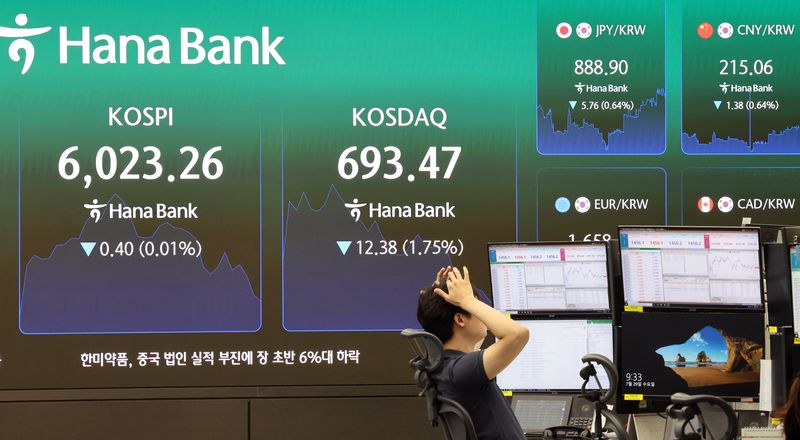
[Financial News] KOSDAQ has tumbled from the 900 level to the 600 level in just one month. As the market faces an unprecedented liquidity crunch and tougher delisting standards are now being fully enforced, anxiety is rising among small- and mid-cap listed companies.■ More than 240 companies? Delisting risks spreadAccording to the investment banking industry on the 29th, the KOSDAQ index fell from 920.57 on June 29 to 662.68 on the day. That marks a drop of 257.89 points, or 28.02%, in just one month. Combined with a decline in trading value, trading in many small- and mid-cap stocks has also weakened sharply.
The Korea Exchange has significantly tightened KOSDAQ listing-maintenance requirements starting this month. The market capitalization threshold was raised from 15 billion won to 20 billion won, and it will be lifted again to 30 billion won in January next year. Companies that remain below the threshold for 30 consecutive trading days are designated as administrative issue stocks. If they fail to recover the standard for 45 trading days within the following 90 trading days, delisting procedures begin.
A new delisting requirement has also been introduced for penny stocks priced below 1,000 won. The standard for complete capital impairment has been expanded from the end of the fiscal year to the half-year mark, and the penalty threshold for disclosure violations over the past year has been lowered from a cumulative 15 points to 10.
KB Securities previously estimated on the 10th that 143 companies had market capitalizations below 20 billion won and 146 companies had share prices below 1,000 won. Excluding overlaps, about 240 companies had entered the delisting-risk zone. That accounts for roughly 14% of all KOSDAQ-listed firms.
However, since the KOSDAQ index has since plunged from the 830 level to the 650 level, the financial investment industry believes the number of companies now in the risk zone is likely much higher. An official from the securities industry said, "In a market where liquidity has dried up, falling share prices directly reduce market capitalization, so the number of companies failing to meet listing-maintenance standards can rise faster than expected."
In February, the financial authorities estimated that the number of KOSDAQ-listed companies subject to delisting this year would rise to around 150 under the revised rules. That is a sharp increase from past figures, which were estimated at 8 cases in 2023, 20 in 2024, and 38 last year.
KB Securities researcher Lim Jeong-eun said, "With delisting standards tightened, low-priced stocks, small caps, and companies with persistent losses are expected to be pushed out more quickly." She added, "The closer a company is to delisting requirements, the faster investor funds may leave, so market capitalization and share-price trends need to be monitored continuously."■ Overseas markets combine grace periods... Korea emphasizes 'swift exit'Market participants generally agree with the policy goal of removing weak companies, but they also warn that market prices such as share price and market capitalization could become overly influential in a period of rapidly shrinking liquidity.
As investor funds have recently concentrated in large-cap stocks and single-stock leveraged exchange-traded funds (ETFs), trading in small- and mid-cap stocks has declined. As a result, broad market declines could also affect whether companies meet market capitalization requirements.
According to the Korea Capital Market Institute, the United States and Japan determine whether a company can remain listed by granting a grace period, requiring an improvement plan, and conducting qualitative reviews when listing-maintenance standards are not met. The New York Stock Exchange (NYSE) and Nasdaq operate case-by-case grace periods and review procedures, while the Tokyo Stock Exchange (TSE) also makes a comprehensive assessment of market performance and financial soundness.
By contrast, Korea has strengthened quantitative standards for market capitalization, penny stocks, complete capital impairment, and disclosure violations, increasing the likelihood that companies failing to meet the thresholds will be quickly removed.
Jeong Ji-su, senior researcher at the Korea Capital Market Institute, said, "While the United States and Japan make a comprehensive judgment on continued listing through improvement procedures and reviews, Korea is characterized by clearer quantitative standards and recovery procedures that speed up delisting." She added, "Along with stronger quantitative standards, we need to continuously improve the consistency of review procedures, the completeness of disclosure information, and investor protection measures." She also noted, "Tightening delisting standards can help restore trust in the capital market over the long term, but we must also prepare for the possibility of illegal acts by companies facing delisting risk."
[email protected] Choi Du-seon Reporter