Iran Resumes Attacks on U.S. Bases Instead of Ceasefire Talks, Taking a Wait-and-See Approach
- Input
- 2026-07-29 09:40:45
- Updated
- 2026-07-29 09:40:45
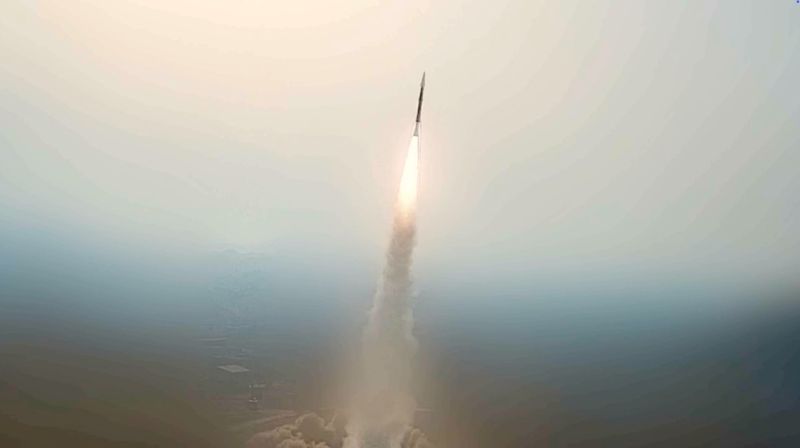
[Financial News] After halting attacks for four days, the Iranian military suddenly launched ballistic missile strikes against U.S. bases in the Middle East. Despite repeated U.S. pressure to negotiate a ceasefire, Iran has shown no willingness to talk.
U.S. Central Command, which oversees American operations against Iran, posted on X on the 28th local time that "at 5:45 p.m. Eastern Time today, units of Iran's Islamic Revolutionary Guard Corps (IRGC) launched multiple ballistic missiles in an attempt to carry out a surprise attack on U.S. bases in the Middle East." The command added, "All Iranian missiles were successfully intercepted," and said, "U.S. forces remain vigilant and maintain a high level of readiness."
The U.S. military did not say where the attacked base was located. The reason Iran suddenly resorted to missile strikes was also not disclosed. In a separate statement on the 28th, CENTCOM said it had carried out precision airstrikes with Saudi Arabia against pro-Iranian terrorists in eastern Iraq. CENTCOM claimed that pro-Iranian forces in Iraq, acting under IRGC orders, had attempted more than 30 drone attacks over the past 72 hours.
After signing a memorandum on ending the war with Iran on the 17th of last month and agreeing to a 60-day ceasefire, the United States resumed bombing Iran after Iran claimed control of the Strait of Hormuz and attacked commercial vessels. The U.S. bombed Iran again on the 26th and 27th of last month, on the 7th and 9th of this month, and then carried out daily airstrikes from the 11th to the 23rd. Iran also retaliated with missiles and drones against U.S. bases in the Middle East, including those in Kuwait and Bahrain.
U.S. President Donald Trump said in an announcement on the 24th that he was suspending airstrikes after resuming talks with Iran. The next day, U.S. media outlets including The New York Times (NYT) reported that Trump had halted the attacks because of a shortage of weapons stockpiles. Trump denied the shortage claim in a statement on the 26th.
On the 26th, Iranian military spokesman Mohammad Akraminia said, "U.S. attacks continued until the night before two days ago, but they have stopped over the past two days." He added, "Our military strategy is fundamentally aimed at retaliation, so we have also suspended our retaliatory operations."
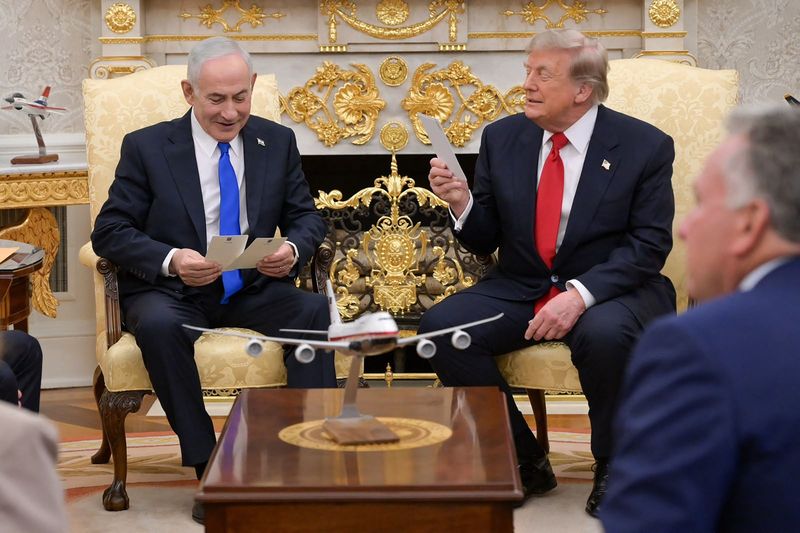
In an interview with Fox News on the 28th, Trump claimed that the U.S. is currently engaged in denuclearization talks with Iran. "And we have had very good conversations," he said. "I think we are in a very strong position right now." Trump warned, "They know that if they do not make a deal, I will act. Bridges will literally be gone in less than an hour. Most bridges, the major bridges, will all be gone within two hours, and power plants will be gone in a day."
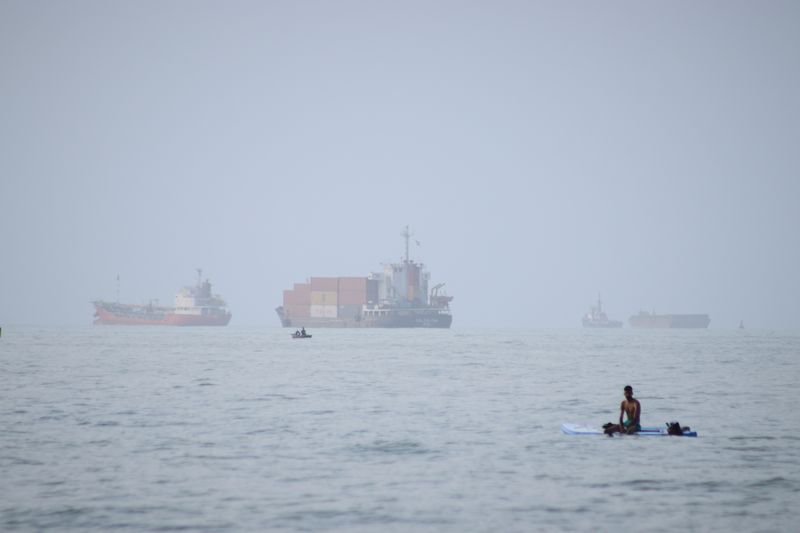
However, the previous day, Esmaeil Baghaei, spokesman for Iran's Foreign Ministry, stressed that "we are not currently holding any negotiations with the United States" and that the Strait of Hormuz was "still closed." He added, however, that the Iranian government discussed transit arrangements for the strait with Oman, which shares the Strait of Hormuz, on the 24th and 25th.
In this regard, The New York Times reported on the 28th that Iran is showing no intention of negotiating and is buying time to secure recognition of its control over the Strait of Hormuz. Gregory Brew, a senior researcher on Iran at Eurasia Group, said, "Iran believes time is on its side, that it can endure pain and pressure better than Trump, and that Trump will eventually agree to a deal that meets its demands."
Farzin Nadimi, a senior researcher at The Washington Institute for Near East Policy, estimated that Iran produced 700 to 1,000 solid-fuel ballistic missiles between last year's U.S.-Israeli airstrikes on Iranian nuclear facilities in June and the outbreak of war this year on February 28. He said it is difficult to estimate production of liquid-fuel missiles and cruise missiles. Brew of Eurasia Group argued that Iran does not have an abundant missile stockpile either and does not want a full-scale war with the United States and Israel to resume.
[email protected] Reporter Park Jong-won Reporter