NVIDIA Signs Texas Data Center Lease, Fueling Fears of 'Circular Financing'
- Input
- 2026-07-29 03:49:35
- Updated
- 2026-07-29 03:49:35
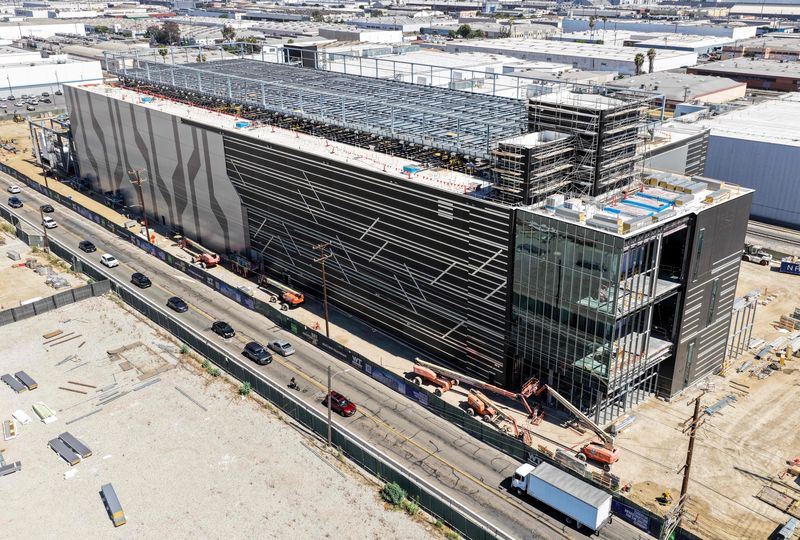
NVIDIA is seeking to lease an entire large data center in Texas and then sublease it to so-called NeoCloud companies such as CoreWeave.
The Financial Times (FT) reported on the 28th local time, citing five sources, that NVIDIA had signed a deal to lease the entire 1-gigawatt (GW) data center now under construction in Texas. The long-term lease could cost as much as $50 billion over 30 years.
The AI heavyweight is using its vast financial resources to create demand for itself.
Securing Power and Land for Data Centers
According to FT, the company building the data center is Hut 8, which mines cryptocurrency and leases data centers.
With power and land already secured, Hut 8 will build the data center after purchasing hundreds of thousands of NVIDIA Graphics Processing Units (GPUs).
As power supply and land for data centers become increasingly scarce, NVIDIA has effectively stepped in to provide financing for its own customers.
CEO Jensen Huang has a strategy of aggressively deploying the company's financial firepower into the rapidly growing market for AI computing capacity to maintain its lead.
The Texas data center lease is seen as a symbol that clearly shows NVIDIA's intent to secure an early advantage in the race to obtain power and land.
Up to $50 Billion
According to Hut 8, NVIDIA will initially lease the Texas data center for 15 years. The rent will total $19.6 billion.
It also has the right to renew the contract. If it exercises that option, the lease term would extend to 30 years. Total rent over 30 years would reach $50 billion.
By committing to the lease, NVIDIA has enabled Hut 8 to secure cheaper financing for the data center site and construction costs. Last month, it raised about $4.3 billion by issuing bonds at an interest rate of 6.129% to fund the first phase of construction.
Thanks to NVIDIA's lease agreement, the bonds received an investment-grade rating from Moody's Corporation, and the interest rate could be set at about 1 percentage point above the yield on NVIDIA's 30-year corporate bonds.
Hut 9 is preparing a second round of financing to double the size of the data center.
Circular Financing
However, concerns are also growing that NVIDIA's attempt to build an AI ecosystem with massive financial resources could be risky. Critics worry about 'circular financing,' in which a supplier becomes a customer and creates demand for itself.
Circular financing is gaining momentum as competition with Google, which has challenged GPU dominance with Tensor Processing Units (TPUs), intensifies.
Google is also using its vast financial resources to push TPU development and is supporting data center developers to generate demand.
According to financial circles, when these big tech companies promise to lease data centers, the financing costs for data center developers are cut in half.
Still, there are concerns that if these cloud companies fail to deliver expected profitability or if cloud demand weakens, NVIDIA and Google, which have stepped in with financial support, could face a heavy burden.
Mixed Views
Opinions on circular financing are sharply divided.
Some see it as a pattern very similar to the collapse of the dot-com bubble and argue that the AI boom is nearing its end. Hyperscalers and big tech companies are currently pouring hundreds of billions of dollars a year into AI data centers and chips, but few are generating enough revenue from artificial intelligence software to justify those investments.
Others counter that this stems from the nature of AI infrastructure, which requires enormous amounts of power and capital, and has nothing to do with the end of the AI bubble.
Unlike the dot-com bubble, where oversupply was the problem, the current issue is an absolute shortage of grid capacity and land. From that perspective, circular financing is simply a competition to secure the means of production first.
Whether this ends as a bubble or leads to the spread of an AI foundation will likely depend on whether end users are willing to pay for AIaaS over the next one to two years.
[email protected] Song Kyung-jae Reporter