[Exclusive] HD Hyundai’s Philippine shipyard launches its first vessel, proving the ‘Subic revival’ with results
- Input
- 2026-07-28 18:45:38
- Updated
- 2026-07-28 18:45:38
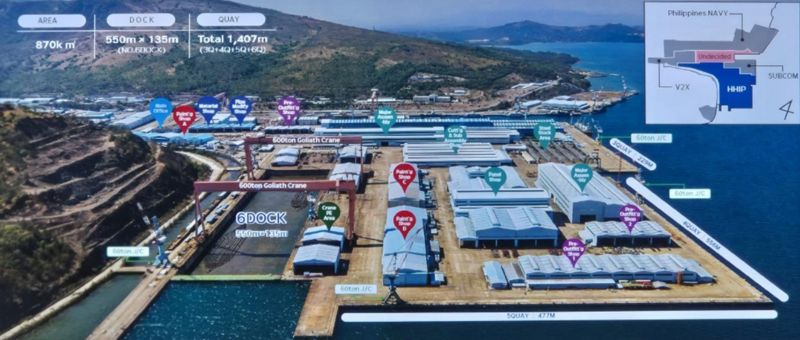
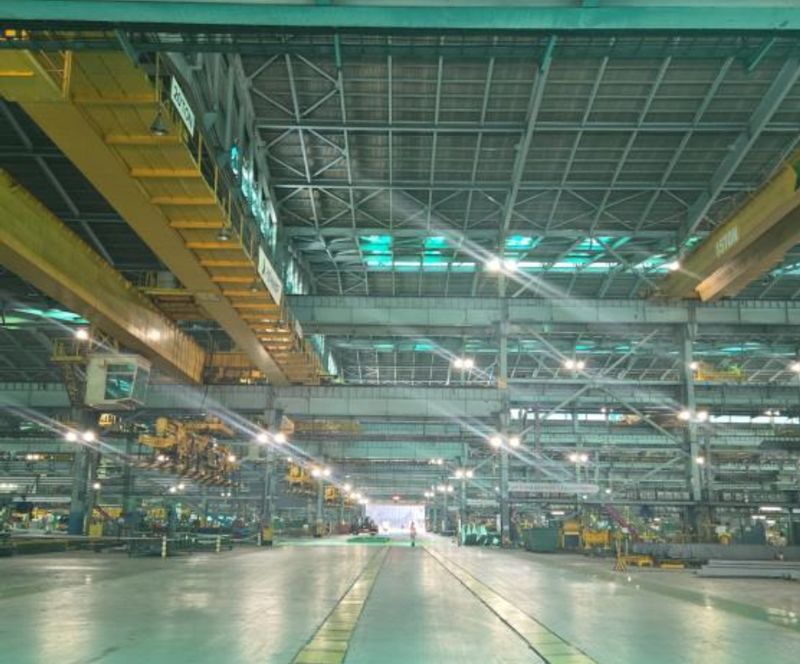
[Financial News] HD Hyundai has launched the first vessel at HD Hyundai Heavy Industries’ Philippine shipyard (HHIP), which it restarted in Subic Bay, the Philippines. It has taken about two years since the company revived the long-idle former Hanjin Heavy Industries shipyard as a production base by leasing only the land it needed, rather than acquiring the entire site. Beyond restoring equipment and training local workers, the yard has now demonstrated actual shipbuilding capability, and HD Hyundai’s Southeast Asia production-belt strategy is seen as having passed an important test.
As competition with China intensifies, HD Hyundai is responding with a two-track strategy. It is building vessels that are at a relative disadvantage in price competition at shipyards in Vietnam and the Philippines to regain market share, while in Korea it focuses on high-value-added ships, especially eco-friendly vessels where it holds a technological edge, to maximize profitability.
HHIP launches first 115,000-DWT PC carrier
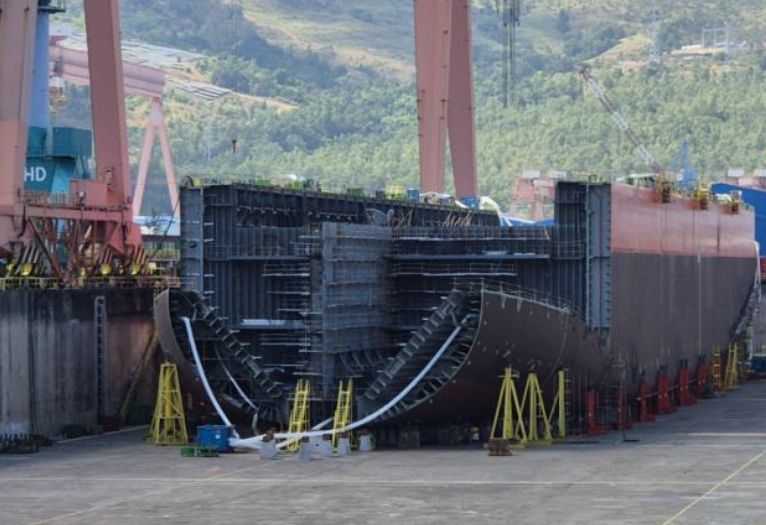
According to the shipbuilding industry on the 28th, HHIP launched its first vessel, a 115,000-DWT petrochemical product carrier (PC carrier), at the Subic Shipyard in the Philippines that day. The ship is the first of four ordered by an Asian shipping company. After the launch, it will undergo outfitting work such as piping and electrical installation at the quay, followed by sea trials before delivery to the owner.
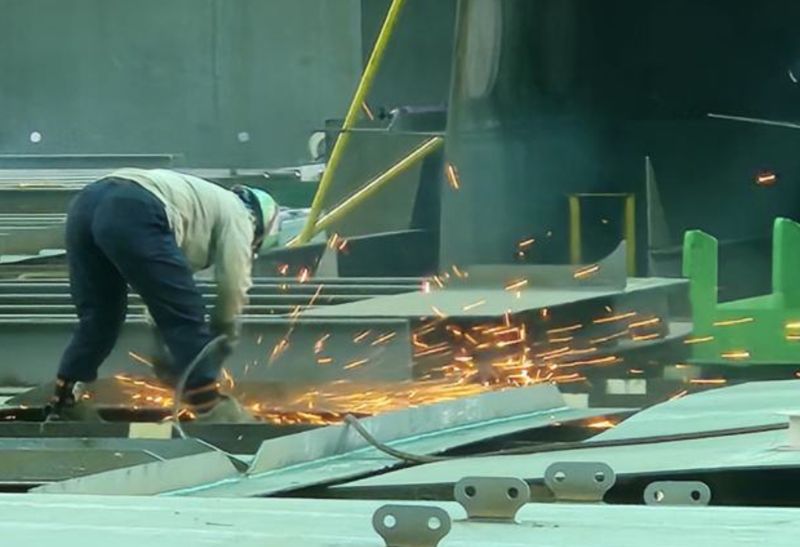
The launch was more than a ceremonial milestone. It showed that HHIP had successfully carried out key newbuilding processes, from steel cutting and block fabrication to block erection. HHIP received its first ship order in 2024 and began construction in 2025. In February this year, it started erection work on the first vessel and reached the launch stage about five months later.
An industry source said, "A newly restarted overseas shipyard is highly likely to face delays or rework on its first vessel," adding, "Launching on schedule is a sign that the equipment, workforce and production management system have stabilized to a certain level."
HHIP operates on a leased section of the former Hanjin Heavy Industries Subic Shipyard, including the six-dock area secured by U.S. private equity firm Cerberus Capital. Cerberus acquired the shipyard in 2022, and HD Hyundai repaired abandoned facilities and redesigned the yard layout and logistics flow to fit its own production methods.
Hanjin Heavy Industries once built a wide range of vessels simultaneously at the Subic Shipyard, including ultra-large container ships, crude oil carriers and bulk carriers. As production complexity rose, up to 18,000 workers were deployed, increasing the burden of cost and quality management. HD Hyundai, by contrast, has concentrated on 115,000-DWT PC carriers. Repeatedly building ships to the same design reduces the burden of design changes and material procurement, while quickly improving workers’ skills. As process data accumulated on the first vessel is applied to subsequent ships, shorter build times and lower costs are expected to become more visible from the second vessel onward.
The industry is focusing less on the first launch than on the construction speed of the follow-up ships. The first vessel bears the cost of both equipment verification and worker training, but once the yard enters repeated production, it can shorten the block fabrication and erection cycle. HHIP’s order backlog for 115,000-DWT PC carriers is seen as the foundation for building a stable repeat-production system. Additional orders for the same vessel type have also recently continued.
HHIP aims to build up to 10 ships a year by 2030 with a workforce of about 5,500. That is less than one-third of the staffing level once set by Hanjin Heavy Industries for a similar production volume. The strategy is to reduce labor dependence through optimized yard logistics, standardized processes and the use of robots in bottleneck operations.
The much lower labor costs in the Philippines compared with Korea are also an advantage. But lower wages do not automatically translate into profitability. The key is how steadily the yard can manage the skill level of local workers, the supply chain for equipment and materials, and the rework rate. The launch of the first vessel is seen as partially easing those uncertainties.
Some forecasts suggest that if HHIP establishes a system to build seven PC carriers and three VLCCs a year, annual sales could exceed 100 billion won and reach as much as around 150 billion won. The approach is to first build a production base with PC carriers and then gradually expand into higher-value large vessels.
Potential to expand beyond commercial ships into naval vessels and MRO
The value of the Subic Shipyard is not limited to production capacity. Subic Bay was once home to a U.S. naval base and remains a strategic location close to the South China Sea. Parts of the shipyard also house facilities related to the Philippine Navy. Because the structure combines U.S. capital securing the shipyard base and a Korean company handling shipbuilding, it carries strong symbolic significance for shipbuilding cooperation among Korea, the U.S. and the Philippines.
Since 2016, HD Hyundai Heavy Industries has built a cooperative relationship with the Philippines by winning a total of 12 orders from the Philippine Navy, including frigates and patrol vessels. As a result, HHIP is increasingly seen as a possible long-term base not only for commercial shipbuilding but also for maintenance, repair and overhaul (MRO) of Philippine naval vessels, and even as a support base for the U.S. Navy. The Philippine government is also hopeful about the revival of shipbuilding. President Ferdinand Marcos Jr. attended the HHIP launch event in September 2025 and described the restart of the Subic Shipyard as a turning point for the recovery of the country’s shipbuilding industry and job creation.
HHIP is one pillar of HD Hyundai’s Southeast Asian production network, the SEA Belt, alongside its Vietnam shipyard. That is why Kisun Chung, chairman of HD Hyundai, visited the shipyard site in person in March this year. The company could also expand cooperation between overseas shipyards by supplying deck houses and funnels made in Vietnam to the Philippines. The structure would have Korean shipyards focus on high-value vessels such as LNG carriers and naval ships, while the Philippines and Vietnam handle standard ships where price competitiveness matters more.
An industry source said, "With the first launch, HHIP has moved from a planned overseas base to a shipyard that actually produces vessels," adding, "From here on, shorter build times and stable quality on the follow-up ships will determine the business viability of the Subic Shipyard."
[email protected] Kang Gu-gwi Reporter