"No Returns for Discounted Items"... C-Commerce Also Unilaterally Cancels Prize Wins
- Input
- 2026-07-28 18:33:27
- Updated
- 2026-07-28 18:33:27
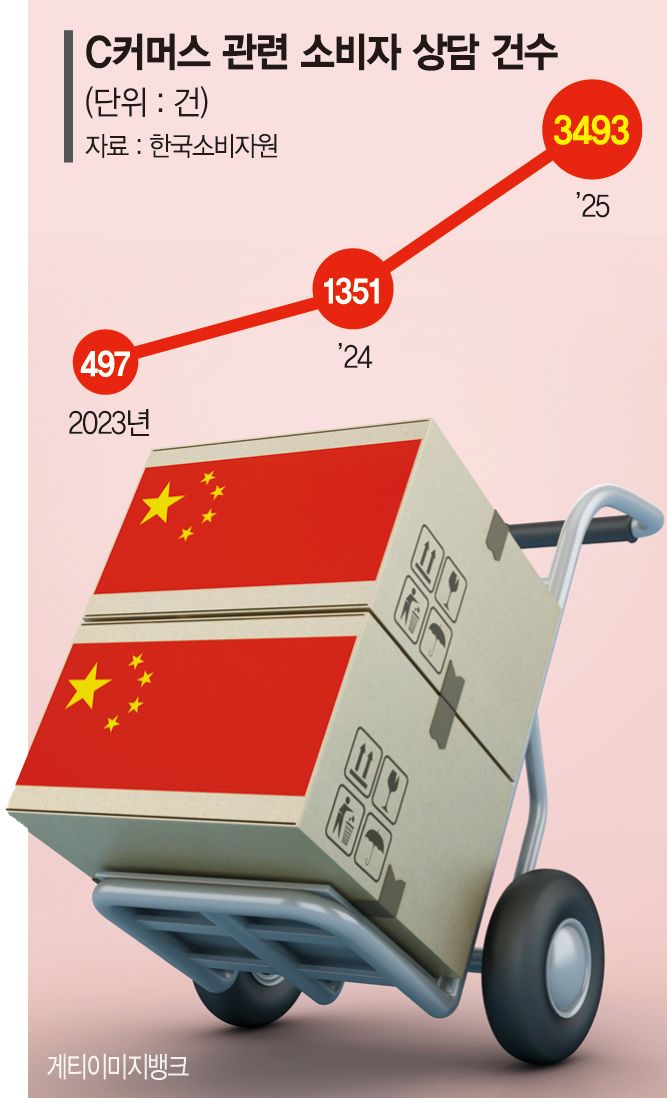
■ Unilateral transaction cancellations leave consumers without relief
According to the Korea Consumer Agency (KCA) on the 28th, an investigation into the terms and display practices of four Chinese e-commerce platforms, including AliExpress, Temu, SHEIN, and Taobao, found clauses that could restrict consumer rights. Some platforms had rules that limited returns and exchanges for discounted or promotional items, or that allowed them to refuse shipping fee refunds even when a product was defective. There were also clauses that reduced business liability. Among the platforms surveyed, two were found to have terms allowing them to cancel orders without consumer consent when problems arose due to business errors, such as incorrect pricing, or to cap compensation for damages at a certain amount. In one actual case, Consumer A won 10 clothing items as a prize in an event run by Collaborative Commerce this year, but the business did not deliver the items and instead canceled the order unilaterally, citing a shipping address error.
Some platforms encouraged refunds in the form of platform-specific credits, even when refunds through the original payment method were possible. Last November, Consumer B bought a Xiaomi tablet through Collaborative Commerce and, after receiving the product, confirmed that it was counterfeit and requested a return. During the refund process, B later learned that the refund would be issued as platform points rather than a card cancellation. B filed a consumer complaint, saying that only the "fast refund" option was visible during the return process, and that a card cancellation was possible only after clicking "more," which could easily cause confusion.
The Act on the Consumer Protection in Electronic Commerce, Etc. stipulates that when a consumer withdraws an offer, the business must refund the payment within three business days from the date it receives the returned goods. It also states that payments made by card or other methods can be subject to a request to suspend billing or cancel the charge through the relevant payment provider. The KCA said, "A method that emphasizes the speed of credit refunds may risk limiting consumers' choice."
Consumer deception was also found in the labeling and advertising practices of Collaborative Commerce platforms. Some platforms used phrases such as "Buy 3, from 1,000 won" to make it appear as though three products could be purchased for 1,000 won. However, the investigation found that only some items were actually available at that price. There were also cases in which discounts were shown with a limited-time display, suggesting they would soon end, even though the same benefits remained available after the deadline passed.
■ Questions remain over the effectiveness of tighter regulation
As consumer harm related to Collaborative Commerce has surged, the government has also begun revising the system. Under the revised enforcement decree of the Act on the Consumer Protection in Electronic Commerce, Etc. announced by the Korea Fair Trade Commission (KFTC) on the 14th, overseas businesses without an address or office in Korea must appoint a domestic representative if they meet certain criteria. The rule, which takes effect on January 21 next year, applies to businesses with annual sales of at least 1 trillion won in the previous year, or those whose average monthly number of domestic users accessing their cyber malls over the previous three months exceeded 1 million as of the end of the previous year. It also applies when the KFTC requests documents because a violation of the law has caused, or is likely to cause, significant consumer harm.
A KFTC official said, "AliExpress and Temu are currently operating in the Korean market and are therefore subject to domestic laws such as the Act on the Consumer Protection in Electronic Commerce, Etc.," but added, "It is difficult to impose effective sanctions on individual sellers operating on each platform." The official continued, "The domestic representative system should make it easier for authorities to conduct investigations and oversee operations, so we expect it to improve the effectiveness of sanctions against regulatory violations." However, blind spots remain, including small overseas shopping malls and new businesses that do not meet the sales and user thresholds.
Lee Young-ae, a professor in the Department of Consumer Science at Incheon National University, said, "Effective consumer protection is only possible if follow-up inspections and thorough monitoring are carried out regarding the implementation of the system." She added, "Consumers also use Collaborative Commerce because of the advantage of low prices, even though they accept the risks of transactions, so awareness education must also be provided."
[email protected] Kim Hyun-ji Reporter