[Editorial] Accelerate the MERCOSUR FTA to turn South American expansion into reality
- Input
- 2026-07-28 18:09:21
- Updated
- 2026-07-28 18:09:21
We see new opportunities in our relationship with Brazil because we want to speed up our entry into the Southern Common Market (MERCOSUR). Brazil is the world's 11th-largest economy and the largest in South America. Together with Argentina, Republic of Paraguay, and Oriental Republic of Uruguay, it belongs to MERCOSUR. Among them, Brazil is the de facto leader, accounting for a large share of the bloc's gross domestic product. If ties with Brazil improve, access to the South American market will open as if on a highway. In fact, MERCOSUR signs external trade agreements as a customs union, not as individual countries. Strengthening ties with Brazil is therefore a gateway to the entire 280 million-person MERCOSUR market.
The goods we can trade with this region are strategically vital for us. Rare earths are a prime example. Brazil holds key minerals, including rare earths, and ranks second in the world in reserves. Expanding trade between the two countries could achieve two goals at once: diversifying supply chains for our industries and opening new markets. The United States, China, and Europe have already worked to expand trade with the region because they have long recognized its strengths. That is why we must move faster, especially since we have been relatively late in entering South America. We need to break away from supply chain risks created by excessive dependence on specific countries without building stable supply networks with resource-rich nations. South America can serve as an alternative source to ease that vulnerability.
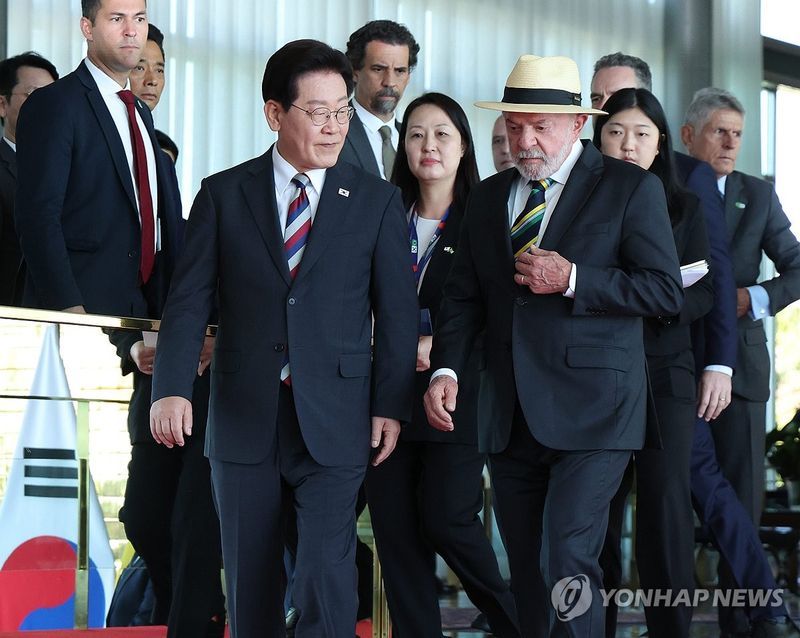
In that sense, the strategic partnership with Brazil must develop into a practical business relationship. Now is the time to push hard so that the Korea-MERCOSUR Free Trade Agreement can gain momentum. Although both sides recognized the importance of the Korea-MERCOSUR FTA, progress has been sluggish. Against that backdrop, it is meaningful that the two countries agreed at this summit to establish a working group to resume the agreement. Forming a working group does not guarantee a deal. Matching conditions between the two sides will require significant concessions and time. That is why we need the wisdom to turn the current friendly atmosphere and trust between the leaders into real progress at the negotiating table. Other major competitors are already moving to conclude agreements with MERCOSUR or accelerate negotiations. This is no time to let another symbolic event end in empty gestures.
There are not many chances on this planet to find friendly partner countries and share mutual benefits. We must flesh out concrete ways to strategically diversify our ties with South America, which has strong growth potential. We hope the government will move quickly to present a clear roadmap and timeline for embedding this effort within the institutional framework of the MERCOSUR FTA.