"Even KOSPI 6000 Is Breaking Down"... Securities Firms Now Say Recovery Will Be Difficult
- Input
- 2026-07-28 16:13:49
- Updated
- 2026-07-28 16:13:49
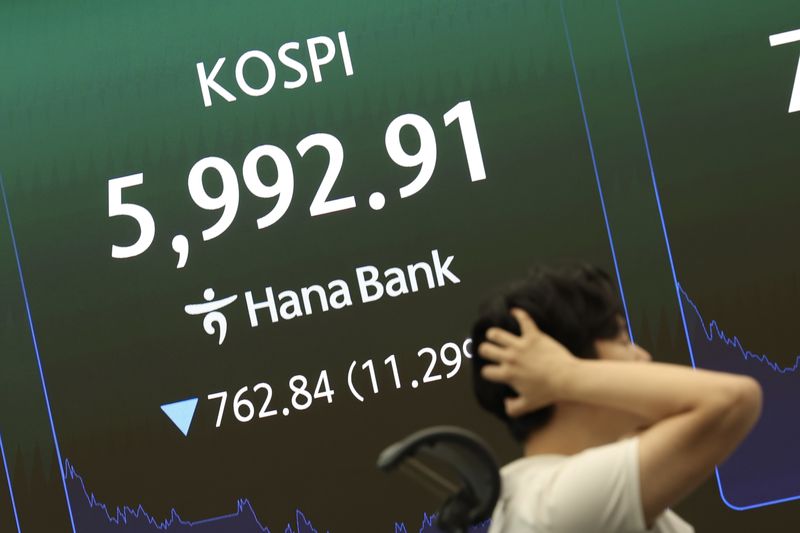
[Financial News] The KOSPI, which had once climbed above 9,000, has now been pushed into a position where even the 6,000 level is under threat in just over a month. Even in the securities industry, where people had been predicting that the index would reach 10,000 this year, skepticism is spreading that it will be difficult to recover its previous high.
■ Is the market heading back into a box range?
According to the Korea Exchange, the KOSPI closed at 6,023.66 on the 28th, down 10.84% from the previous day. Compared with the recent peak of 9,114.55 recorded on the 22nd of last month, the index has plunged 3,090.92 points, or 33.9%. During the session, it even fell below 6,000, touching 5,992.91.
The market was shaken as Samsung Electronics fell 13.39% and SK hynix dropped 14.65%, both losing more than 10%. Overnight on the New York stock market, semiconductor shares such as NVIDIA and ASML fell sharply, while SK hynix's American depositary receipts (ADRs) also declined 7.47%. Concerns that the Shanghai listing of ChangXin Memory Technologies (CXMT) could weaken the semiconductor oligopoly added to the pressure.
Views are also gaining ground in the securities industry that reclaiming the previous high of 9,114.55 will be difficult. Junyeong Kim, a researcher at iM Securities, said, "Rather than retaking the previous high within the third quarter, the market is likely to remain in a range-bound phase through year-end." He added, "During the dot-com bubble and the 2017 semiconductor cycle, the market also moved sideways for about six months after peaking, and a similar pattern is likely this time as well."
Kim also pointed to the still-high level of margin loans in the KOSPI as a risk factor. "If the index falls further while margin balances remain elevated, we also need to consider the possibility of margin-driven selling," he said.
Even if the market rebounds, many expect the upside to be limited. Du-eon Kim, a researcher at Hana Securities, said, "A rebound and a recovery of the previous high should be distinguished." He noted that, on average, it took 1,148 days, or about 3.1 years, for the market to recover a prior peak from a bottom in the past. Heo Jae-hwan, a researcher at IBK Investment & Securities, also said, "The stronger the rebound toward the high becomes, the more likely foreign selling pressure is to reemerge." He advised investors to "buy in the 6,000 range and gradually sell in the 8,000 range." The warning is aimed at avoiding a vicious cycle in which a rebound quickly triggers profit-taking.
■ "Big tech's willingness to invest in semiconductors must be confirmed"
There are also concerns that the earnings growth of semiconductor companies, which led this year's KOSPI rally, has reached its limit. According to Eugene Investment & Securities, the growth rate of semiconductor operating profit is expected to peak at 640% this year before slowing to 42% next year, while the KOSPI's overall operating profit growth rate is projected to fall from 220% to 35%. Heo Jae-hwan, a researcher at Eugene Investment & Securities, analyzed that "the KOSPI rose too quickly relative to the slope of earnings growth after April and May this year, and worries about a slowdown in the second half, combined with the burden of the sharp rally in the first half, led to the steep decline in share prices."
Attention is now focused on this week. Final second-quarter results for SK hynix will be released on the 29th, followed by Samsung Electronics on the 30th, while the U.S. benchmark interest rate will be decided by the Federal Reserve System in the early hours of the 30th. Earnings announcements from U.S. big tech companies, including Meta Platforms, Microsoft, Amazon and Apple, are also lined up. Lee Sang-yeon, a researcher at Shinyoung Securities, said, "For foreign investors to return, there must first be signs that the semiconductor industry is improving again."
Kim said, "What matters in this big tech earnings season is not the size of investment, but whether the results can support that spending and whether there is a willingness to keep spending." He added, "The real issue will be whether rising capital expenditures (CAPEX) reduce room for share buybacks and dividends, and whether companies begin covering funding gaps with borrowing."
[email protected] Han Young-joon Reporter