Will the KOSPI Hold the 6,000 Level After a Double-Digit Drop? [Fn Afternoon Market Report]
- Input
- 2026-07-28 14:24:22
- Updated
- 2026-07-28 14:24:22
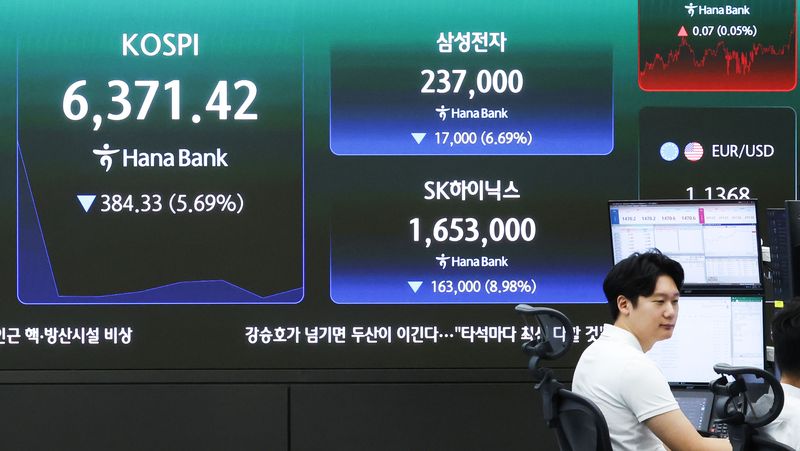
As of 2:18 p.m. that day, the KOSPI was trading at 6,064.38, down 691.37 points, or 10.23%, from the previous session.
The KOSPI opened at 6,400.27, down 355.48 points, or 5.26%, from the previous trading day, and widened its losses as the session progressed. It plunged more than 5% right after the market opened, triggering a sell sidecar at 9:06 a.m. The KOSDAQ also saw deeper losses early in the session, which triggered a sell sidecar around 9:14 a.m. It was the 42nd sidecar this year and the 22nd sell sidecar.
A circuit breaker mechanism was also triggered at around 10:13 a.m. after the KOSPI fell more than 8%, halting trading for 20 minutes. The KOSDAQ likewise dropped more than 8%, prompting another circuit breaker mechanism at around 12:01 p.m.
Foreign investors were the main force dragging the indices lower. In the domestic stock market, individuals and institutions bought 3.4166 trillion won and 593.2 billion won worth of shares, respectively, while foreigners sold 4.0173 trillion won.
As a result, all 14 of the stocks with the largest market capitalizations were in decline.
Samsung Electronics and SK hynix, the companies ranked first and second by market capitalization, were down 12.20% and 12.89%, respectively, from the previous session.
The KOSDAQ was trading at 704.10, down 60.76 points, or 7.94%, from the previous trading day. The index opened at 742.13, down 22.73 points, or 2.97%, and then extended its losses.
A securities industry official analyzed that "the key reason for today's sharp market drop was weakening investor sentiment toward the global AI and semiconductor sectors, along with the side effects of the accumulated concentration of funds and leverage structures."
The official added that "in the domestic market, buying had been extremely concentrated in specific large-cap stocks such as Samsung Electronics and SK hynix, as well as related leveraged ETF products." The official said that once profit-taking began, the leverage structure amplified volatility, creating a vicious cycle in which "declines fueled further declines" and worsening supply-demand imbalances.
[email protected] Kim Hyun-jung Reporter