"SK hynix's Market Cap Halved in a Month" Panic Hits South Korean and Japanese Stocks
- Input
- 2026-07-28 13:45:01
- Updated
- 2026-07-28 13:45:01
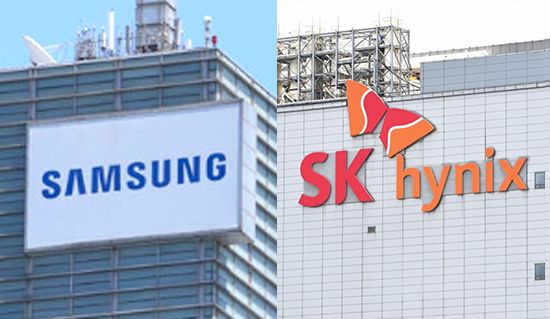
[Financial News] South Korean and Japanese stock markets were shaken sharply as semiconductor stocks that had driven the AI investment boom plunged. After AI memory leaders such as SK hynix and Samsung Electronics fell sharply, the KOSPI triggered an intraday circuit breaker, while Japan's Nikkei 225 also dropped more than 4%. Market watchers say investor sentiment has turned cold as concerns over oversupply from expanded AI infrastructure investment and valuation pressures surfaced at the same time.
SK hynix loses 570 trillion won in market value, putting the brakes on the AI rally
According to the Financial Times on the 28th, selling spread across AI semiconductor stocks, sending the KOSPI down more than 8% intraday and briefly halting trading. Japan's Nikkei 225 also fell more than 4%.
SK hynix and Samsung Electronics were both down more than 12% to 13% intraday. Together, the two companies account for about 40% of the Korean stock market's total market capitalization, deepening the overall decline.
SK hynix's share price has fallen about 45% from its June peak. The Financial Times estimated that its market capitalization shrank by about 570 trillion won, or roughly $420 billion, during that period. With the stock having nearly tripled in the first half of the year, analysts say profit-taking and leveraged liquidations hit all at once.
Lee Chan-hee, CEO of Petra Capital Management, said, "This correction was inevitable given how quickly the stock rose this year," but added, "Once the leveraged unwinding is over, global funds could flow back in and drive a rebound."
Semiconductor stocks also fell sharply across Japan. Memory maker KIOXIA Corporation plunged more than 18% intraday and has lost about half its value over the past month. Major semiconductor names including Lasertec, DISCO Corporation, Tokyo Electron, and Renesas also posted steep declines. Some market participants say higher interest rates are rapidly unwinding momentum trades led by retail investors.
AI investment continues, but concerns over "oversupply" are also spreading
The core of the market anxiety is not AI investment itself, but future profitability.
Investors worry that if memory prices rise too much, customers may cut purchases or look for alternatives. In addition, Samsung Electronics and SK hynix's large-scale expansion plans have raised expectations that oversupply could emerge in the long term, putting pressure on share prices.
The two companies are pursuing a plan to invest a combined 800 trillion won over the next five years and double DRAM production capacity. Micron has also decided to expand its investment in the United States to $250 billion by 2035.
Still, there are not many who are pessimistic about the industry itself.
Kim Dong-won, an analyst at KB Securities, said, "Next year, the focus will be on expanding high-bandwidth memory (HBM) production, while general memory capacity increases will be limited," adding, "Revenue from big tech and data center companies will continue to grow as a share of total sales."
Sean Oh, an analyst at NH Investment & Securities, said, "Following the recent plunge, SK hynix's forward price-to-earnings ratio has fallen to 4.4 times," and assessed that "the improved valuation could make this a buying opportunity."
[email protected] Kim Kyung-min Reporter