Both hikes and freezes are burdensome... Fed faces Wash's first test
- Input
- 2026-07-28 11:16:54
- Updated
- 2026-07-28 11:16:54
Since taking office, Chairman Warsh has emphasized in congressional hearings and elsewhere that "the Fed will never tolerate high inflation. " With inflation still exceeding the Fed's 2% target, raising interest rates would demonstrate a commitment to price stability through action, not just words. Lori Logan, President of the Federal Reserve Bank of Dallas, and Beth Hammack, President of the Federal Reserve Bank of Cleveland, also share the view that further rate hikes are necessary.
Both warn that inflationary pressures may persist longer than expected, citing continued widespread price increases across services, transportation, dining out, and travel. Loretta Mester, former President of the Federal Reserve Bank of Cleveland, also stated, "Given the current economic situation, it is difficult to view current monetary policy as sufficiently contractionary," adding that "raising interest rates helps balance supply and demand and stabilize inflation expectations.
Since taking office, Chairman Warsh has emphasized in congressional hearings and elsewhere that "the Fed will never tolerate high inflation. " With inflation still exceeding the Fed's 2% target, raising interest rates would demonstrate a commitment to price stability through action, not just words. Lori Logan, President of the Federal Reserve Bank of Dallas, and Beth Hammack, President of the Federal Reserve Bank of Cleveland, also share the view that further rate hikes are necessary." She further pointed out, "The longer the Fed talks about controlling inflation without taking action, the more policy credibility is bound to decline. " However, raising interest rates carries significant burdens.
Both the Consumer Price Index (CPI) and the Producer Price Index (PPI) for June came in lower than market expectations, showing signs of a slowdown in inflation. Some point out that raising interest rates under these circumstances could confuse the market regarding the criteria the Federal Reserve uses to make policy decisions.
Moreover, a significant portion of the recent price instability stems from supply shocks, such as the surge in international oil prices due to the war with Iran and tariffs, rather than overheated demand. Brent crude briefly surpassed $100 per barrel last week before falling back to around $90 as fighting temporarily ceased.
The Fed is also concerned that supply shocks are difficult to resolve solely through benchmark interest rate hikes. Dean Markey, Chief Economist at Point 72, pointed out to The New York Times (NYT) that "raising rates while economic indicators are improving could actually cause the market to fail to understand the Fed's policy response function," adding that "there is a risk of causing confusion in the market rather than boosting policy credibility.
" President Trump also met with reporters on the same day and stated, "U. S.
GDP growth could reach 8%, 9%, 10%, or even 12% on an annualized basis," adding, "That is how it should be. " He further emphasized, "Just like 30 years ago, the U.
S. should have the lowest interest rates in the world.
Since taking office, Chairman Warsh has emphasized in congressional hearings and elsewhere that "the Fed will never tolerate high inflation. " With inflation still exceeding the Fed's 2% target, raising interest rates would demonstrate a commitment to price stability through action, not just words. Lori Logan, President of the Federal Reserve Bank of Dallas, and Beth Hammack, President of the Federal Reserve Bank of Cleveland, also share the view that further rate hikes are necessary.
" Interest Rate Freeze. Secures Flexibility, but Criticized as 'Hawks in Words' Conversely, freezing interest rates allows the Fed to buy time.
Since taking office, Chairman Warsh has emphasized in congressional hearings and elsewhere that "the Fed will never tolerate high inflation. " With inflation still exceeding the Fed's 2% target, raising interest rates would demonstrate a commitment to price stability through action, not just words. Lori Logan, President of the Federal Reserve Bank of Dallas, and Beth Hammack, President of the Federal Reserve Bank of Cleveland, also share the view that further rate hikes are necessary.The market expects inflation to gradually slow in the second half of this year, and two months' worth of price and employment data will be released before the September FOMC meeting. The Fed can secure time to decide on policy after reviewing additional data.
In a recent interview with the NYT, Jan Hatzius, Chief Economist at Goldman Sachs, analyzed that recent price increases are largely due to temporary factors such as tariffs, stating, "Inflation is likely to gradually improve over time. " He assessed that "current hawkish rhetoric does not necessarily have to lead to actual interest rate hikes.
" However, freezing interest rates also poses a significant political and policy burden for Chair Warsh. Above all, he could face criticism that his actual policy does not align with the "zero tolerance for inflation" principle he has emphasized.
The concern is that if he maintains his policy while publicly declaring that he will absolutely not tolerate high prices, the Fed's policy credibility could be shaken. Inflation expectations are also a variable.
Amidst the ongoing war with Iran and energy price instability, if the Fed remains inactive, there is a possibility that the market will perceive it as "the Fed tolerating rising prices. " Hawks are concerned that this could lead to a vicious cycle where companies continue to raise prices and workers demand higher wages.
Ultimately, the market is paying more attention to the logic Chair Warsh uses to explain the interest rate decision at this FOMC meeting than to the decision itself. Wall Street is focusing on the possibility that even if Warsh raises rates, he will minimize market shock by describing it as a policy 'rebalancing' rather than the start of long-term tightening.
Analysts suggest that how Warsh interprets the exceptional situation of a supply shock and persuades the market, while maintaining his commitment to curbing inflation, will determine the future credibility of the Fed's policies. Federal Reserve Chair Kevin Warsh.
Since taking office, Chairman Warsh has emphasized in congressional hearings and elsewhere that "the Fed will never tolerate high inflation. " With inflation still exceeding the Fed's 2% target, raising interest rates would demonstrate a commitment to price stability through action, not just words. Lori Logan, President of the Federal Reserve Bank of Dallas, and Beth Hammack, President of the Federal Reserve Bank of Cleveland, also share the view that further rate hikes are necessary.
Since taking office, Chairman Warsh has emphasized in congressional hearings and elsewhere that "the Fed will never tolerate high inflation. " With inflation still exceeding the Fed's 2% target, raising interest rates would demonstrate a commitment to price stability through action, not just words. Lori Logan, President of the Federal Reserve Bank of Dallas, and Beth Hammack, President of the Federal Reserve Bank of Cleveland, also share the view that further rate hikes are necessary.
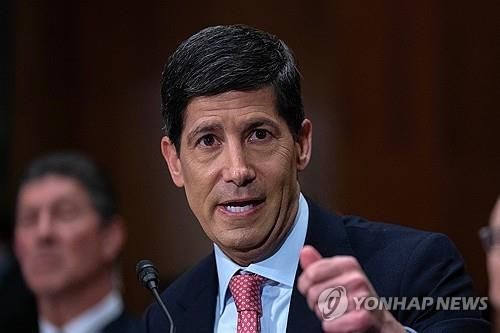
Since taking office, Chairman Warsh has emphasized in congressional hearings and elsewhere that "the Fed will never tolerate high inflation. " With inflation still exceeding the Fed's 2% target, raising interest rates would demonstrate a commitment to price stability through action, not just words. Lori Logan, President of the Federal Reserve Bank of Dallas, and Beth Hammack, President of the Federal Reserve Bank of Cleveland, also share the view that further rate hikes are necessary.
Since taking office, Chairman Warsh has emphasized in congressional hearings and elsewhere that "the Fed will never tolerate high inflation. " With inflation still exceeding the Fed's 2% target, raising interest rates would demonstrate a commitment to price stability through action, not just words. Lori Logan, President of the Federal Reserve Bank of Dallas, and Beth Hammack, President of the Federal Reserve Bank of Cleveland, also share the view that further rate hikes are necessary.
[email protected] Correspondent Lee Byeong-cheol Reporter