Number of Homes Tops 20 Million for First Time Last Year, but Growth Slows
- Input
- 2026-07-28 12:00:00
- Updated
- 2026-07-28 12:00:00
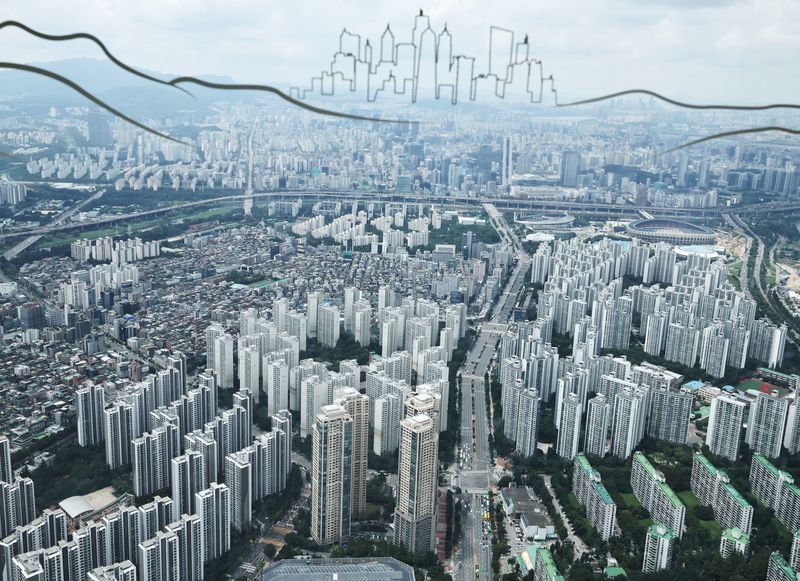
[Financial News] The number of homes in South Korea surpassed 20 million for the first time last year. Supply increased, but the pace of growth slowed, and the concentration of housing in the Capital Region and in apartments continued.
According to the '2025 Population and Housing Census Results (registered census method)' released by the National Data Office on the 28th, the country had 20.181 million homes as of Nov. 1 last year, up 309,000, or 1.6%, from a year earlier. The growth rate was 0.1 percentage point lower than the previous year’s 1.7%.
Kyung Eun-sook, head of the National Data Office’s Population Census Division, explained, "Housing growth usually reflects homes that are completed and occupied three to four years after construction starts." She added, "Recently, the slowdown in the share of housing starts has affected the growth rate in the number of homes."
By housing type, apartments totaled 13.29 million, up 2.4% from a year earlier and accounting for 65.8% of all homes. By contrast, detached houses fell 0.3% to 3.83 million. While the growth of multi-unit housing continued, detached houses remained on a downward trend.
By region, 46.8% of all homes, or 9.445 million units, were concentrated in the Capital Region. Among provinces and cities, Incheon posted the highest year-on-year growth at 2.9%, followed by Daejeon and North Chungcheong Province at 2.3% each. In terms of the increase in housing units, Gyeonggi Province led with 80,000, followed by Seoul with 46,000 and Incheon with 34,000.
Kyung said, "Incheon recorded a strong increase because completions and move-ins continued in new towns such as Geomdan, Cheongna, Luwon City, Yeongjong and Songdo." She added, "Daejeon saw a rise as move-ins took place after redevelopment projects in the old downtown were completed, while North Chungcheong Province posted higher growth as housing move-ins increased with the revitalization of industrial complexes by major companies such as SK hynix."
Aging housing also continued to rise. Homes built 20 years ago or more numbered about 11.29 million, accounting for 56.0% of the total, while homes built 30 years ago or more reached about 6.18 million, or 30.6%. By housing type, 60.3% of detached houses and 22.2% of apartments were found to be more than 30 years old. By province and city, the share of aging homes was highest in Jeollanam-do at 45.6%, followed by North Jeolla Province at 40.5% and Gyeongbuk at 40.4%.
Vacant homes totaled 1.72 million, accounting for 8.5% of all housing units. By construction year, 20.6% of newly built homes in 2025 and 16.7% of homes built before 1989 were unoccupied. Vacant homes include newly completed units that have not yet been occupied, as well as temporary vacancies due to sales, moving or repairs.
[email protected] Kim Chan-mi Reporter